Get your free personalized podcast brief
We scan new podcasts and send you the top 5 insights daily.
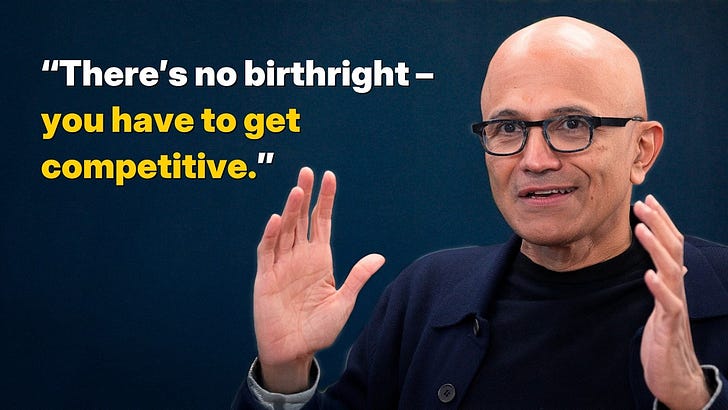
Nadella has delegated management responsibilities to embed himself directly in AI product development. He now spends his time in internal Teams channels, emailing engineers with specific flaws, and holding weekly product grillings to accelerate Copilot's improvement, acting as a hands-on product leader.

Related Insights
While some competitors prioritize winning over ROI, Nadella cautions that "at some point that party ends." In major platform shifts like AI, a long-term orientation is crucial. He cites Microsoft's massive OpenAI investment, committed *before* ChatGPT's success, as proof of a long-term strategy paying off.

Z.AI's culture mandates that technical leaders, including the founder, remain hands-on practitioners. The AI field evolves too quickly for a delegated, hands-off management style to be effective. Leaders must personally run experiments and engage with research to make sound, timely decisions.

Webflow's CPO champions the "ICCPO" (Individual Contributor CPO) model. In the AI era, leaders must be hands-on practitioners who experiment with their own tools. This direct engagement is critical for understanding the new toolkit, discovering its limitations, and guiding their teams effectively from the trenches.

Nadella adopts a grounded perspective on AI's current state. He likens it to past technological revolutions, viewing it as a powerful tool that enhances human intellect and productivity, rather than subscribing to the more mystical 'final revolution' narrative about AGI.
Product leaders must personally engage with AI development. Direct experience reveals unique, non-human failure modes. Unlike a human developer who learns from mistakes, an AI can cheerfully and repeatedly make the same error—a critical insight for managing AI projects and team workflow.

The "ICCPO" (Individual Contributor Chief Product Officer) model requires leaders to use AI tools to self-serve answers directly from company data. This shifts the executive role from pure delegation to hands-on experimentation, modeling a culture of self-sufficiency and inspiring the team to adopt new tools.
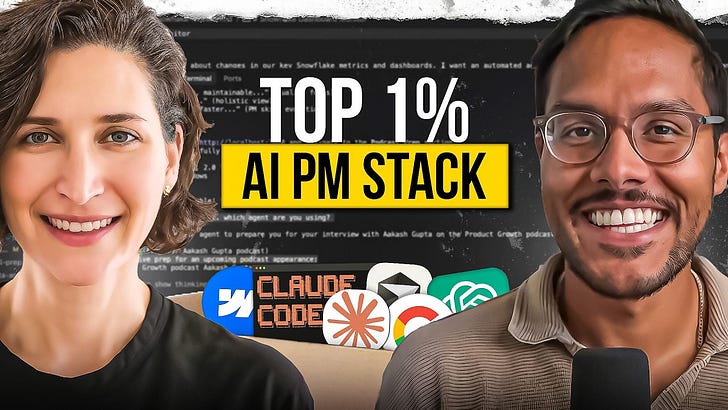
It's nearly impossible to hire senior product or engineering leaders who are also fluent in AI. The advice for experienced managers is to step back into an Individual Contributor (IC) role. This allows them to build hands-on AI skills, demonstrating the humility and beginner's mindset necessary to lead in this new era.
Microsoft CEO Satya Nadella views AI's trajectory in two distinct paths. The first is "cognitive enhancement" tools that assist users, like Copilot. The second, more ambitious path is a "guardian angel," an AGI-like system that oversees and manages tasks. This framework signals a deeper belief in AGI's potential than is commonly associated with him.

AI won't replace product managers but will elevate their role. PMs will shift from executing tasks like financial forecasting to managing a team of specialized AI agents, forcing them to focus on high-level strategy and assumption-checking.

While senior leaders are trained to delegate execution, AI is an exception. Direct, hands-on use is non-negotiable for leadership. It demystifies the technology, reveals its counterintuitive flaws, and builds the empathy required to understand team challenges. Leaders who remain hands-off will be unable to guide strategy effectively.