Get your free personalized podcast brief
We scan new podcasts and send you the top 5 insights daily.
The company's ethos, inspired by concepts like Just War Theory and its "Lord of the Rings" namesake, is to make the cost of conflict prohibitively high for adversaries. The ultimate goal is to deter war, thereby protecting lives and preserving democratic ideals.

Related Insights
Counterintuitively, Anduril views AI and autonomy not as an ethical liability, but as a way to better adhere to the ancient principles of Just War Theory. The goal is to increase precision and discrimination, reducing collateral damage and removing humans from dangerous jobs, thereby making warfare *more* ethical.
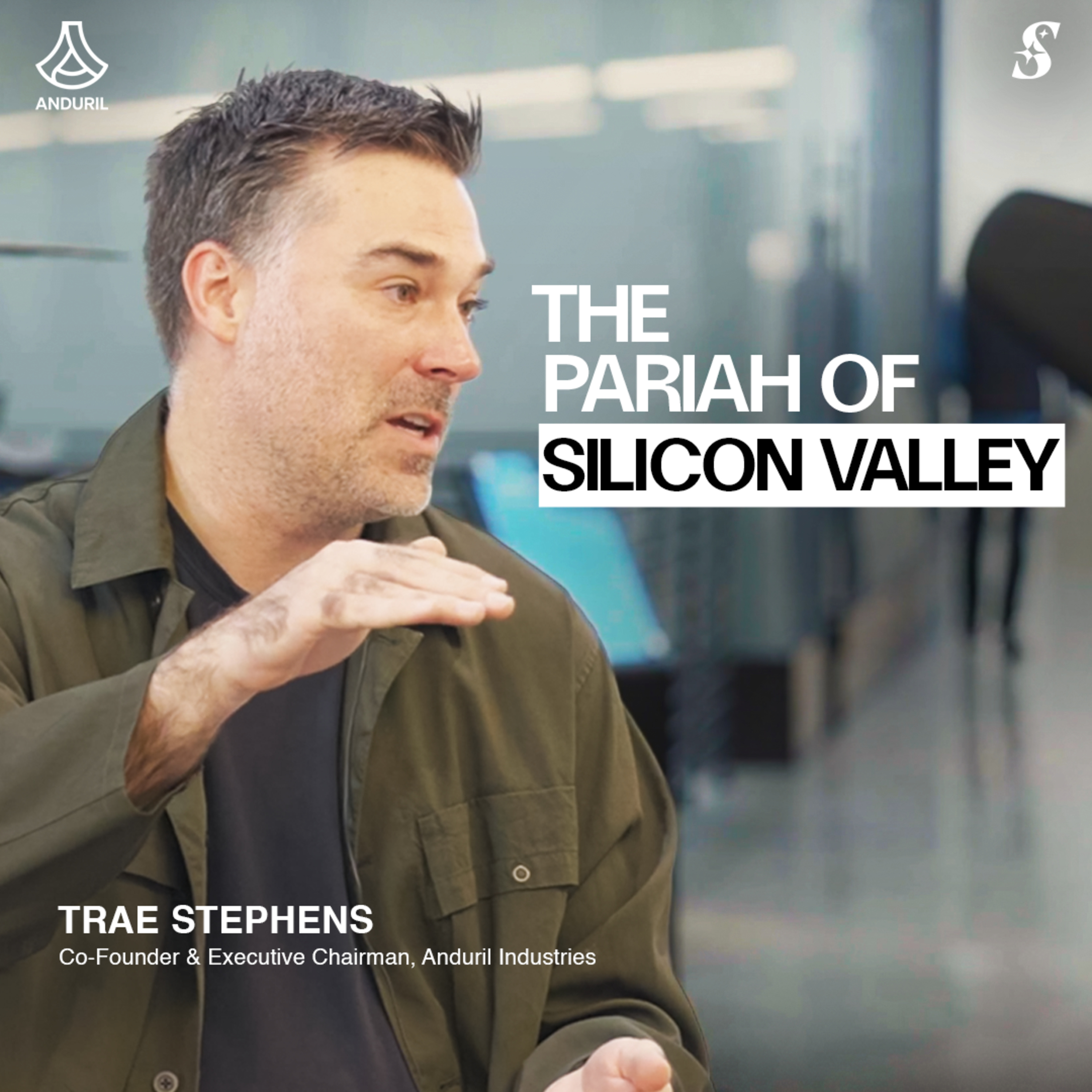
Defense tech startup Anduril is disrupting incumbents not with untested technology, but with a novel business model. It uses VC funds to build manufacturing capacity *before* winning large contracts and sources commercial parts to reduce cost and supply chain risk, effectively prioritizing execution over pure tech risk.

Anduril was founded on the thesis that great power conflict was inevitable. The founder argues you cannot wait for war to start before developing defense technology. By then, it's too late for deterrence, and you can only participate in fighting the war, not preventing it.

The DoD's global R&D share has plummeted from 36% to under 1%, so it can no longer dictate cutting-edge specs. Anduril funds its own R&D to solve a mission, then sells the finished capability, flipping the traditional government-funded, built-to-spec model on its head.
In a tech climate wary of defense work, Anduril was "very unapologetic that they were a defense company." This clear, strong positioning acted as a crucial filter, repelling skeptical investors but attracting partners like Andreessen Horowitz who were fully aligned with their mission from the start.

Despite building large physical systems like drones, Anduril's co-founder states their core competency and original vision is software. They are a "software-defined and hardware-enabled" company, which fundamentally differentiates their approach from traditional defense contractors who are the opposite.
The decisive advantage in future conflicts will not be just technological superiority, but the ability to mass-produce weapons efficiently. After decades of offshoring manufacturing, re-industrializing the US to produce hardware at scale is Anduril's core strategic focus, viewing the factory itself as the ultimate weapon.

Countering the common narrative, Anduril views AI in defense as the next step in Just War Theory. The goal is to enhance accuracy, reduce collateral damage, and take soldiers out of harm's way. This continues a historical military trend away from indiscriminate lethality towards surgical precision.
The ability to ethically object to military involvement is a luxury that only exists because another group is willing to create and wield the tools of violence necessary for protection. This philosophical stance is central to Anduril's mission to ensure that choice remains possible.
Anduril's co-founder argues America's atrophied manufacturing base is a critical national security vulnerability. The ultimate strategic advantage isn't a single advanced weapon, but the ability to mass-produce "tens of thousands of things" efficiently. Re-industrializing is therefore a core pillar of modern defense strategy.