Get your free personalized podcast brief
We scan new podcasts and send you the top 5 insights daily.
To manage a massive global restructuring, CEO Roger Lynch instructed his teams to 'assume we got it wrong.' This counterintuitive approach encouraged immediate feedback and adjustments, preventing teams from rigidly sticking to a flawed plan and accelerating the path to an optimal structure.

Related Insights
Instead of lengthy post-mortems, Khosrowshahi advocates for a simpler process: quickly understand what went wrong, learn the lesson, and immediately move on to building the next thing. He believes over-examination can stifle momentum and create a culture of fear.
CEO Dylan Field combats organizational slowness by interrogating project timelines. He seeks to understand the underlying assumptions and separate actual work from "well-intentionally added" padding. This forces teams to reason from first principles and justify the true time required, preventing unnecessary delays.

To combat methodical slowness at Twitter, Costolo's first move as CEO was to end consensus-based decision-making. He pushed ownership down the org chart to individual leaders, holding them accountable and dramatically increasing the cadence of execution.

During a major crisis, a leader cannot rely on team consensus because everyone is still aligned with the old, now-invalid strategy. The CEO must dictate the new direction and be willing to be inconsistent to reset the organization quickly.

Contrary to the popular bottoms-up startup ethos, a top-down approach is crucial for speed in a large organization. It prevents fragmentation that arises from hundreds of teams pursuing separate initiatives, aligning everyone towards unified missions for faster, more coherent progress.

Taking a strong stance on a strategic question, even if it's not perfectly correct, is a powerful way to accelerate progress. It provides clear direction, allowing a team to skip endless deliberation and move decisively, avoiding the paralysis that comes from trying to keep all options open.

To ensure a culture of honest feedback, a CEO should pitch a convincingly presented but terrible idea. Firing team members who agree with it serves as a "simple test" to eliminate sycophants and identify those who will challenge leadership, which is critical for innovation and avoiding groupthink.

Frequent organizational change, such as reorgs, serves as a natural filter. People who are uncomfortable with flux will self-select out, leaving a team that is more adaptable and aligned with a fast-moving company's needs.

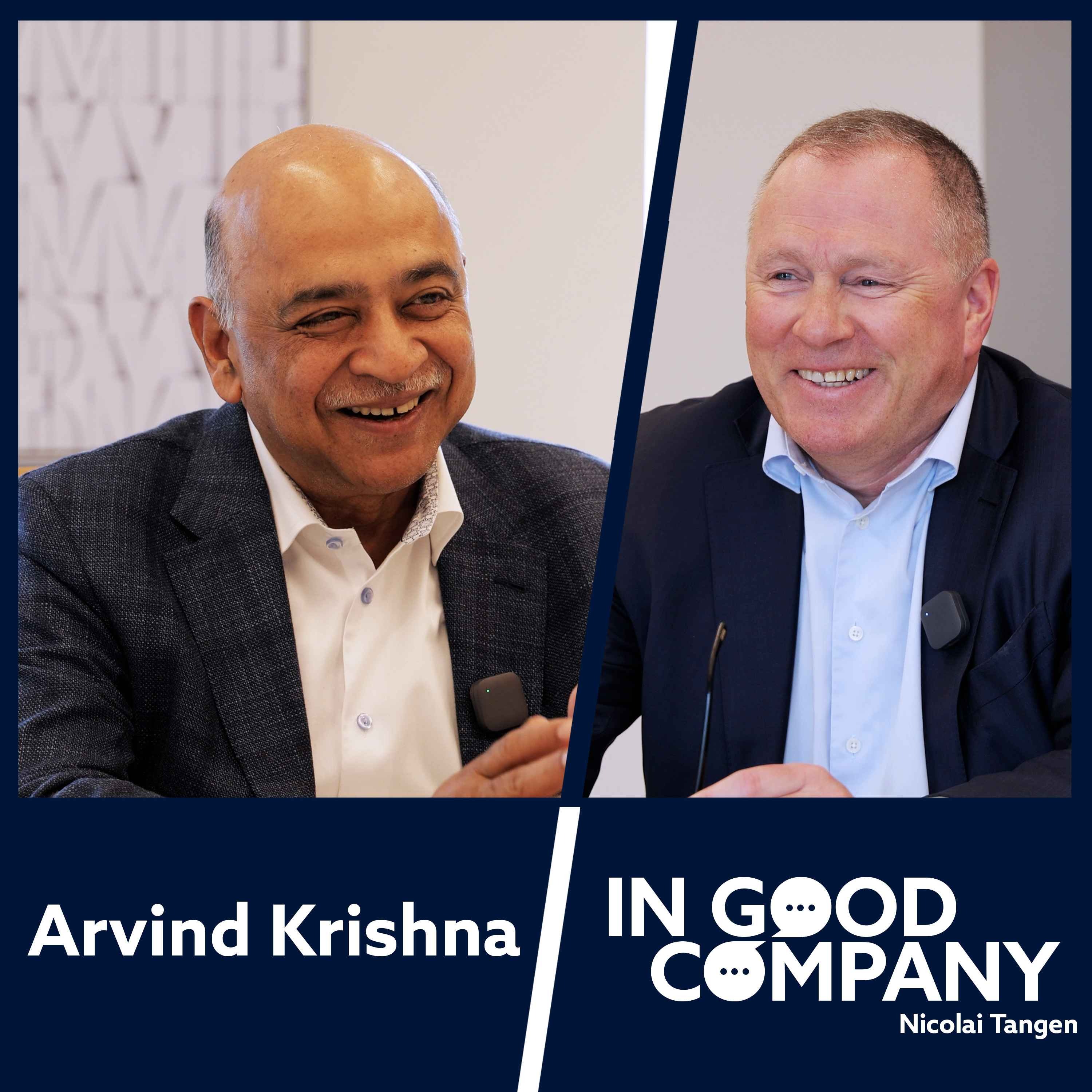
To combat a risk-averse culture bred by years of decline, Arvind Krishna encourages teams to present plans with only 50% confidence. This gives them permission to be ambitious. He then builds management buffers to accommodate the inherent uncertainty, unlocking higher productivity.
Instead of attempting a company-wide transformation, leaders should focus on a small corner of the organization first. Perfecting one team's process and culture creates a successful template and builds momentum, making it easier to then replicate that change "room to room" across the company.