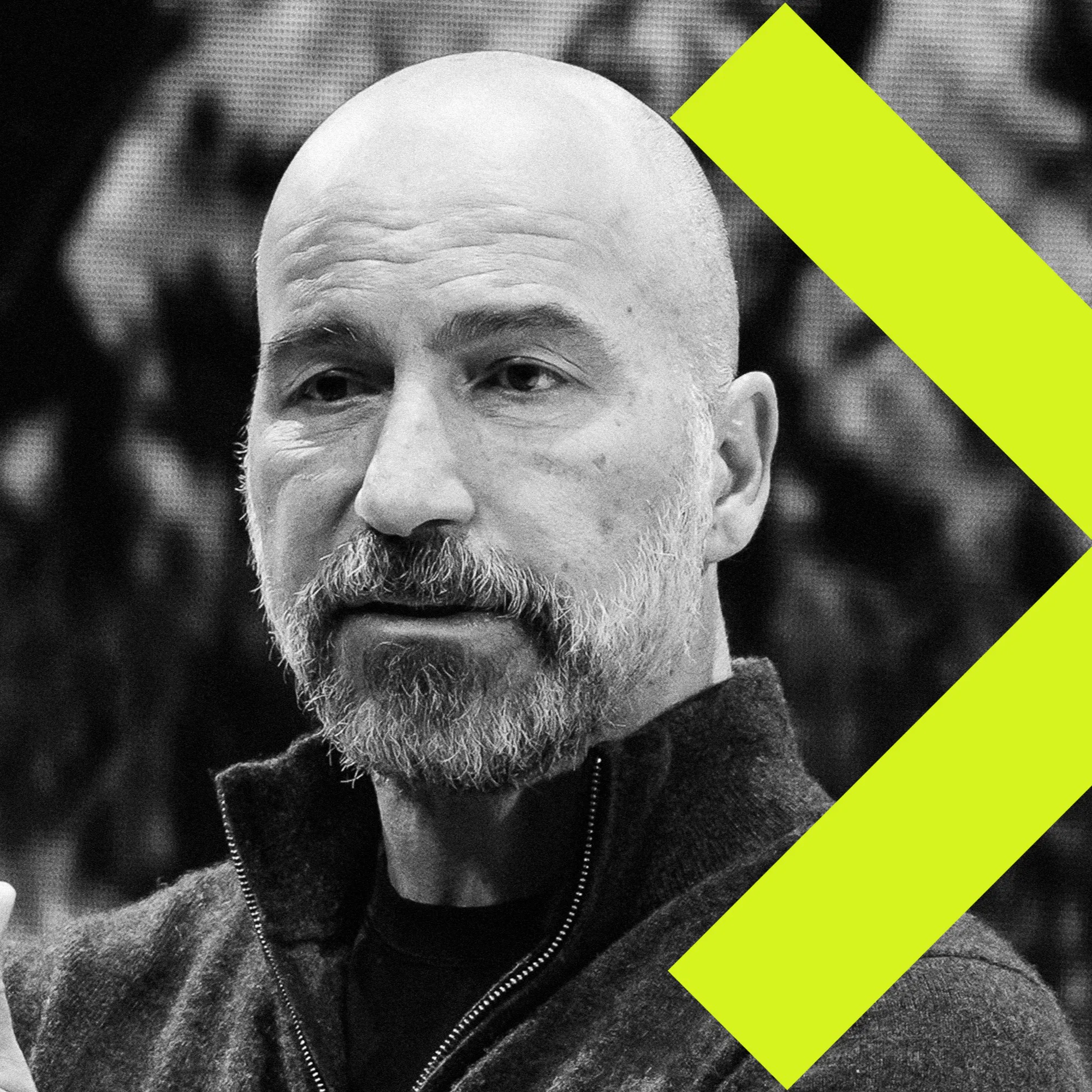
Dara Khosrowshahi challenges the common pattern of large companies becoming more conservative. He argues that as a company's resilience increases with scale and cash flow, its capacity to take bigger, innovation-driving risks grows, making larger mistakes more survivable.
Instead of lengthy post-mortems, Khosrowshahi advocates for a simpler process: quickly understand what went wrong, learn the lesson, and immediately move on to building the next thing. He believes over-examination can stifle momentum and create a culture of fear.
Despite hype around AI agents booking services, integrations with ChatGPT, Alexa, and Google Gemini haven't driven meaningful volume for Uber. Khosrowshahi notes the core problem is that using these agents is currently slower and clunkier than simply using the highly optimized Uber app directly.
Uber found that rule-based AI agents failed because their internal policy documentation was incomplete and designed for human interpretation. Their new approach scraps the rules and instead provides the AI with desired outcomes (e.g., "keep this customer happy"), letting the model determine the best action.
To secure a future for human drivers, Uber is expanding into use cases too complex for current automation. They turned the user "hack" of asking couriers to shop for them into an official "personal shopper" service, creating a pathway for drivers to migrate to more intricate work.
To enter markets like hotel booking, Uber first needed to break its on-demand-only perception. They launched Uber Reserve, a scheduled ride service, to train users to think of Uber for future planning. This behavioral shift was a crucial prerequisite for offering longer-horizon travel products.
The lines between roles at Uber are blurring. Instead of prioritizing simple bug fixes with engineers, some product managers now use AI agents to write the code themselves. An engineer still reviews it, but this significantly speeds up minor development tasks and changes team dynamics.
Uber's first attempt at integrating taxis failed because it used the same 1-to-1 matching as rideshare. Years later, they tried again with a "blast dispatch" model (sending a request to multiple taxis at once) that better suited the taxi workflow, turning it into a fast-growing product.
To realize its "everything app" vision, Uber needed to manage inherent P&L conflicts between its businesses (e.g., a delivery ad taking a pixel from the ride app). Appointing a COO to oversee the entire platform ensures trade-offs are made holistically for the company's benefit.
Khosrowshahi draws a parallel to travel metasearch, where value ultimately accrued to consolidated suppliers (Expedia), not aggregators. He believes because the mobility and delivery markets are dominated by a few large players, Uber will retain power even if AI front-ends become popular.
After blowing through their entire annual AI token budget in just four months, Uber is now making a direct trade-off. Overages in AI and infrastructure spending are being paid for by hiring less aggressively, fundamentally changing how they manage their tech budget and priorities.
Uber is investing in multiple autonomous vehicle partners (Rivian, Lucid, Waymo) because it believes there won't be one "foundation model to rule them all" for physical-world AI. This diversified, supply-led approach aims to onboard every safe robot driver, mirroring their strategy with human drivers.