Get your free personalized podcast brief
We scan new podcasts and send you the top 5 insights daily.
Marinna Madrid, trained in both fields, observes that physics is a mature, slow-moving discipline with discoveries every 30-40 years. In contrast, biology is rife with unknowns, leading to major published discoveries almost daily. This rapid pace and vast mystery create a more fertile ground for new companies and applications.

Related Insights
The combination of AI reasoning and robotic labs could create a new model for biotech entrepreneurship. It enables individual scientists with strong ideas to test hypotheses and generate data without raising millions for a physical lab and staff, much like cloud computing lowered the barrier for software startups.
The "low-hanging fruit" argument for diminishing returns in science is flawed because it assumes a static problem space. Progress is often explosive when entirely new fields, like computer science, emerge from other domains, opening up a fresh landscape of easy problems where rapid breakthroughs are once again possible.

Unlike large pharma where novel projects compete with established, safer alternatives, biotech startups derive immense power from their singular focus. The "live or die" mentality on a single hard problem forces teams to innovate and persevere through setbacks, which is essential for pushing true scientific boundaries.

Major advancements in biotech instrumentation are not just software or AI achievements. They are the result of a deeply multidisciplinary effort over many years, requiring innovations and integration across optics, fluidics, chemistry, hardware, and biology to create powerful new tools.

Molecular biology offers a unique form of creative freedom. Unlike fields with immediate feedback where work can be instantly critiqued, the long timelines for experimental results (e.g., weeks to get a dataset) create a protected space for exploration. This "unjudged" period allows scientists to pursue novel ideas without premature criticism.

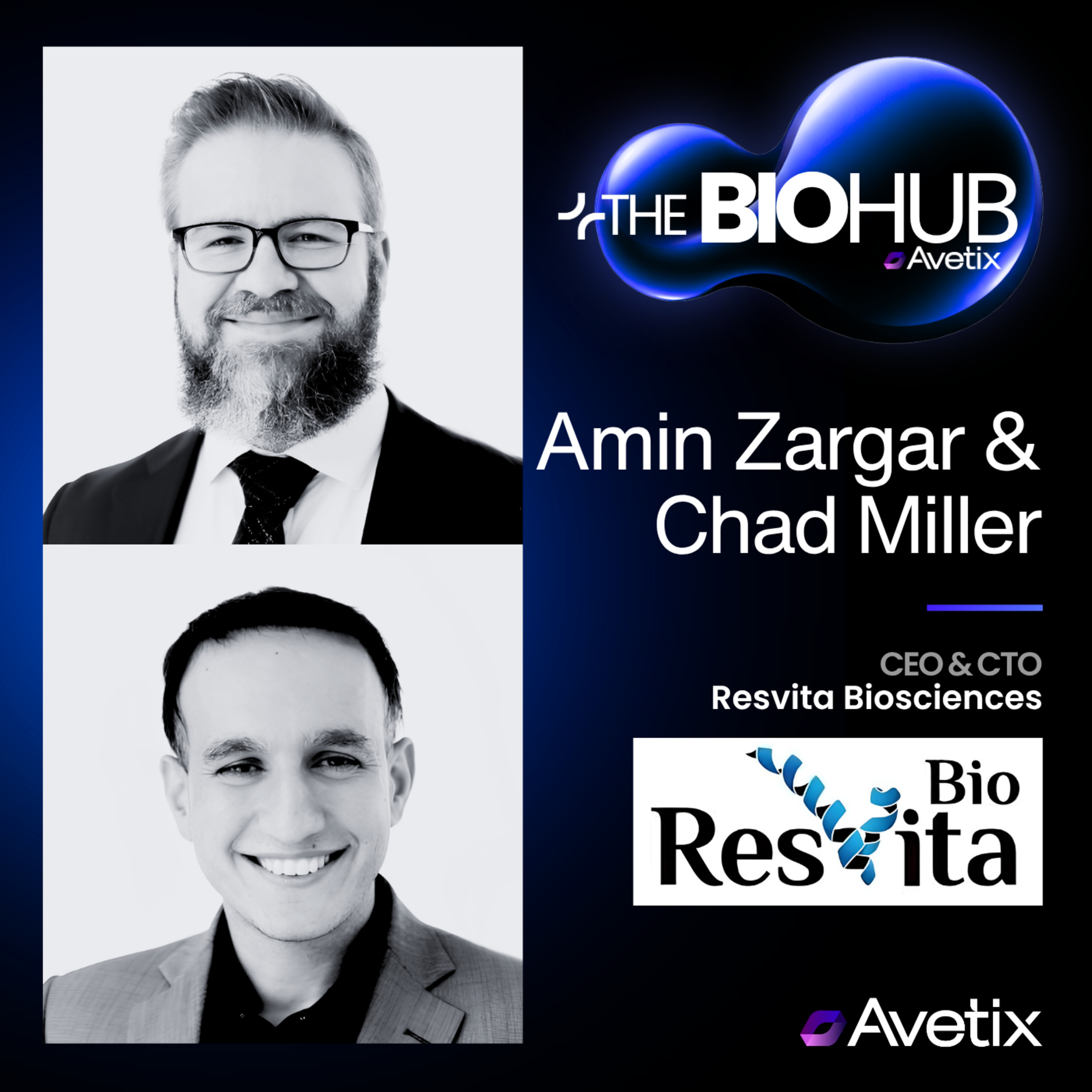
Resvita Bio's CEO notes that in academia, scientists conduct numerous experiments to prove a single point for publication. In a startup, the focus shifts to building momentum. Once a concept is proven, the team must immediately move to the next challenge rather than over-verifying with redundant experiments.
Many scientists are driven by pure curiosity. However, the mindset that pushes an academic toward entrepreneurship is a relentless focus on reaching a definitive conclusion—a 'yes or no' answer. This goal-oriented drive to translate a concept into a real-world application is a key founder trait in biotech.

Colossal CEO Ben Lamb, a software entrepreneur with no biology background, approached top geneticist George Church seeking world-changing problems. His ability to build teams and secure capital, unconstrained by scientific dogma, was key to launching the ambitious de-extinction venture.

All therapeutic discoveries fall into two types. The first is a biological insight, where the challenge is to find a way to drug it. The second is a technical advancement, like a new platform technology, where the challenge is to find the right clinical application for it. This clarifies a startup's core problem.

When an industry is new, there are no established paths. Leaders must create novel strategies for partnerships, IPOs, and international collaborations from scratch, turning a lack of precedent into an advantage for innovation.