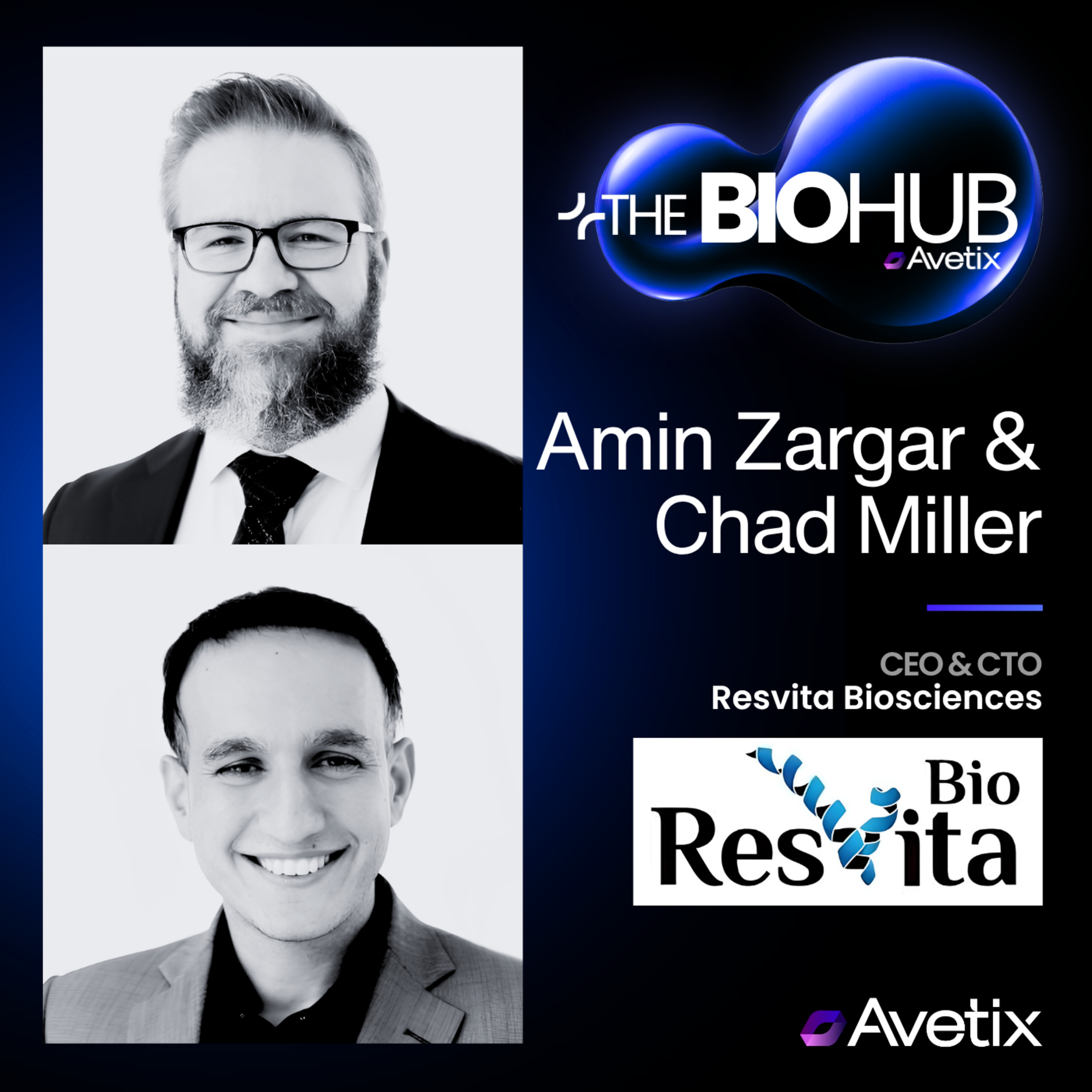
Resvita Bio's CEO notes that in academia, scientists conduct numerous experiments to prove a single point for publication. In a startup, the focus shifts to building momentum. Once a concept is proven, the team must immediately move to the next challenge rather than over-verifying with redundant experiments.
Resvita Bio's team uses a sports analogy for hiring. While an academic lab can thrive with multiple individualistic 'Michael Jordan' superstars, a startup is a team sport. It needs collaborative 'LeBron James' types who elevate the entire team and can play any position to tackle complex, multidisciplinary challenges.
CEO Amin Zargar's initial proof-of-concept for Resvita's therapy worked due to a lucky moisturizer choice. A subsequent, different formulation failed completely. This highlights how early scientific breakthroughs can depend on serendipity and small, uncontrolled variables, not just rigorous planning.
Scientific founders must shift from detailing R&D progress to telling a compelling story. Investors are less moved by specific experimental results and more by the vision of a platform technology at the cusp of major trends (like SynBio and AI) that can generate a continuous pipeline of future therapies.
Resvita Bio's approach isn't about creating proteins from scratch. Instead, they use machine learning to 'read the book of life comprehensively,' analyzing how different organisms have evolved to solve the same biological problem. This allows them to synthesize nature's best solutions into an ideal therapeutic protein.
Resvita's CTO joined because the company first solved the difficult challenge of delivering proteins to the skin. This created a 'plug-and-play' platform that he calls a 'protein designer's dream.' By abstracting away the delivery problem, the team can focus solely on designing the optimal therapeutic protein for each disease.