Get your free personalized podcast brief
We scan new podcasts and send you the top 5 insights daily.
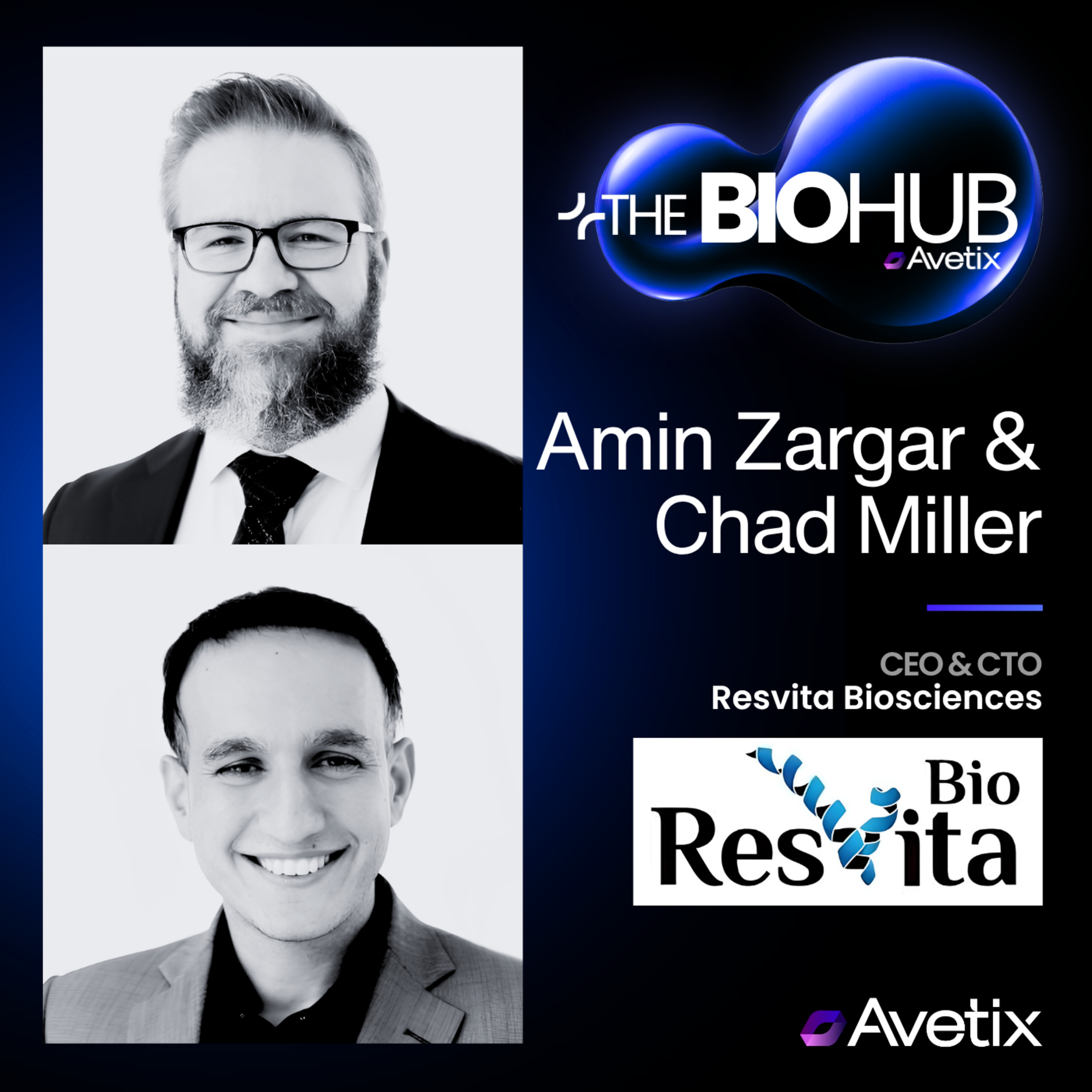
Resvita Bio's CEO notes that in academia, scientists conduct numerous experiments to prove a single point for publication. In a startup, the focus shifts to building momentum. Once a concept is proven, the team must immediately move to the next challenge rather than over-verifying with redundant experiments.
Related Insights
Scientist-founders often believe one more experiment will prove their hypothesis. To succeed as a CEO, they must shift from scientific curiosity to ruthless capital discipline, killing unviable programs and building a team that challenges ideas, not just executes them.

As articulated by Eric Ries in 'The Lean Startup,' raw speed of shipping is meaningless if you're building in the wrong direction. The true measure of progress is how quickly a team can validate assumptions and learn what customers want, which prevents costly rework.

Sana CEO Steve Harr actively questions whether the company's groundbreaking science can translate into a scalable, commercially viable therapy. This internal pressure focuses the team on solving not just the scientific challenges ("does it work?"), but also manufacturing ("can you scale it?") and the commercial model required for a true cure.
The transition from academia to entrepreneurship is most successful when the focus shifts from pure science or technology to solving a tangible, pre-existing clinical problem. This ensures market interest, clinical adoption, and ultimately, patient impact from the outset.

Moving technology from academia to a startup requires a crucial mindset shift. The academic goal of publishing data must be replaced by the industry requirement of extensive validation. For Vivtex, this single piece of advice added years of work but was essential for creating a commercially viable platform.

While startups must be nimble, analytical processes from large corporations are invaluable. The key is applying the same rigorous thinking to decision-making but compressing the timeline. Having prior experience with similar situations allows leaders to make informed choices more quickly.
Many scientists are driven by pure curiosity. However, the mindset that pushes an academic toward entrepreneurship is a relentless focus on reaching a definitive conclusion—a 'yes or no' answer. This goal-oriented drive to translate a concept into a real-world application is a key founder trait in biotech.

Moving from a science-focused research phase to building physical technology demonstrators is critical. The sooner a deep tech company does this, the faster it uncovers new real-world challenges, creates tangible proof for investors and customers, and fosters a culture of building, not just researching.

CEO Amin Zargar's initial proof-of-concept for Resvita's therapy worked due to a lucky moisturizer choice. A subsequent, different formulation failed completely. This highlights how early scientific breakthroughs can depend on serendipity and small, uncontrolled variables, not just rigorous planning.
The most successful founders rarely get the solution right on their first attempt. Their strength lies in persistence combined with adaptability. They treat their initial ideas as hypotheses, take in new data, and are willing to change their approach repeatedly to find what works.
