Get your free personalized podcast brief
We scan new podcasts and send you the top 5 insights daily.
Major advancements in biotech instrumentation are not just software or AI achievements. They are the result of a deeply multidisciplinary effort over many years, requiring innovations and integration across optics, fluidics, chemistry, hardware, and biology to create powerful new tools.

Related Insights
While tools like AI and robotics are transformative, a deep understanding of core principles like microbial physiology, mass transfer, and reaction kinetics remains essential. Technology augments, but does not replace, the critical thinking required to design robust experiments and interpret data.

Tackling monumental challenges, like creating a biologic effective against 800+ HIV variants, is not a single-shot success. It requires multiple iterations on an advanced engineering platform. Each cycle of design, measurement, and learning progressively refines the molecule, making previously impossible therapeutic goals achievable.
A "software-only singularity," where AI recursively improves itself, is unlikely. Progress is fundamentally tied to large-scale, costly physical experiments (i.e., compute). The massive spending on experimental compute over pure researcher salaries indicates that physical experimentation, not just algorithms, remains the primary driver of breakthroughs.

Today's AI-first drug companies must bridge the gap between separate AI and biology experts. The future competitive advantage will belong to a new generation of scientists who are trained from the start to be fluent in both disciplines, eliminating the "accent" of learning one as a second language.

The most significant breakthroughs will no longer come from traditional wet lab experiments alone. Instead, progress will be driven by the smarter application of AI and simulations, with future bioreactors being as much digital as they are physical.
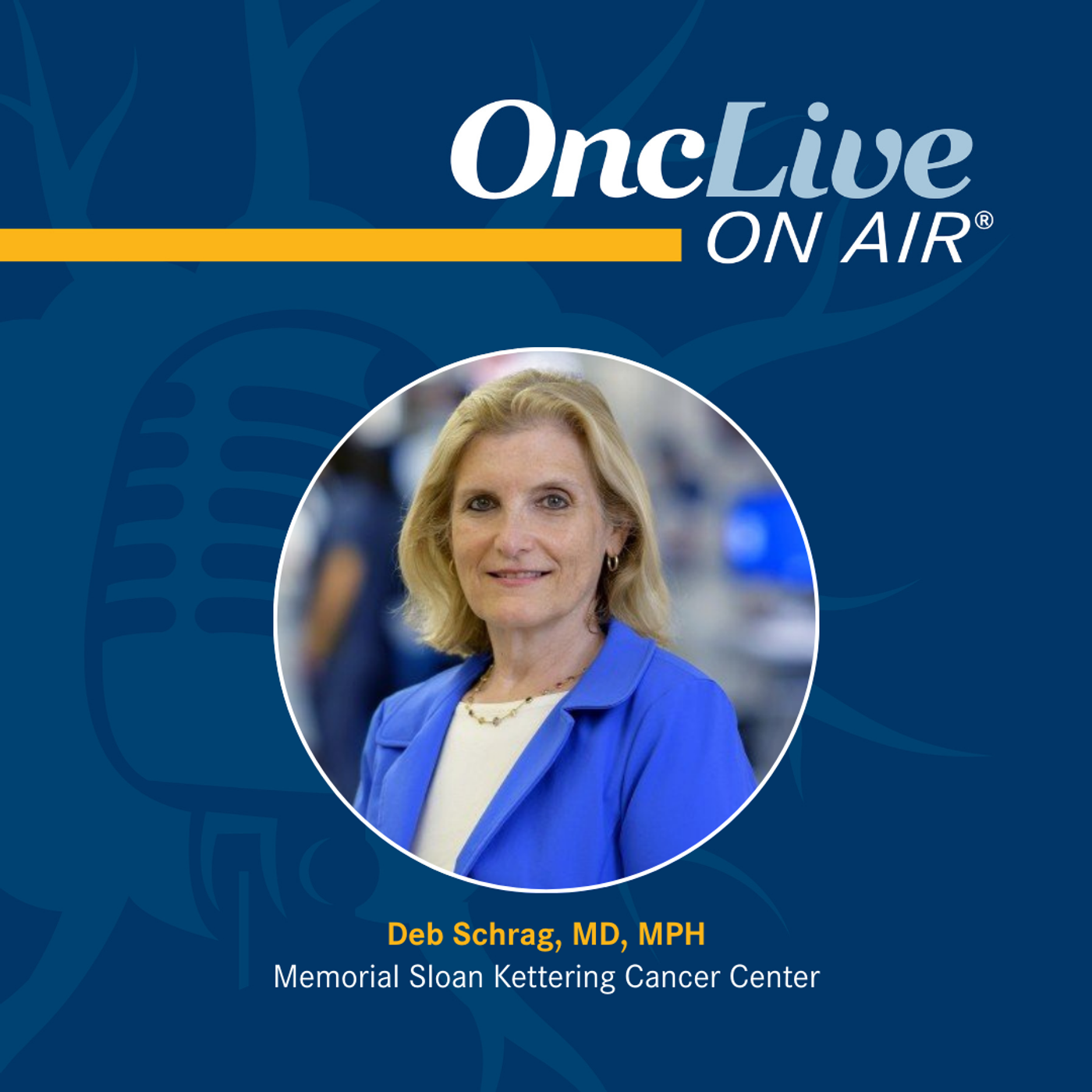
Dr. Deb Schrag predicts that future medical innovations, especially in AI, will depend on collaborations beyond traditional medical specialties. Oncologists must now partner with engineers, computational scientists, and physicists to translate complex technologies into clinical practice.
The primary value of AI in bioprocessing is not just automating tasks, but analyzing process data to predict outcomes. This requires a fundamental shift in capital equipment design, focusing on integrating more sensors and methods to collect far more granular data than is standard today.
The idea for a living computer came not from biologists, but from engineers with backgrounds in signal processing. This highlights how breakthrough innovations often occur at the intersection of disciplines, where outsiders can reframe a problem from a fresh perspective.

Building biologically relevant AI is not a one-off process. It demands a continuous "lab in the loop" system where wet lab experiments generate proprietary data to train models, whose outputs are then physically tested in the lab. This iterative feedback cycle constantly refines the model's predictive accuracy.

The founder of AI and robotics firm Medra argues that scientific progress is not limited by a lack of ideas or AI-generated hypotheses. Instead, the critical constraint is the physical capacity to test these ideas and generate high-quality data to train better AI models.