Get your free personalized podcast brief
We scan new podcasts and send you the top 5 insights daily.
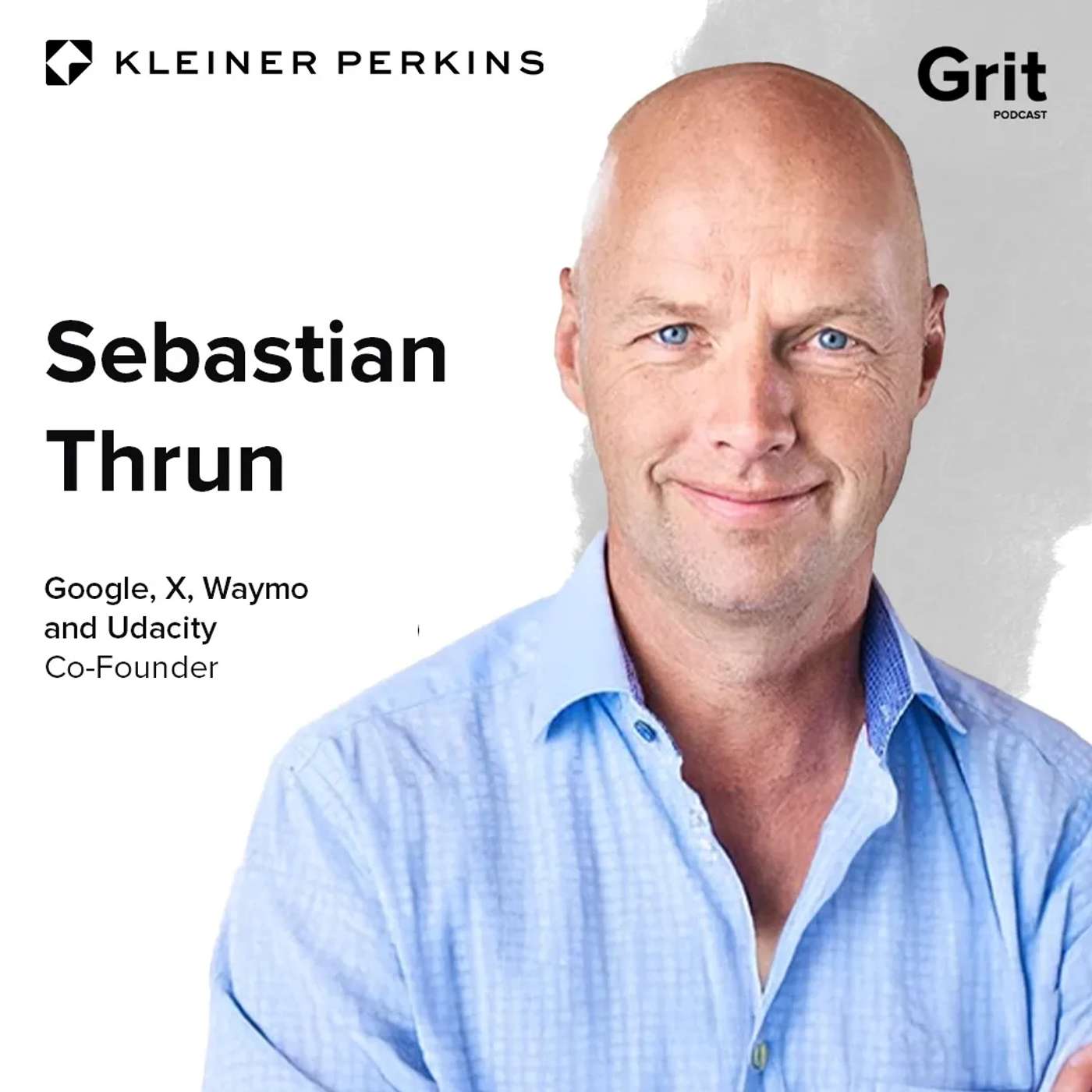
Google's Larry Page taught Sebastian Thrun that radical innovation is often easier than incremental improvement. A moonshot project attracts world-class talent and capital, while an incremental business like a pizza restaurant requires risking personal savings against fierce competition for little recognition.
Related Insights
To de-risk innovation, teams must avoid the trap of building easy foundational parts (the "pedestal") first. Drawing on Alphabet X's model, they should instead tackle the hardest, most uncertain challenge (the "monkey"). If the core problem is unsolvable, the pedestal is worthless.
Sebastian Thrun, a top expert, initially dismissed city-based self-driving cars as impossible. This taught him that experts are often blind to disruptive change, as their knowledge is rooted in past paradigms, making them ill-equipped to envision a radically different future.
The default assumption for any 'moonshot' idea is that it is likely wrong. The team's immediate goal is to find the fatal flaw as fast as possible. This counterintuitive approach avoids emotional attachment and speeds up the overall innovation cycle by prioritizing learning over being right.

Startups often fail by making a slightly better version of an incumbent's product. This is a losing strategy because the incumbent can easily adapt. The key is to build something so fundamentally different in structure that competitors have a very hard time copying it, ensuring a durable advantage.
![Palmer Luckey - Inventing the Future of Defense - [Invest Like the Best, CLASSICS] thumbnail](https://megaphone.imgix.net/podcasts/f7c9aa8e-cb8d-11f0-828e-0b281809c10a/image/cc07f91ec47f95abbde771a4956b37b7.jpg?ixlib=rails-4.3.1&max-w=3000&max-h=3000&fit=crop&auto=format,compress)
While adjacent, incremental innovation feels safer and is easier to get approved, Nubar Afeyan warns that everyone else is doing the same thing. This approach inevitably leads to commoditization and erodes sustainable advantage. Leaping to new possibilities is the only way to truly own a new space.
For ambitious 'moonshot' projects, the vast majority of time and effort (90%) is spent on learning, exploration, and discovering the right thing to build. The actual construction is a small fraction (10%) of the total work. This reframes failure as a critical and expected part of the learning process.
When building its self-driving car team, Google intentionally hired software engineers over automotive experts. They found industry veterans were so ingrained in the existing paradigm that they couldn't adapt to a software-first approach and ended up firing them. The project's success came from fresh minds.
A moonshot isn't just a big goal. It requires three parts: a major global problem, a sci-fi sounding solution that would solve it, and a specific breakthrough technology that makes the solution seem just barely possible. This framework creates a testable hypothesis.
Sebastian Thrun advises innovators to eliminate guilt and fear, estimating 80% of his work is correcting mistakes. Feeling guilty about errors stifles risk-taking and leads to safe, incremental work. Instead, he treats mistakes purely as learning opportunities to be applied in the future.
An entrepreneur's success rate dramatically shifted from 0 for 12 to 5 for 5 not because his execution improved, but because his project selection did. He stopped chasing high-risk, "one in a million" moonshots (like building the next social network) and focused on businesses with clearer paths to revenue (e-commerce, services).
