Get your free personalized podcast brief
We scan new podcasts and send you the top 5 insights daily.
Named after Robert McNamara's flawed approach to the Vietnam War, this fallacy describes the trap of focusing on easily measurable data (like enemy body counts) while ignoring crucial, unquantifiable factors (like morale). We intend to measure what's important, but end up valuing what's measured.

Related Insights
Current military assessments focus on inputs like '6,000 targets struck,' creating a false sense of progress. This echoes the Vietnam War's body count metric, which measures activity but fails to assess actual strategic effects like achieving free navigation or eroding the enemy's power.

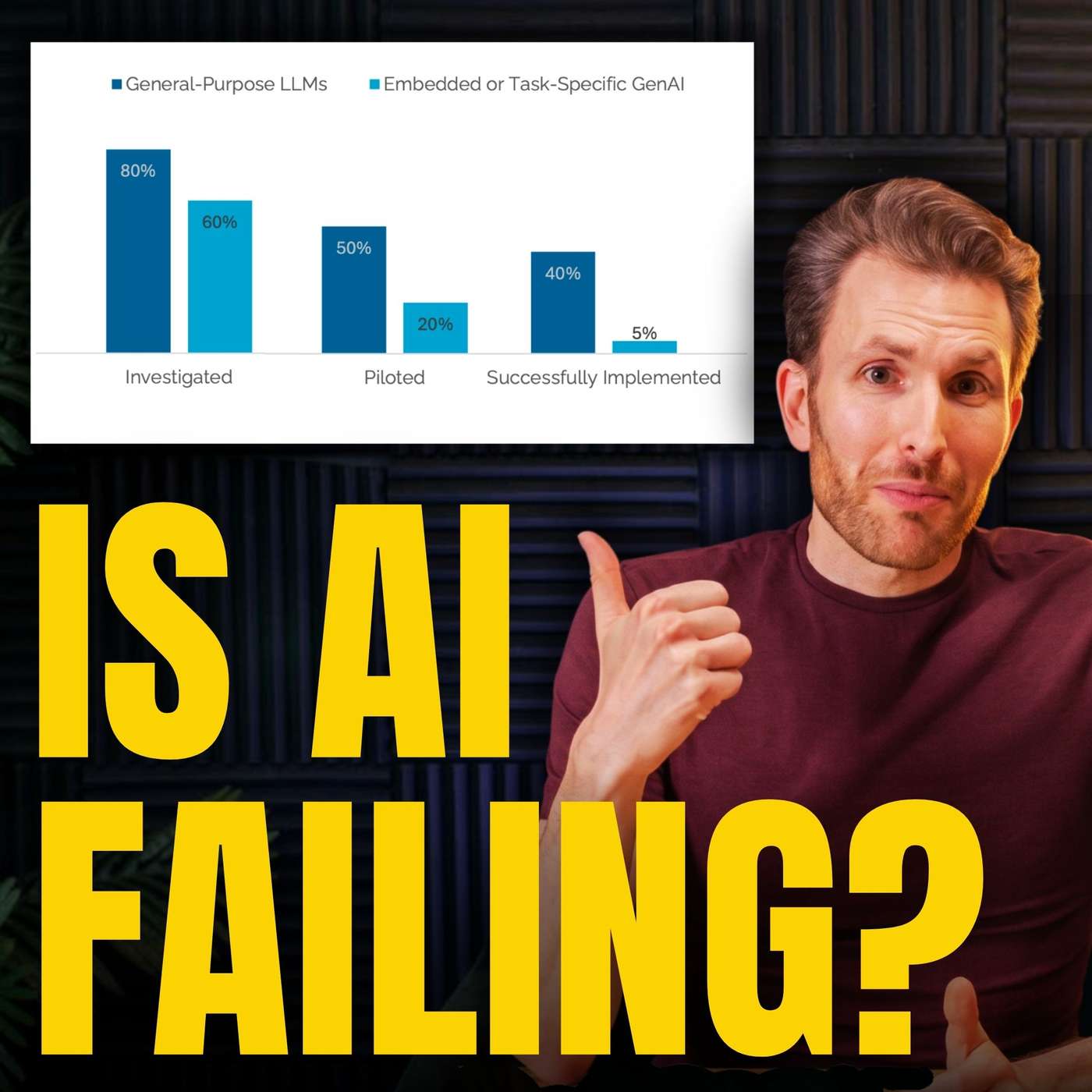
An AI pilot study defined success as "marked and sustained" profit impact within six months. This impossibly high bar automatically classified projects that broke even, were on track for future profit, or provided non-financial benefits as "failures," thus obscuring the real, incremental value of new technology deployments.
True effectiveness comes from focusing on outcomes—real-world results. Many people get trapped measuring inputs (e.g., hours worked) or outputs (e.g., emails sent), which creates a feeling of productivity without guaranteeing actual progress toward goals.

Leaders focus on increasing reports because headcount is an objective metric for promotion, unlike subjective assessments of business impact. This creates an incentive for managers to accumulate people, even if it's not the most impactful business decision.

Setting rigid targets incentivizes employees to present favorable numbers, even subconsciously. This "performance theater" discourages them from investigating negative results, which are often the source of valuable learning. The muscle for detective work atrophies, and real problems remain hidden beneath good-looking metrics.

"Bike shedding" describes the tendency for teams to spend disproportionate time on simple, low-stakes agenda items (like a bike shed's color) because they are less cognitively taxing than complex, high-stakes topics (like a nuclear power plant). Acknowledge this bias to keep discussions focused on what truly matters.

We optimize for visible metrics like money but ignore hidden ones like stress or time with loved ones. These metrics are unmeasurable until they're gone—a mental breakdown occurs or time with parents runs out. Then, they become the most important metric of all.

We tend to stop analyzing data once we find a conclusion that feels satisfying. This cognitive shortcut, termed "explanatory satisfaction," is often triggered by confirmation bias or a desire for a simple narrative, preventing us from reaching more accurate, nuanced insights.

When complex situations are reduced to a single metric, strategy shifts from achieving the original goal to maximizing the metric itself. During the Vietnam War, using "body counts" as a proxy for success led to military decisions designed to increase casualties, not to win the war.

Focusing on metrics like click-through rates without deep qualitative understanding of customer motivations leads to scattered strategies. This busywork creates an illusion of progress while distracting from foundational issues. Start with the qualitative "why" before measuring the quantitative "what."
