Get your free personalized podcast brief
We scan new podcasts and send you the top 5 insights daily.
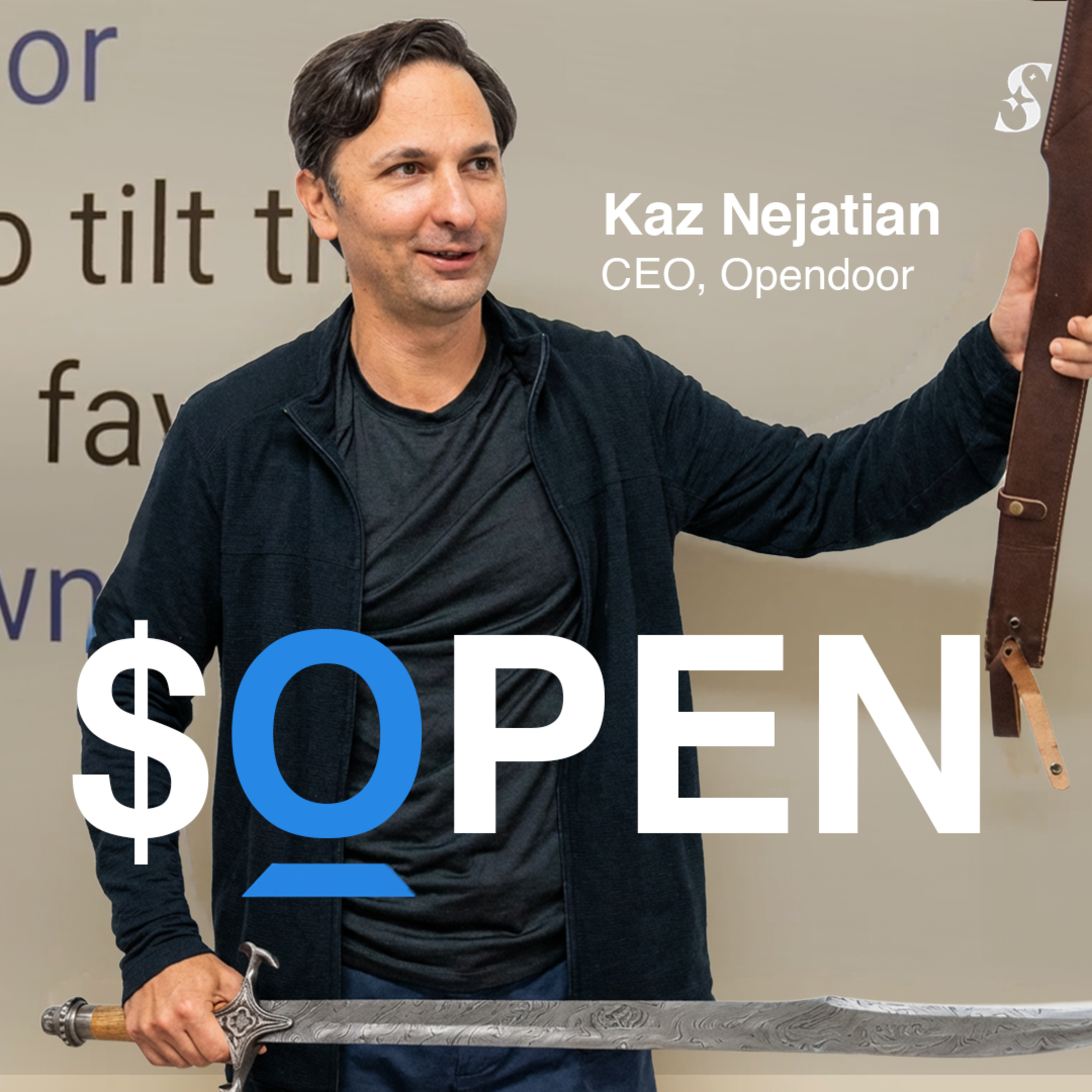
Unlike many public companies that use "retail investor" as a pejorative term, Opendoor proudly embraces its broad ownership by average Americans. This community, or "army," is seen as a core part of its mission and a source of strength, validating its goal of making homeownership more accessible.

Related Insights
Opendoor has no PR department; the official press email auto-replies with instructions to DM the CEO on X. This radical approach forces direct, unfiltered communication and ensures the CEO's authentic voice defines the company narrative, bypassing traditional media gatekeepers.
Vlad Tenev argues that unlike crypto, which built a powerful grassroots advocacy block through widespread retail ownership, the AI industry is vulnerable to negative sentiment and regulation because it lacks a "retail army" of investors. With no financial stake, the public is more susceptible to fear-based narratives.

Base intentionally constructs its cap table with a mix of investor types: growth funds for pattern matching, sector funds for domain expertise, strategic partners for market access (e.g., homebuilders), and endowments for long-term stability. This turns the cap table into an active asset beyond just capital.

To better engage its retail investor base, Opendoor's IR team rapidly shifted from traditional audio calls to video livestreams on platforms like Robinhood. This strategy meets modern investors where they are, rather than forcing them into staid, institutional Wall Street forums, demonstrating that even compliance functions can innovate.
Opendoor's recovery from a near-delisting is viewed internally not just as a financial rebound but as a "second or third birth." This narrative highlights the critical role an external community of believers plays in giving a struggling company a new chance, emphasizing that you must lean into that support rather than hide from it.
Frontline individuals like soldiers and retail investors have a clearer understanding of value because they see data in an unfiltered way. This contrasts with "expert" classes like analysts and journalists, who are insulated from reality and have consistently been wrong about substantive trends for the last 20 years.
Lacking early VC interest, Cereno went public and attracted a large retail investor base. A pivotal factor was an investor-created Discord server, which evolved into a 5,000-member hub for data, competitive intelligence, and community engagement, fostering long-term support.
![Sten R. Sörensen, Cereno Scientific 🇸🇪 | Drug Repurposing, Retail Investors | E52 [Sponsored] thumbnail](https://d3t3ozftmdmh3i.cloudfront.net/staging/podcast_uploaded_episode/38602414/38602414-1770668818564-0e3602876c1a2.jpg)
Institutional investors prefer quantifiable data with historical correlations. They struggle to build teams and models around qualitative, evolving 'conversational data' from social media. This structural inability to act on non-quantifiable signals creates a lasting advantage for observant retail investors.

Contrary to the traditional focus on institutional investors, allocating a significant portion of an IPO to retail investors creates a loyal shareholder base. This "retail following" can result in higher valuation multiples and sustained brand advocacy, turning customers into long-term owners and a strategic asset.

Archer's CEO highlights that a strong retail investor base, cultivated through communities like Reddit, creates high trading volume. This liquidity is a strategic asset, making it easier for the company to raise capital as institutional investors are more confident they can trade the stock in and out.