Get your free personalized podcast brief
We scan new podcasts and send you the top 5 insights daily.
A laser-focused company mission can backfire if it lacks explicit ethical and privacy constraints. Defining a company solely by reducing neighborhood crime leads naturally to aggressive surveillance tech like license plate readers, prompting public anger, community protests, and operational fallout when privacy boundaries are crossed.

Related Insights
The CEO of surveillance camera company Flock stated he was wrong to assume regulatory processes would provide civil liberty protections for his product. This is a stark admission of a company deferring ethical responsibility to government bodies that may be unprepared to provide necessary oversight.

As AI-powered sensors make the physical world "observable," the primary barrier to adoption is not technology, but public trust. Winning platforms must treat privacy and democratic values as core design requirements, not bolt-on features, to earn their "license to operate."

Ring's Super Bowl ad framed its AI surveillance as a benign tool to find lost dogs. Critics and the public immediately saw this as a way to normalize and develop powerful technology that could easily be used to track people, revealing how a harmless use-case can mask more controversial long-term capabilities.
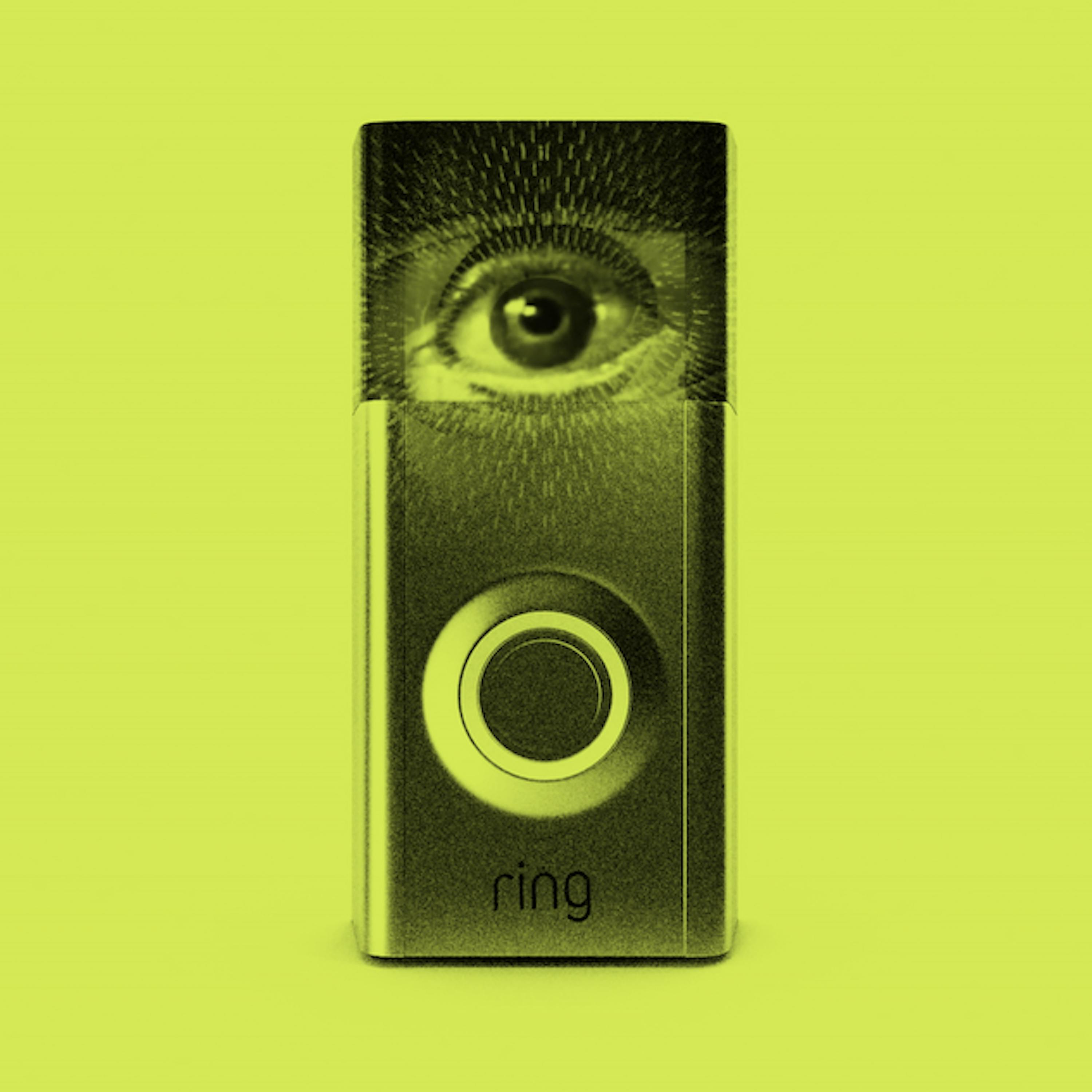
Automated private surveillance tools like Flock Safety cameras present significant trade-offs despite claims of crime reduction. Beyond reported cases of police officers abusing camera access to stalk personal contacts, continuous automated surveillance feeds encourage public reactivity, where observers mistake benign actions for criminal activity and trigger unnecessary confrontations that would not have existed otherwise.

AI's potential for rapid growth is creating a new moral calculus. Practices like tracking every employee keystroke for CRM automation, once controversial, are becoming standard. This trend suggests that as companies chase exponential gains, they will increasingly justify and normalize actions, from mass layoffs to invasive monitoring, that were previously considered unacceptable.

The debate over Flock's license plate readers highlights a societal contradiction. Citizens broadly oppose mass surveillance on privacy grounds but demand the use of these exact tools to solve crimes after they occur, creating a constant policy tension.

To counter surveillance concerns with features like finding lost dogs or tracking wildfires, Ring frames them as optional community initiatives. Users are explicitly asked to participate, allowing the company to build a "better social fabric" while respecting that individuals can, and should, maintain their privacy.

Ring founder Jamie Simenoff described his AI's goal as replicating a neighborhood with all-knowing private security. Instead of conveying safety, host Nilay Patel immediately challenged this vision as a "dystopian" nightmare, revealing a stark disconnect between a founder's intent and public perception of surveillance technologies.
Flock Safety learned that public distrust of law enforcement was being transferred directly to their brand. CEO Garrett Langley realized his initial "we just sell a tool" stance was untenable. In controversial sectors, a vendor must own the responsibility for customer misuse, as the customer's reputation becomes the vendor's liability.

Opposition to automated license plate reading systems like Flock is surging rapidly across the political spectrum, mirroring community pushback against physical data centers. Rather than ordinary traffic enforcement, citizens and local officials increasingly view these widespread, visible camera networks and their shared nationwide databases as concrete symbols of uncontrolled mass surveillance, software error risk, and privacy overreach.
