Get your free personalized podcast brief
We scan new podcasts and send you the top 5 insights daily.
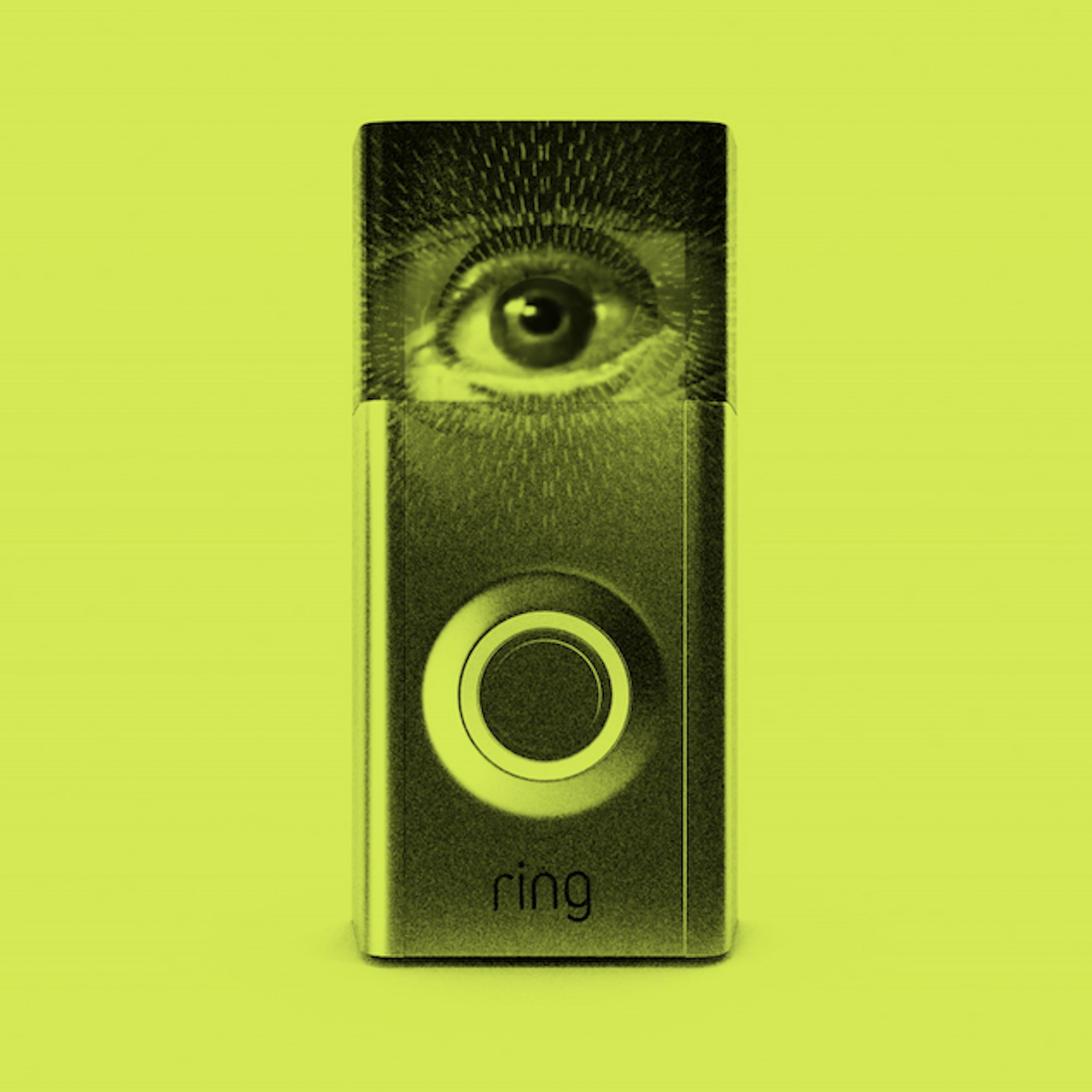
Ring founder Jamie Simenoff described his AI's goal as replicating a neighborhood with all-knowing private security. Instead of conveying safety, host Nilay Patel immediately challenged this vision as a "dystopian" nightmare, revealing a stark disconnect between a founder's intent and public perception of surveillance technologies.
Related Insights
Ring's founder deflects privacy concerns about his company's powerful surveillance network by repeatedly highlighting that each user has absolute control over their own video. This 'decentralized control' narrative frames the system as a collection of individual choices, sidestepping questions about the network's immense aggregate power.
As AI-powered sensors make the physical world "observable," the primary barrier to adoption is not technology, but public trust. Winning platforms must treat privacy and democratic values as core design requirements, not bolt-on features, to earn their "license to operate."

The most immediate danger of AI is its potential for governmental abuse. Concerns focus on embedding political ideology into models and porting social media's censorship apparatus to AI, enabling unprecedented surveillance and social control.

Public fear of AI often focuses on dystopian, "Terminator"-like scenarios. The more immediate and realistic threat is Orwellian: governments leveraging AI to surveil, censor, and embed subtle political biases into models to control public discourse and undermine freedom.

Ring's Super Bowl ad framed its AI surveillance as a benign tool to find lost dogs. Critics and the public immediately saw this as a way to normalize and develop powerful technology that could easily be used to track people, revealing how a harmless use-case can mask more controversial long-term capabilities.
Ring’s founder clarifies his vision for AI in safety is not for AI to autonomously identify threats but to act as a co-pilot for residents. It sifts through immense data from cameras to alert humans only to meaningful anomalies, enabling better community-led responses and decision-making.

The podcast highlights a core paradox: widespread fear of corporate surveillance systems like Ring coexists with public praise for citizens using identical technology (cell phones) to record law enforcement. This demonstrates that the perceived controller and intent, not the technology itself, dictate public acceptance of surveillance.
AI leaders often use dystopian language about job loss and world-ending scenarios (“summoning the demon”). While effective for fundraising from investors who are "long demon," this messaging is driving a public backlash by framing AI as an existential threat rather than an empowering tool for humanity.

The narrative around advanced AI is often simplified into a dramatic binary choice between utopia and dystopia. This framing, while compelling, is a rhetorical strategy to bypass complex discussions about regulation, societal integration, and the spectrum of potential outcomes between these extremes.

As powerful AI capabilities become widely available, they pose significant risks. This creates a difficult choice: risk societal instability or implement a degree of surveillance to monitor for misuse. The challenge is to build these systems with embedded civil liberties protections, avoiding a purely authoritarian model.
