Get your free personalized podcast brief
We scan new podcasts and send you the top 5 insights daily.
Automated private surveillance tools like Flock Safety cameras present significant trade-offs despite claims of crime reduction. Beyond reported cases of police officers abusing camera access to stalk personal contacts, continuous automated surveillance feeds encourage public reactivity, where observers mistake benign actions for criminal activity and trigger unnecessary confrontations that would not have existed otherwise.

Related Insights
The debate over surveillance tech is often split along socioeconomic lines. Affluent citizens with private security tend to prioritize privacy, while residents of less safe communities strongly support tools like Flock because they lack other means of protection. This reveals a "safety privilege gap" influencing views on public surveillance.

To combat concerns over surveillance abuse, Flock Safety has built and mandated a free tool for its law enforcement customers that automatically scans audit logs for abnormal search behavior. This self-policing approach is a novel attempt by a technology provider to enforce accountability and build public trust.

Ring’s founder clarifies his vision for AI in safety is not for AI to autonomously identify threats but to act as a co-pilot for residents. It sifts through immense data from cameras to alert humans only to meaningful anomalies, enabling better community-led responses and decision-making.

Schiff highlights how the intersection of automated public cameras, consumer microphones, and multimodal AI is eliminating residual privacy. Because models can be trained to aggregate health files, monitor broadcast consumption, and eavesdrop through connected devices, statutory protections must go beyond traditional public conduct rules to actively prevent technological models and private surveillance vendors from systematically destroying privacy.

AI-powered tools like Flock Safety are so effective that reducing crime is now a political choice for municipalities, not a technological one. Cities like Cambridge are actively choosing to disable tools like gunshot detectors, creating a pro- or anti-crime policy divide.

The debate over Flock's license plate readers highlights a societal contradiction. Citizens broadly oppose mass surveillance on privacy grounds but demand the use of these exact tools to solve crimes after they occur, creating a constant policy tension.

Ring founder Jamie Simenoff described his AI's goal as replicating a neighborhood with all-knowing private security. Instead of conveying safety, host Nilay Patel immediately challenged this vision as a "dystopian" nightmare, revealing a stark disconnect between a founder's intent and public perception of surveillance technologies.
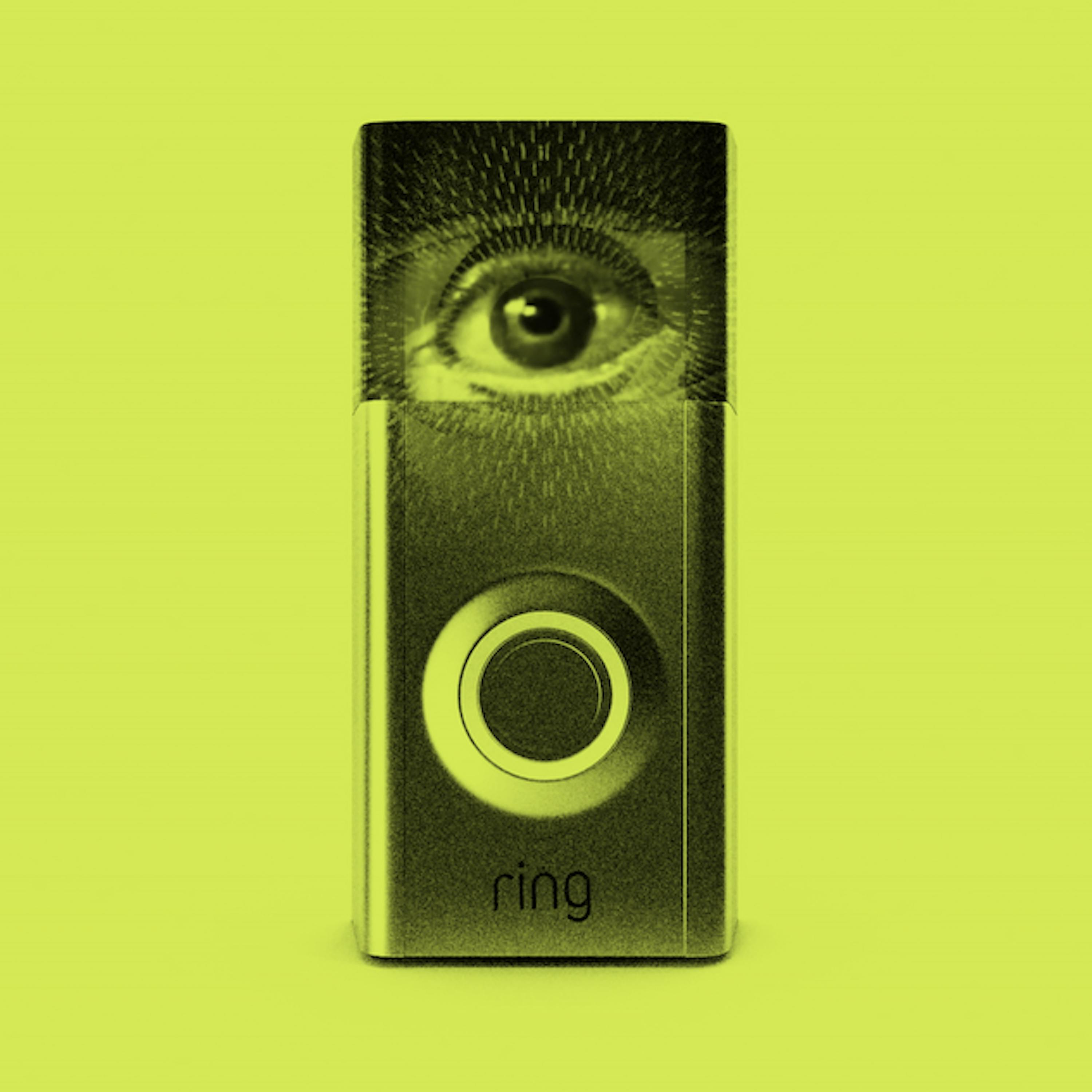
Cities are turning off effective AI surveillance systems like Flock, which tracks vehicles involved in crimes, due to political backlash over privacy. This decision directly hinders police ability to solve active crime sprees, as demonstrated when criminals were only caught after driving into a neighboring town where the system was active.

Flock's "drone as first responder" system serves primarily to de-escalate. By arriving on scene first and assessing a threat from a safe distance (e.g., identifying a reported gun as a toy lighter), the drone provides critical context that can prevent a tense, high-stakes confrontation when officers arrive.
Opposition to automated license plate reading systems like Flock is surging rapidly across the political spectrum, mirroring community pushback against physical data centers. Rather than ordinary traffic enforcement, citizens and local officials increasingly view these widespread, visible camera networks and their shared nationwide databases as concrete symbols of uncontrolled mass surveillance, software error risk, and privacy overreach.
