Get your free personalized podcast brief
We scan new podcasts and send you the top 5 insights daily.
Fayyad stresses that any future Palestinian leadership must build legitimacy from the ground up by delivering tangible improvements to people's daily lives. Rather than focusing on long-term political goals, the immediate, incremental task of providing basic services and welfare is the key to gaining public trust.

Related Insights
In geopolitics, clinging to a righteous cause you cannot win by force often means grinding your own people into poverty for decades. The logical, albeit difficult, response is to make concessions and focus on improving citizens' lives, rather than insisting on being 'right' while they suffer.

Fayyad argues that to achieve national consensus, Hamas must be brought into the Palestine Liberation Organization (PLO)—the umbrella body for all Palestinians—rather than just the Palestinian Authority (PA), a product of the Oslo Accords. This structural change is key to forming a legitimate, non-factional government.
Salam Fayyad contends the Palestinian Authority is not simply in need of technocratic reforms; its political structure is fundamentally flawed. Even if managed as efficiently as Finland, it would still lack the national consensus required to govern effectively because it doesn't represent all Palestinian factions.
For deep-seated issues like the Israeli-Palestinian conflict, pursuing a grand final solution is often counterproductive. A better approach is to "shrink the conflict" through practical, tangible steps like building transportation corridors, which can reduce friction and build momentum for an eventual resolution.

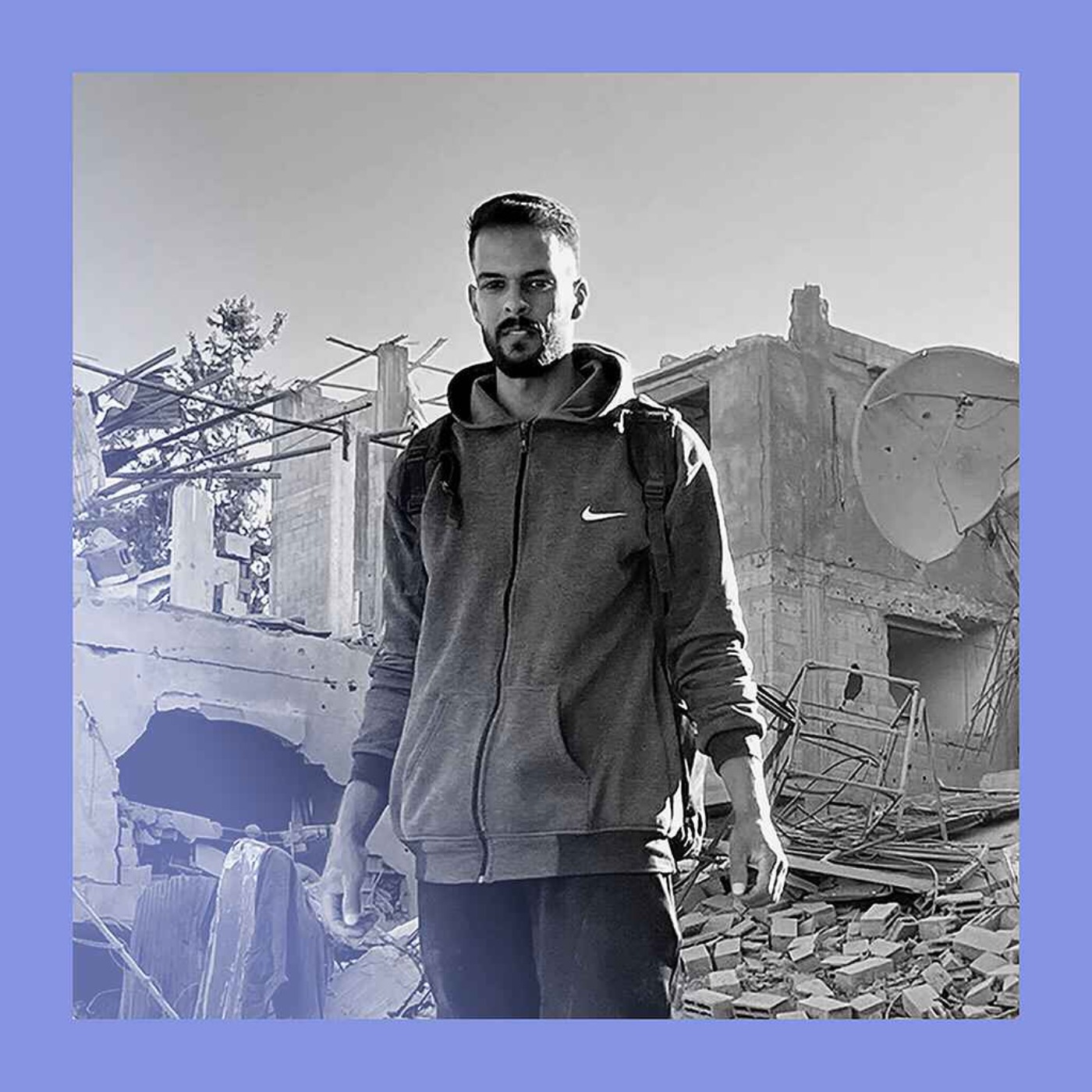
Effective reconstruction in Gaza must prioritize creating meaningful employment and educational opportunities for its young population. This approach addresses the profound loss of purpose and hope, which is a more critical need than simply rebuilding physical structures. Without restoring hope, a future cannot be pursued.
When seeking to regain public support, a political leader should focus on delivering concrete, measurable wins for citizens, such as lower energy costs. Data-driven results that people can feel in their wallets are far more effective than attempting to spin a new story or narrative.

Fayyad is skeptical of recent international recognitions of a Palestinian state, arguing they often serve the domestic political needs of foreign leaders. He sees these symbolic gestures as worse than a placebo, creating a false sense of progress while the reality of occupation gets progressively worse.
Former PA Prime Minister Salam Fayyad argues the focus on political conditions like Hamas's disarmament has overshadowed the immediate, catastrophic need to improve the livelihoods of people in Gaza, who lack shelter, food, and water. This prioritization of politics over people is the key failure post-ceasefire.
Fayyad recalls his angry initial reaction to a U.S. proposal for a technocratic committee to govern post-war Gaza. He argues the plan was fundamentally flawed because it presumed Hamas could be completely eliminated—an impossible goal whose pursuit would lead to catastrophic loss of life.
Expecting politicians to vote themselves out of a job is unrealistic. The path to reform is a bottom-up approach, using numerous local citizen assemblies to prove their value. When politicians realize these assemblies can solve problems and reconcile people with the system, they will adopt them to secure their own legitimacy and hold onto power.
