Get your free personalized podcast brief
We scan new podcasts and send you the top 5 insights daily.
Salam Fayyad contends the Palestinian Authority is not simply in need of technocratic reforms; its political structure is fundamentally flawed. Even if managed as efficiently as Finland, it would still lack the national consensus required to govern effectively because it doesn't represent all Palestinian factions.

Related Insights
Fayyad argues that to achieve national consensus, Hamas must be brought into the Palestine Liberation Organization (PLO)—the umbrella body for all Palestinians—rather than just the Palestinian Authority (PA), a product of the Oslo Accords. This structural change is key to forming a legitimate, non-factional government.
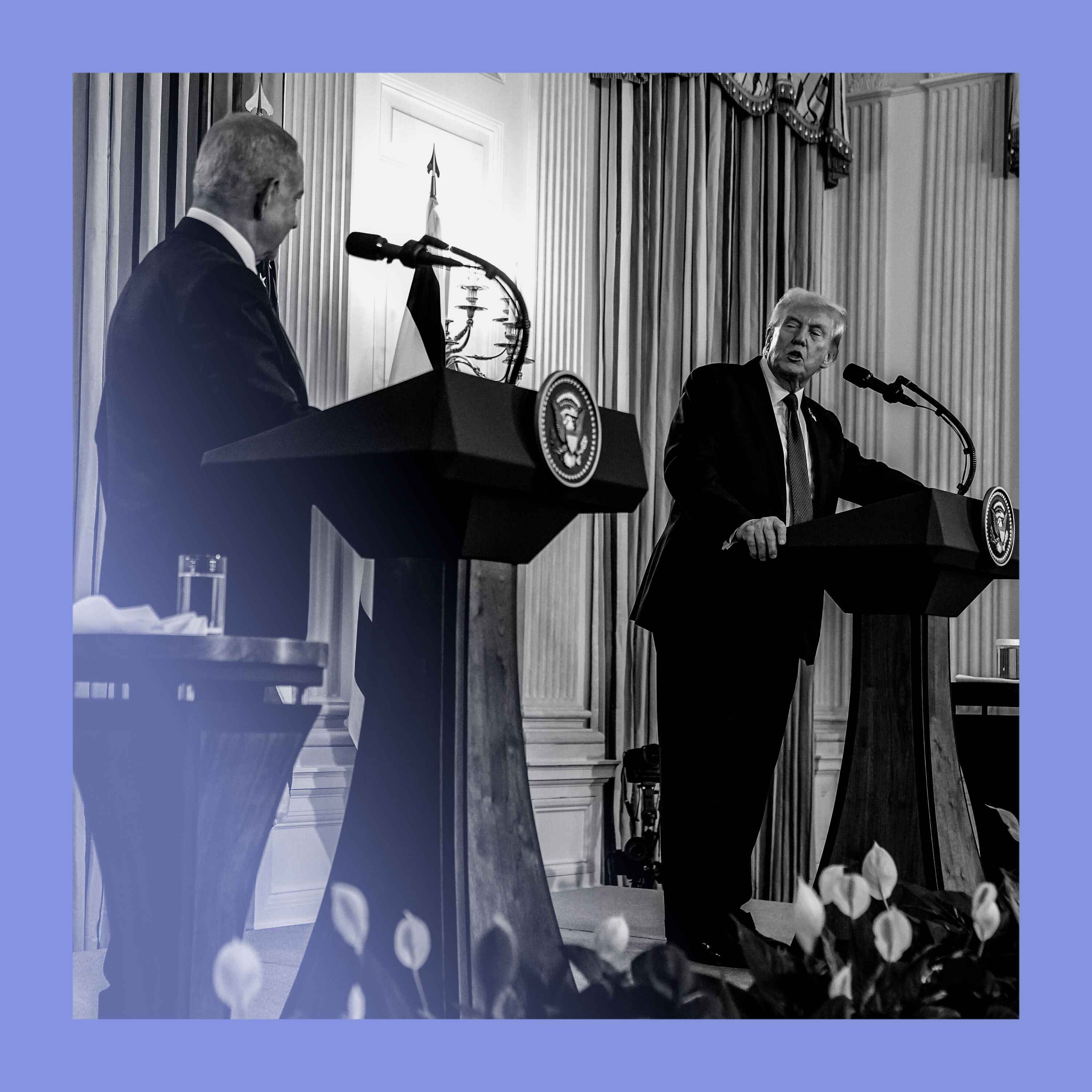
Israeli PM Netanyahu's acceptance of the peace plan is a study in contradiction. While publicly endorsing the deal, he immediately rejected a key component: a role for the Palestinian Authority in post-war Gaza. This tactic creates 'wiggle room' and signals a lack of genuine buy-in, challenging the deal's future.
After decades covering the region, Jeffrey Goldberg now identifies with the "fatalist, realist camp." He believes all parties—from Netanyahu's government to Hamas—have "screwed this up beyond measure," making traditional solutions seem impossible and moving him ideologically to Israel's center-left.

To hold leaders accountable, a nation must agree on a core set of values. Without this shared ethos, politics devolves into tribalism where each side justifies any action, making it impossible to remove a leader for violating principles that are no longer commonly held.

Fayyad is skeptical of recent international recognitions of a Palestinian state, arguing they often serve the domestic political needs of foreign leaders. He sees these symbolic gestures as worse than a placebo, creating a false sense of progress while the reality of occupation gets progressively worse.
The viability of a two-state solution depends entirely on the nature of the new Palestinian government. A state cannot achieve stability if it is run by a terrorist organization like Hamas. The international community's push for statehood is meaningless without addressing the internal governance that perpetuates violence.

Former PA Prime Minister Salam Fayyad argues the focus on political conditions like Hamas's disarmament has overshadowed the immediate, catastrophic need to improve the livelihoods of people in Gaza, who lack shelter, food, and water. This prioritization of politics over people is the key failure post-ceasefire.
Rather than pursuing symbolic recognitions from individual countries, Fayyad advocates for a diplomatic effort to secure a UN Security Council resolution recognizing the Palestinian *right* to a sovereign state on 1967 borders. This creates a powerful, internationally-enshrined legal basis for negotiations that Israel cannot veto.
Fayyad recalls his angry initial reaction to a U.S. proposal for a technocratic committee to govern post-war Gaza. He argues the plan was fundamentally flawed because it presumed Hamas could be completely eliminated—an impossible goal whose pursuit would lead to catastrophic loss of life.
Fayyad stresses that any future Palestinian leadership must build legitimacy from the ground up by delivering tangible improvements to people's daily lives. Rather than focusing on long-term political goals, the immediate, incremental task of providing basic services and welfare is the key to gaining public trust.