Get your free personalized podcast brief
We scan new podcasts and send you the top 5 insights daily.
Kernel's product strategy is to go deeper into company data challenges (e.g., complex APAC or government hierarchies) before going broader. This 'earn the right' approach builds customer trust by solving the core problem exceptionally well, creating pull for future product expansions rather than pushing a bloated, mediocre feature set.

Related Insights
Before launch, product leaders must ask if their AI offering is a true product or just a feature. Slapping an AI label on a tool that automates a minor part of a larger workflow is a gimmick. It will fail unless it solves a core, high-friction problem for the customer in its entirety.

Economist Bernd Hobart argues that large enterprises are too risk-averse for early AI adoption. The winning go-to-market strategy, similar to Stripe's, is for AI-native companies to sell to smaller, agile customers first. They can then grow with these customers, mature their product, and eventually sell the proven solution back to the legacy giants.

General Catalyst's CEO notes a change in enterprise AI GTM strategy. The old model was finding product-market fit, then repeating sales. The new model involves "forward deployed engineering" to build deep trust with an initial enterprise client, then focusing on expanding the services offered to that single client.
Most SaaS startups begin with SMBs for faster sales cycles. Nexla did the opposite, targeting complex enterprise problems from day one. This forced them to build a deeply capable platform that could later be simplified for smaller customers, rather than trying to scale up an SMB solution.

Early-stage startups should resist applying AI everywhere. Instead, they should focus on one high-impact area where processes already work. AI is most effective as an amplifier for a solid foundation, not as a shortcut or a fix for fundamental strategic problems. Start small with integrated tools.

Startups like NextVisit AI, a note-taker for psychiatry, win by focusing on a narrow vertical and achieving near-perfect accuracy. Unlike general-purpose AI where errors are tolerated, high-stakes fields demand flawless execution. This laser focus on one small, profound idea allows them to build an indispensable product before expanding.

While technical founders excel at finding an initial AI product wedge, domain-expert founders may be better positioned for long-term success. Their deep industry knowledge provides an intuitive roadmap for the company's "second act": expanding the product, aligning ecosystem incentives, and building defensibility beyond the initial tool.
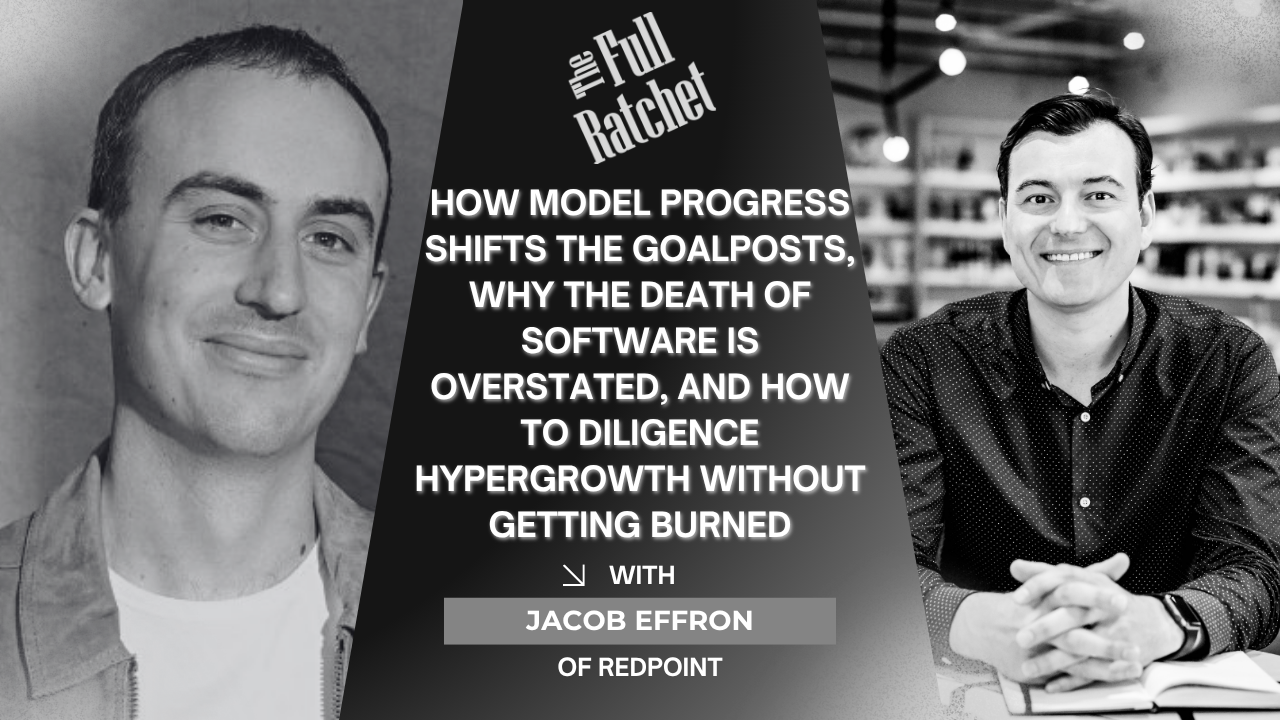
The traditional SaaS method of asking customers what they want doesn't work for AI because customers can't imagine what's possible with the technology's "jagged" capabilities. Instead, teams must start with a deep, technology-first understanding of the models and then map that back to customer problems.
Don't let the novelty of GenAI distract you from product management fundamentals. Before exploring any solution, start with the core questions: What is the customer's problem, and is solving it a viable business opportunity? The technology is a means to an end, not the end itself.

Contrary to typical advice, ElevenLabs targeted multiple customer segments simultaneously. This worked because they first built a best-in-class foundational AI model, attracting diverse users. They then hired founder-type leaders to own and grow each vertical-specific product, treating them as separate business units.
