Get your free personalized podcast brief
We scan new podcasts and send you the top 5 insights daily.
A cost-effective AI architecture involves using a small, local model on the user's device to pre-process requests. This local AI can condense large inputs into an efficient, smaller prompt before sending it to the expensive, powerful cloud model, optimizing resource usage.

Related Insights
A common pattern for developers building with generative media is to use two types of models. A cheaper, lower-quality 'workhorse' model is used for high-volume tasks like prototyping. A second, expensive, state-of-the-art 'hero' model is then reserved for the final, high-quality output, optimizing for cost and quality.

Apple isn't trying to build the next frontier AI model. Instead, their strategy is to become the primary distribution channel by compressing and running competitors' state-of-the-art models directly on devices. This play leverages their hardware ecosystem to offer superior privacy and performance.

OpenAI favors "zero gradient" prompt optimization because serving thousands of unique, fine-tuned model snapshots is operationally very difficult. Prompt-based adjustments allow performance gains without the immense infrastructure burden, making it a more practical and scalable approach for both OpenAI and developers.

Model architecture decisions directly impact inference performance. AI company Zyphra pre-selects target hardware and then chooses model parameters—such as a hidden dimension with many powers of two—to align with how GPUs split up workloads, maximizing efficiency from day one.
The primary driver for fine-tuning isn't cost but necessity. When applications like real-time voice demand low latency, developers are forced to use smaller models. These models often lack quality for specific tasks, making fine-tuning a necessary step to achieve production-level performance.
Pega's CTO advises using the powerful reasoning of LLMs to design processes and marketing offers. However, at runtime, switch to faster, cheaper, and more consistent predictive models. This avoids the unpredictability, cost, and risk of calling expensive LLMs for every live customer interaction.

Chinese AI models like Kimi achieve dramatic cost reductions through specific architectural choices, not just scale. Using a "mixture of experts" design, they only utilize a fraction of their total parameters for any given task, making them far more efficient to run than the "dense" models common in the West.

The future of AI isn't just in the cloud. Personal devices, like Apple's future Macs, will run sophisticated LLMs locally. This enables hyper-personalized, private AI that can index and interact with your local files, photos, and emails without sending sensitive data to third-party servers, fundamentally changing the user experience.

The biggest risk to the massive AI compute buildout isn't that scaling laws will break, but that consumers will be satisfied with a "115 IQ" AI running for free on their devices. If edge AI is sufficient for most tasks, it undermines the economic model for ever-larger, centralized "God models" in the cloud.
![Gavin Baker - Nvidia v. Google, Scaling Laws, and the Economics of AI - [Invest Like the Best, EP.451] thumbnail](https://megaphone.imgix.net/podcasts/d97fee14-d4d7-11f0-8951-8324b640c1c1/image/d3a8b5ecbf3957de5b91f278a191c9ff.jpg?ixlib=rails-4.3.1&max-w=3000&max-h=3000&fit=crop&auto=format,compress)
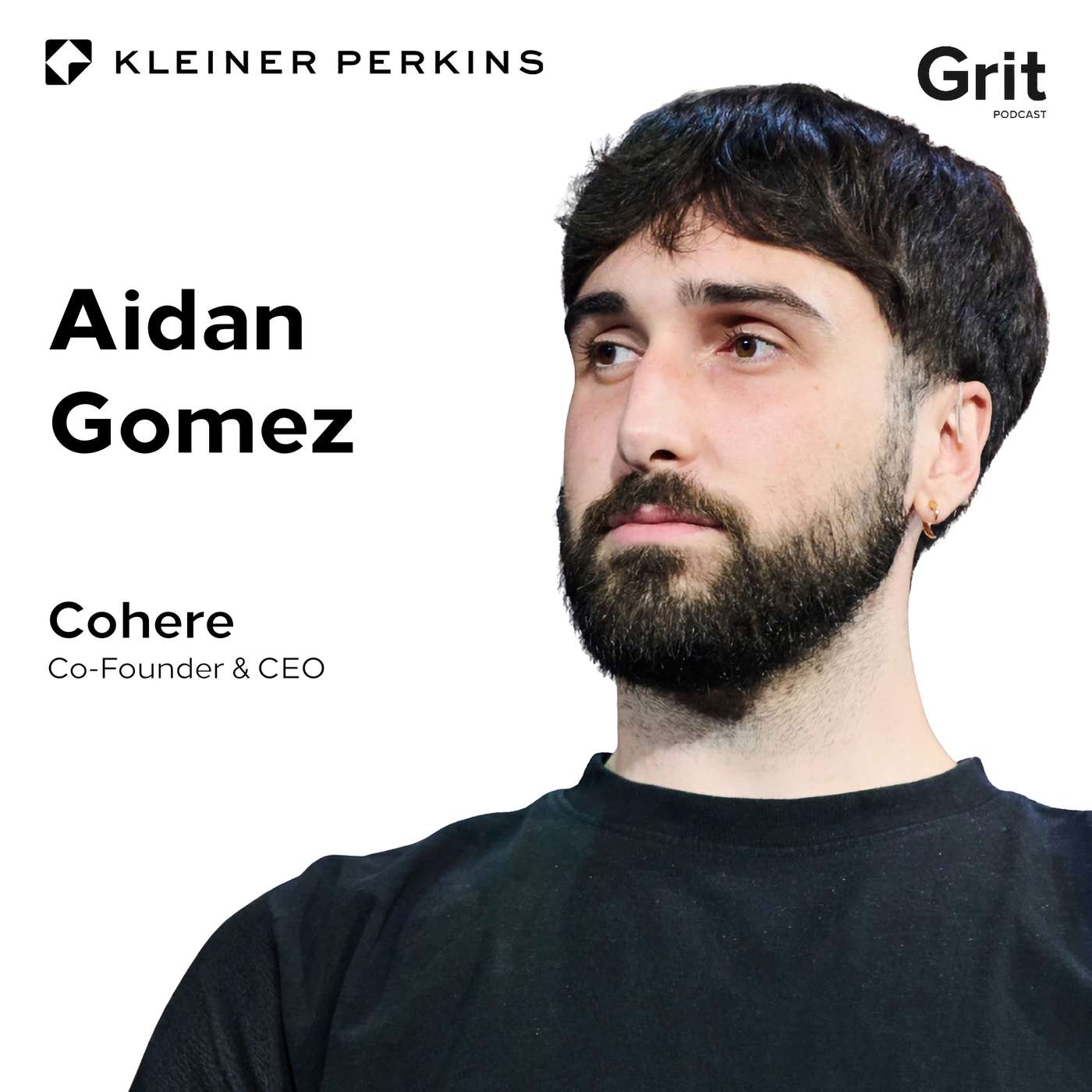
Cohere intentionally designs its enterprise models to fit within a two-GPU footprint. This hard constraint aligns with what the enterprise market can realistically deploy and afford, especially for on-premise settings, prioritizing practical adoption over raw scale.