Get your free personalized podcast brief
We scan new podcasts and send you the top 5 insights daily.
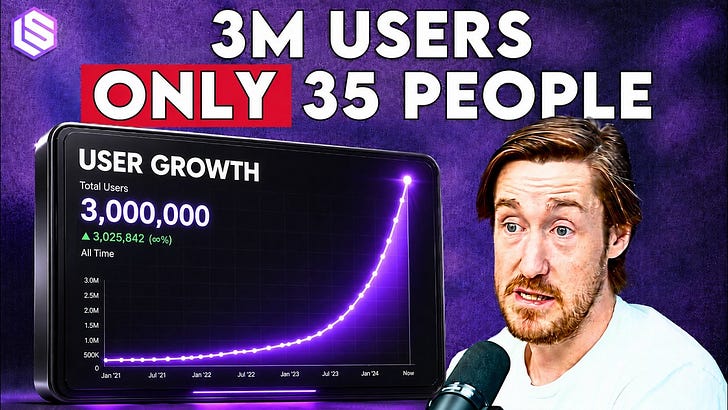
Railway's founder demonstrates that a deep commitment to a frictionless user experience can be the primary motivation for tackling increasingly complex technical challenges, from distributed systems at Uber to patching the Linux kernel at Railway.
Related Insights
A successful startup CTO cannot remain solely a technologist. They must shift their mindset to deeply understand customer problems to ensure product value. Simultaneously, they must foster an environment where engineers find purpose and innovate, preventing them from becoming mere ticket-takers.
Mirror founder Bryn Putnam claims her non-technical background was an asset in hardware. It enforced strict discipline to a core customer vision, preventing the common trap of feature creep and over-engineering that technical founders can fall into because they *can* build more.
The inspiration for Superhuman came from reframing Uber's core value. Its magic wasn't getting from A to B, but the new, productive time it created during a commute. This highlights the need for founders to look beyond a product's function to discover its deeper, more fundamental human benefit, which is often time.

Guillermo Rauch's product intuition comes from accumulating "exposure hours" to diverse products and, crucially, observing how people use his software in their natural environment. Seeing a user with a large monitor revealed a key UI flaw, sparking a major design improvement.

Many engineers start by wanting to work on cutting-edge, abstract technical challenges (like LLM memory) but later pivot to finding greater satisfaction in applying that technology to solve concrete customer problems with measurable business impact, a common 'metamorphosis' in their careers.
An investor with a technology background shares his 'bitter lesson': customer obsession trumps technical perfection. The efficiency or beauty of the underlying code is irrelevant to users. All that matters is whether the product solves a significant pain point and how well that solution is communicated.
With his bioelectrical engineering background, Dara Khosrowshahi frames the CEO role as a large-scale engineering challenge. He sees companies as machines run by people, where the leader's job is to design the system, set the right goals, and assemble the components to achieve a desired output.

Inspired by a Steve Jobs quote, YC partner Garry Tan looks for founders who obsess over details others won't see, like a carpenter perfecting the back of a cabinet. This unseen craftsmanship, like a smooth UI scroll, signals deep product taste and commitment.

The "Odin" platform, which eventually managed all of Uber's stateful workloads, began as a project to containerize sharded MySQL for a single team. This bottom-up approach allowed them to prove the concept and build a working system before seeking wider, more political adoption.
Robinhood's superior user experience isn't just the design team's responsibility; it's a core part of the company's DNA, driven by leadership. The CEO and VPs spend significant time on design details, ensuring a high bar for polish that competitors often neglect.