Get your free personalized podcast brief
We scan new podcasts and send you the top 5 insights daily.
In a scenario where VP JD Vance replaces an incapacitated Trump, he would be a less formidable leader. Vance lacks Trump's powerful personality cult, which is the essential glue holding his diverse and often conflicting political coalition together. Without it, Vance would face significant internal party resistance.

Related Insights
A psychological tactic to neutralize Stephen Miller is to publicly portray him as the power behind the throne. Citing how the 'President Bannon' Time Magazine cover led to Steve Bannon's ousting, this strategy would trigger Trump's narcissism and cause him to push Miller away.
With reports suggesting Trump has only five effective working hours per day, a massive power vacuum emerges for the other nineteen. This void is filled by advisor Stephen Miller, who writes speeches and drives policy, effectively acting as the de facto president and implementing his own extreme agenda.
Directly attacking a charismatic leader can backfire due to personal loyalty. A more effective political strategy is to target their key advisors. Removing controversial figures can weaken the leader's power structure, as it is easier to build consensus against "bad actors" than the principal.

Vance's political future is complicated by a fundamental split on the right. He must navigate the demands of his pro-AI, tech-focused donors against the strong anti-AI sentiment of influential media figures like Tucker Carlson and his broader MAGA base, making it a critical political challenge.

Mapping Trump solely as a self-serving politician is incomplete. His behavior is better understood as a combination of a narcissist who seeks power and a patriot who genuinely wants to impose law and order, leading him to use extreme methods.

Recent election results highlight a key vulnerability for the Republican party: a substantial drop in voter turnout when Donald Trump is not the candidate. The base is less energized, leading to weaker performance in midterms and other elections. This poses a long-term strategic challenge for the party's future beyond Trump.

Trump's seemingly chaotic approach is best understood as a CEO's leadership style. He tells his staff what to do rather than asking for opinions, uses disruption as a negotiation tactic, and prioritizes long-term outcomes over short-term public opinion or procedural harmony.

Some leaders are powerful in a small room but appear wooden on camera. The ability to project charisma through a lens is a separate skill from in-person magnetism. This "television charisma" is becoming increasingly crucial for political viability, and the two are not interchangeable.

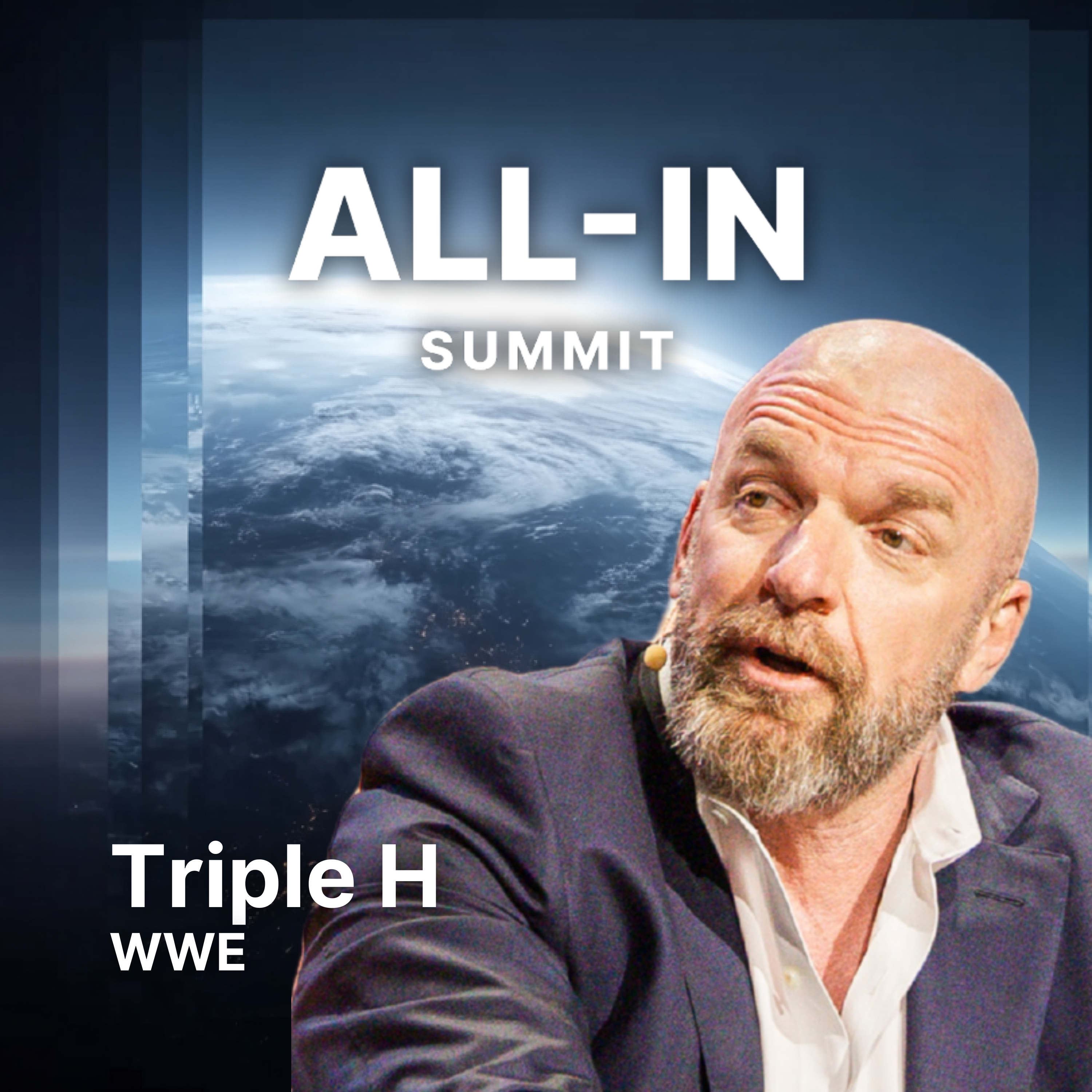
Drawing parallels between wrestling and politics, Paul Levesque asserts that voters ultimately choose presidential candidates based on charisma and personal connection, not policy details. He cites figures like Donald Trump as examples of personalities whose ability to command an audience is their primary asset.
Political allies often remain silent critics until a leader's power begins to wane. The recent increase in Republicans publicly questioning Trump's economic grasp demonstrates this principle. This belated courage is more about political survival and opportunism than genuine conviction, emerging only after the personal risk has subsided.