Get your free personalized podcast brief
We scan new podcasts and send you the top 5 insights daily.
Contrary to the belief that building agents requires complex frameworks, Gusto built their product using just a Cloudflare Worker for the agent loop and the Vercel AI SDK for model switching. This minimalist stack proves that the barrier to entry for building powerful agentic products is surprisingly low.

Related Insights
The internet's next chapter moves beyond serving pages to executing complex, long-duration AI agent workflows. This paradigm shift, as articulated by Vercel's CEO, necessitates a new "AI Cloud" built to handle persistent, stateful processes that "think" for extended periods.

In the fast-evolving AI space, Vercel's AISDK deliberately remained low-level. CTO Malte Ubl explains that because "we know absolutely nothing" about future AI app patterns, providing a flexible, minimal toolkit was superior to competitors' rigid, high-level frameworks that made incorrect assumptions about user needs.

Users increasingly expect to complete purchases within AI chat interfaces. This trend, called "agentic commerce," requires new tools like Stripe Projects that allow agents to programmatically sign up for and pay for services like Vercel or Cloudflare to complete end-to-end tasks for users.

A major trend in AI development is the shift away from optimizing for individual model releases. Instead, developers can integrate higher-level, pre-packaged agents like Codex. This allows teams to build on a stable agentic layer without needing to constantly adapt to underlying model changes, API updates, and sandboxing requirements.
The popular AISDK wasn't planned; it originated from an internal 'AI Playground' at Vercel. Building this tool forced the team to normalize the quirky, inconsistent streaming APIs of various model providers. This solution to their own pain point became the core value proposition of the AISDK.
Investing heavily in building custom AI agents is risky. The emergence of platforms like OpenAI's Workspace Agents, which allow non-technical users to build powerful agents with a few clicks, can render months of complex, custom development work obsolete.
Using a composable, 'plug and play' architecture allows teams to build specialized AI agents faster and with less overhead than integrating a monolithic third-party tool. This approach enables the creation of lightweight, tailored solutions for niche use cases without the complexity of external API integrations, containing the entire workflow within one platform.

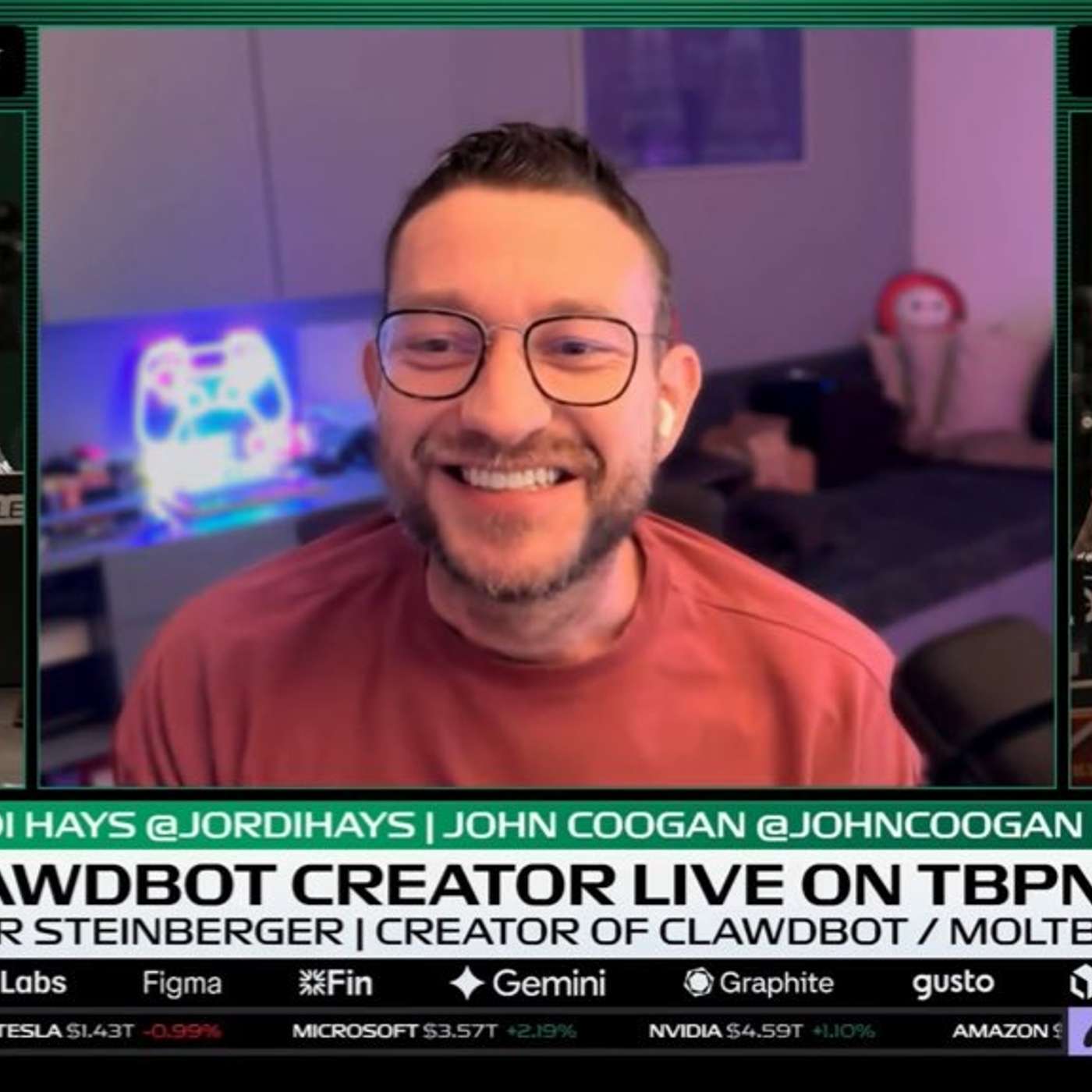
A design agency professional with no coding experience used the Moltbot agent to build 25 internal web services simply by describing the problems. This signals a paradigm shift where non-technical users can create their own hyper-personalized software, bypassing traditional development cycles and SaaS subscriptions.
When testing models on the GDPVal benchmark, Artificial Analysis's simple agent harness allowed models like Claude to outperform their official web chatbot counterparts. This implies that bespoke chatbot environments are often constrained for cost or safety, limiting a model's full agentic capabilities which developers can unlock with custom tooling.
The true capability of AI agents comes not just from the language model, but from having a full computing environment at their disposal. Vercel's internal data agent, D0, succeeds because it can write and run Python code, query Snowflake, and search the web within a sandbox environment.