Get your free personalized podcast brief
We scan new podcasts and send you the top 5 insights daily.
The value of human-created work comes from its origin in a unique individual's lived experience. AI can mimic emotions like love or grief, but it cannot truly feel them. This inability to have an authentic emotional experience makes its creations replicable and fundamentally less valuable than true human expression.

Related Insights
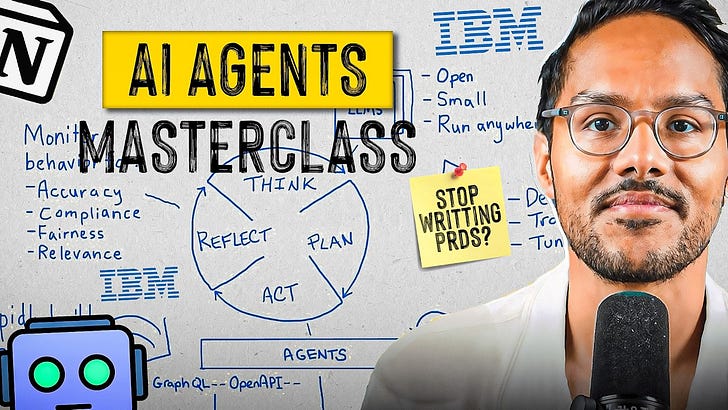
While AI tools once gave creators an edge, they now risk producing democratized, undifferentiated output. IBM's AI VP, who grew to 200k followers, now uses AI less. The new edge is spending more time on unique human thinking and using AI only for initial ideation, not final writing.
Historically, we trusted technology for its capability—its competence and reliability to *do* a task. Generative AI forces a shift, as we now trust it to *decide* and *create*. This requires us to evaluate its character, including human-like qualities such as integrity, empathy, and humility, fundamentally changing how we design and interact with tech.

As AI automates tasks and replicates knowledge, what remains fundamentally human is our personal narrative. The collection of experiences, memories, successes, and failures shaping who we are cannot be generated by AI, making authentic storytelling a core human differentiator.
Figma CEO Dylan Field argues that while AI can quickly generate "good enough" results, this baseline is no longer sufficient. As AI floods the market with generic software and designs, true differentiation will come from human-led craft, taste, and pushing beyond the initial AI output.
AI is engineered to eliminate errors, which is precisely its limitation. True human creativity stems from our "bugs"—our quirks, emotions, misinterpretations, and mistakes. This ability to be imperfect is what will continue to separate human ingenuity from artificial intelligence.

In the age of AI, the new standard for value is the "GPT Test." If a person's public statements, writing, or ideas could have been generated by a large language model, they will fail to stand out. This places an immense premium on true originality, deep insight, and an authentic voice—the very things AI struggles to replicate.

The controversy over AI-generated content extends far beyond intellectual property. The emotional distress caused to families, as articulated by Zelda Williams regarding deepfakes of her late father, highlights a profound and often overlooked human cost of puppeteering the likenesses of deceased individuals.
True creative mastery emerges from an unpredictable human process. AI can generate options quickly but bypasses this journey, losing the potential for inexplicable, last-minute genius that defines truly great work. It optimizes for speed at the cost of brilliance.

Emotions act as a robust, evolutionarily-programmed value function guiding human decision-making. The absence of this function, as seen in brain damage cases, leads to a breakdown in practical agency. This suggests a similar mechanism may be crucial for creating effective and stable AI agents.

The best AI models are trained on data that reflects deep, subjective qualities—not just simple criteria. This "taste" is a key differentiator, influencing everything from code generation to creative writing, and is shaped by the values of the frontier lab.