Get your free personalized podcast brief
We scan new podcasts and send you the top 5 insights daily.
The real danger of new technology is not the tool itself, but our willingness to let it make us lazy. By outsourcing thinking and accepting "good enough" from AI, we risk atrophying our own creative muscles and problem-solving skills.

Related Insights
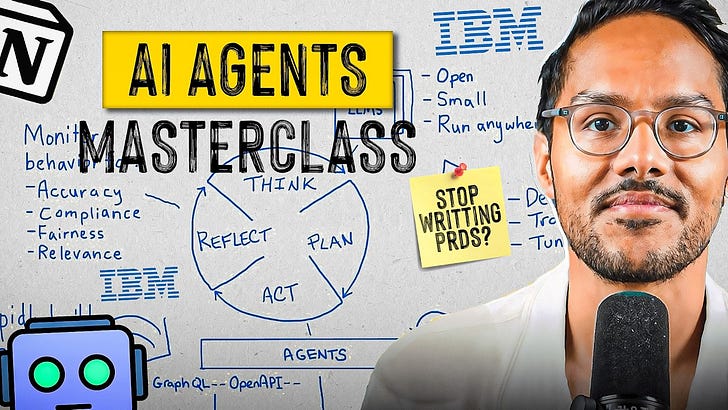
While AI tools once gave creators an edge, they now risk producing democratized, undifferentiated output. IBM's AI VP, who grew to 200k followers, now uses AI less. The new edge is spending more time on unique human thinking and using AI only for initial ideation, not final writing.
Users who treat AI as a collaborator—debating with it, challenging its outputs, and engaging in back-and-forth dialogue—see superior outcomes. This mindset shift produces not just efficiency gains, but also higher quality, more innovative results compared to simply delegating discrete tasks to the AI.
AI is engineered to eliminate errors, which is precisely its limitation. True human creativity stems from our "bugs"—our quirks, emotions, misinterpretations, and mistakes. This ability to be imperfect is what will continue to separate human ingenuity from artificial intelligence.
True creative mastery emerges from an unpredictable human process. AI can generate options quickly but bypasses this journey, losing the potential for inexplicable, last-minute genius that defines truly great work. It optimizes for speed at the cost of brilliance.

The true danger of LLMs in the workplace isn't just sloppy output, but the erosion of deep thinking. The arduous process of writing forces structured, first-principles reasoning. By making it easy to generate plausible text from bullet points, LLMs allow users to bypass this critical thinking process, leading to shallower insights.

The process of struggling with and solving hard problems is what builds engineering skill. Constantly available AI assistants act like a "slot machine for answers," removing this productive struggle. This encourages "vibe coding" and may prevent engineers from developing deep problem-solving expertise.
While AI can accelerate tasks like writing, the real learning happens during the creative process itself. By outsourcing the 'doing' to AI, we risk losing the ability to think critically and synthesize information. Research shows our brains are physically remapping, reducing our ability to think on our feet.
While professional engineers focus on craft and quality, the average user is satisfied if an AI tool produces a functional result, regardless of its underlying elegance or efficiency. This tendency to accept "good enough" output threatens to devalue the meticulous work of skilled developers.

The creative industry is harming itself more through internal cynicism and inaction than from external threats like AI. Creatives spend too much time writing thought pieces about a perceived decline instead of actively making groundbreaking work.
Despite AI tools making it easier than ever to design, code, and launch applications, many people feel stuck and don't know what to build. This suggests a deficit in big-picture thinking and problem identification, not a lack of technical capability.