Get your free personalized podcast brief
We scan new podcasts and send you the top 5 insights daily.
While Trastuzumab deruxtecan (TDXD) is effective in HER2-low breast cancer, there is no evidence that it benefits patients with HER2-low or HER2-intermediate (IHC 2+/FISH negative) gastric cancer. Its use should be strictly limited to truly HER2-positive cases in this disease.

Related Insights
Trastuzumab deruxtecan (TDXD) and datopotamab deruxtecan (Dato-DXd) share the same cytotoxic payload, yet Dato-DXd has a much lower rate of interstitial lung disease (ILD). This indicates the toxicity is driven by the antibody-antigen interaction, not the payload itself.
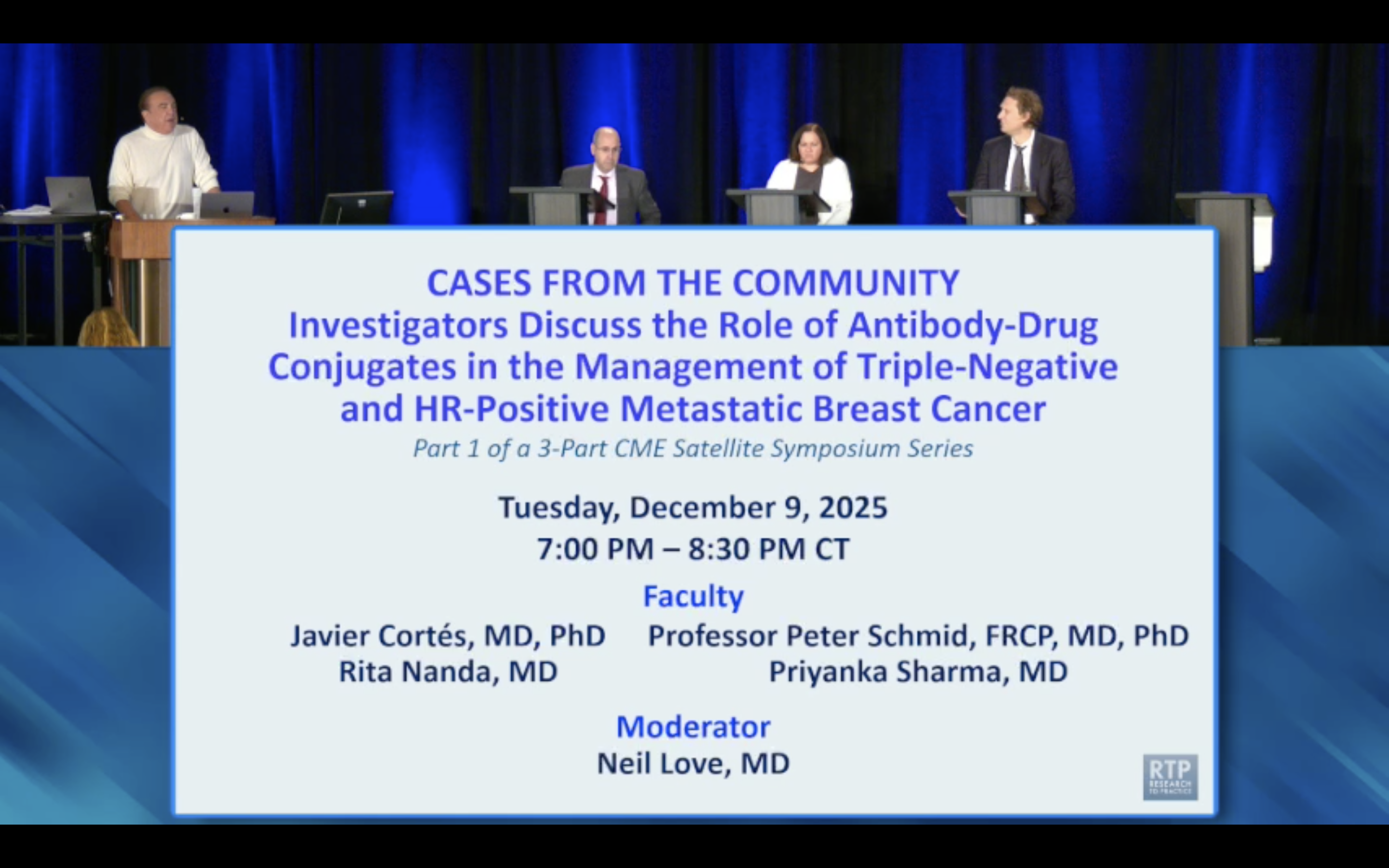
For HER2+ biliary tract cancer patients with hyperbilirubinemia where stenting isn't possible, zanidatumab is a preferable option over TDXD. Zanidatumab lacks significant hepatotoxicity, whereas TDXD's irinotecan-like payload poses a risk in patients with moderate hepatic impairment.
Positive data from both DESTINY-Breast09 (TDXD-based) and PATINA (CDK4/6i maintenance) create a new dilemma. With similar PFS outcomes, the first-line choice for metastatic HER2+/HR+ patients now hinges on toxicity profiles and patient preference rather than a single efficacy winner.

The DESTINY-Breast11 trial showed a neoadjuvant regimen of TDXD followed by THP achieved a 67.3% pathologic complete response (pCR) rate in high-risk HER2+ breast cancer. This is the highest pCR rate seen in a registrational trial, signaling a potential new standard of care.

A subtle finding in the DESTINY-Breast11 trial, where TDXD alone underperformed TDXD followed by THP, suggests that taxane-based chemotherapy might remain effective even after a patient's HER2-positive cancer becomes resistant to the antibody-drug conjugate TDXD.
In HER2-positive colorectal cancer, the choice of targeted therapy depends on RAS mutation status. The tucatinib/trastuzumab combination is effective only in RAS wild-type patients. In contrast, the antibody-drug conjugate trastuzumab deruxtecan (TDXD) shows efficacy regardless of whether a RAS mutation is present.
Contrary to concerns about cross-resistance between HER2 antibody-drug conjugates (ADCs), retrospective data shows TDM-1 remains effective after progression on TDXD. This suggests the different cytotoxic payloads are key, allowing for effective sequencing and challenging the assumption that progression on one ADC class member precludes using another.

HER2 amplification is a primary resistance mechanism to anti-EGFR therapies in colorectal cancer. Therefore, oncologists should avoid using drugs like panitumumab or cetuximab in HER2-positive patients, even if they are RAS wild-type, as these patients experience rapid progression on such regimens.
Due to selective pressure from first-line treatment, 30-40% of HER2-positive gastroesophageal cancers lose HER2 expression by the time of progression. It is crucial to re-test these patients, either via tissue biopsy or ctDNA, to confirm continued HER2 positivity before initiating second-line HER2-targeted therapy like TDXD.
In the DESTINY-CRC02 trial, the lower 5.4 mg/kg dose of trastuzumab deruxtecan (TDXD) resulted in a higher response rate in colorectal cancer compared to the 6.4 mg/kg dose used in gastric cancer. This counter-intuitive finding suggests better tolerability led to longer treatment duration and superior outcomes.