Get your free personalized podcast brief
We scan new podcasts and send you the top 5 insights daily.
In metastatic gastroesophageal cancer, physicians should use their most effective therapies first. With data showing 40-50% of patients in trials never receive second-line treatment due to disease progression, holding potent agents in reserve means a large portion of patients will never benefit from them.

Related Insights
When treating refractory kidney cancer, clinicians prioritize regimens offering the most durable initial response. They argue against “saving” effective drugs for later, as disease progression is traumatic for patients and many never successfully receive subsequent lines of therapy. The goal is long-term disease control now, not preserving theoretical future options.

If gastroesophageal cancer does not respond to first-line zolbetuximab, experts advise against continuing it with a new chemo backbone. This is based on tumor heterogeneity and parallels with a negative trial of continuing trastuzumab past progression in HER2+ disease.

An expert argues the path to curing metastatic cancer may mirror pediatric ALL's history: combining all highly active drugs upfront. Instead of sequencing treatments after failure, the focus should be on powerful initial regimens that eradicate cancer, even if it means higher initial toxicity.
With highly active agents yielding 30% complete response rates, the immediate goal should be to cure more patients by exploring potent combinations upfront. While sequencing minimizes toxicity, an ambitious combination strategy, such as ADC doublets, offers the best chance to eradicate disease and should be prioritized in clinical trials.
In metastatic breast cancer, approximately one-third of patients are unable to proceed to a second line of therapy due to disease progression or declining performance status. This high attrition rate argues for using the most effective agents, such as ADCs, in the first-line setting.
In ROS1-positive NSCLC, starting with older TKIs before newer agents like Repotrectinib dramatically worsens outcomes. Median overall survival has not been reached after 5 years for TKI-naive patients but drops to just 25 months for those pre-treated with another TKI. This starkly quantifies the critical importance of using the most effective treatment first.

New targeted therapies are often approved only for first-line use. This forces clinicians into a difficult choice: using one effective drug like a checkpoint inhibitor means forfeiting the chance to use another, like zolbetuximab, in a subsequent line of treatment, thereby losing a valuable therapeutic option.
Comparing control arms from the TOGA (11 months OS), KEYNOTE-811 (16 months), and HORIZON (19 months) trials reveals a steady improvement in patient outcomes. This trend, likely due to better second-line therapies and supportive care, makes it harder for new agents to show a relative benefit.
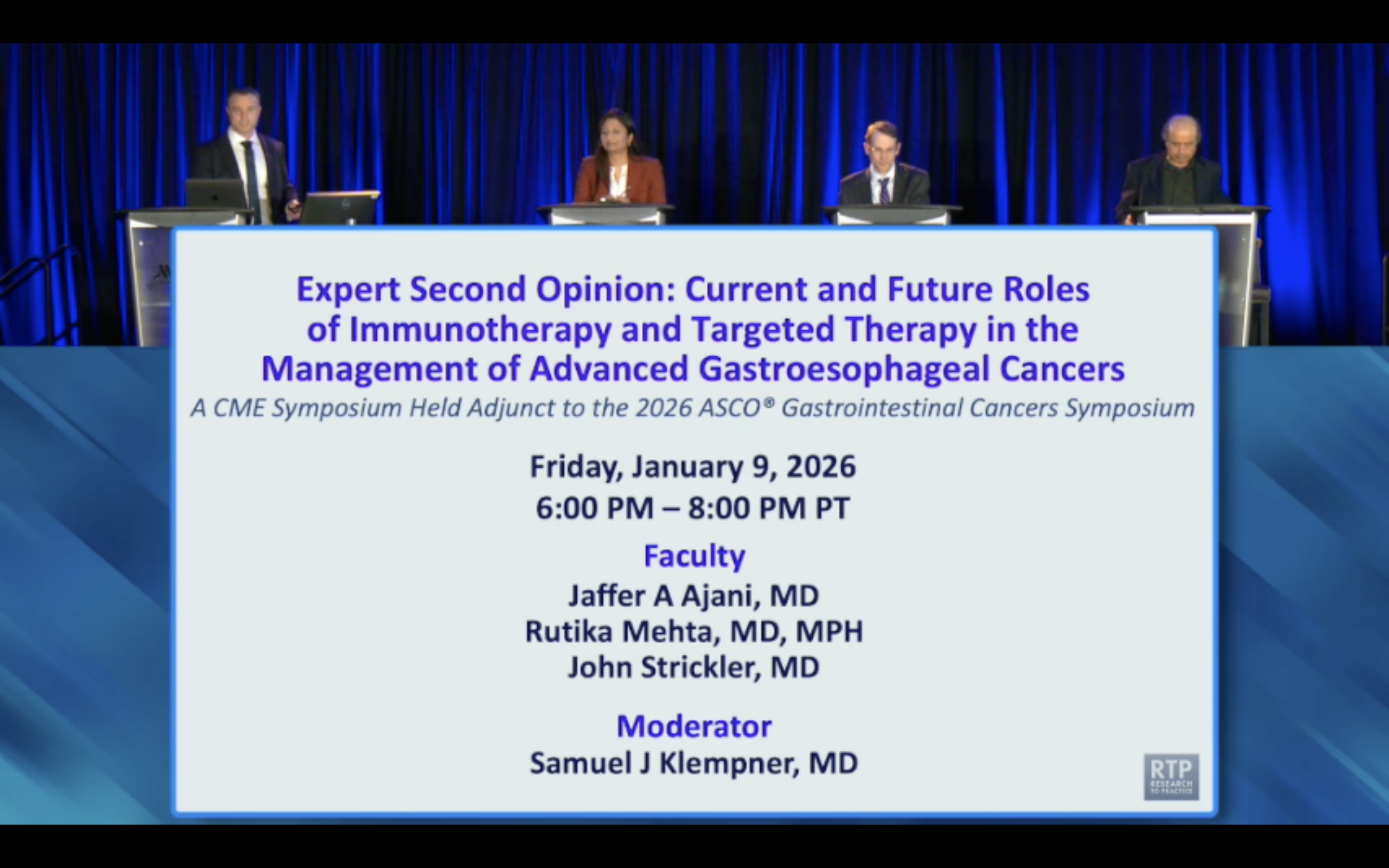
Clinicians advise against continuing targeted agents like zolbituximab or trastuzumab after disease progression in gastroesophageal cancer. The biological heterogeneity of this cancer type means that if a targeted therapy isn't working, it's unlikely to provide benefit with a different chemotherapy backbone.
A key lesson in bladder cancer is that patient attrition is rapid between lines of therapy; many who relapse from localized disease never receive effective later-line treatments. This reality provides a strong rationale for moving the most effective therapies, like EV-pembrolizumab, to earlier settings to maximize the number of patients who can benefit.