Get your free personalized podcast brief
We scan new podcasts and send you the top 5 insights daily.
Standard valuation models based on financial outputs (earnings, cash flow) are flawed because they ignore the most critical inputs: the CEO's value, brand strength, and company culture. These unquantifiable factors are the true drivers of long-term outperformance for companies like Apple.

Related Insights
Many late-stage investors focus heavily on data and metrics, forgetting that the quality of the leadership team remains as critical as in the seed stage. A new CEO, for example, can completely pivot a large company and reignite growth, a factor that quantitative analysis often misses.
To convince a CEO of a brand's value, ask one simple question: 'Do we have pricing power?' This metric—the ability to raise prices at or above inflation without losing demand—cuts through marketing jargon. It is the most direct, tangible indicator of brand health that resonates with finance-focused leadership.

Go beyond analyzing the founding team by treating the entire employee base as a key asset. By measuring metrics like employee retention rates, hiring velocity, and geographical or role-based growth, investors can build a quantitative picture of a company's health and culture, providing a powerful comparative tool.

The market capitalization of the world's largest companies is overwhelmingly derived from non-physical assets like brand, intellectual property, and customer goodwill. Selling all of Coca-Cola's factories would yield far less value than retaining ownership of the name alone, proving that intangible meaning is the primary driver of modern enterprise value.

To prove brand's financial impact, connect it to the three core levers of Customer Lifetime Value (CLV). A strong brand lowers customer acquisition costs, increases retention, and supports higher margins through pricing power. Since aggregate CLV is tied to firm valuation, this makes brand's contribution tangible to a CFO.
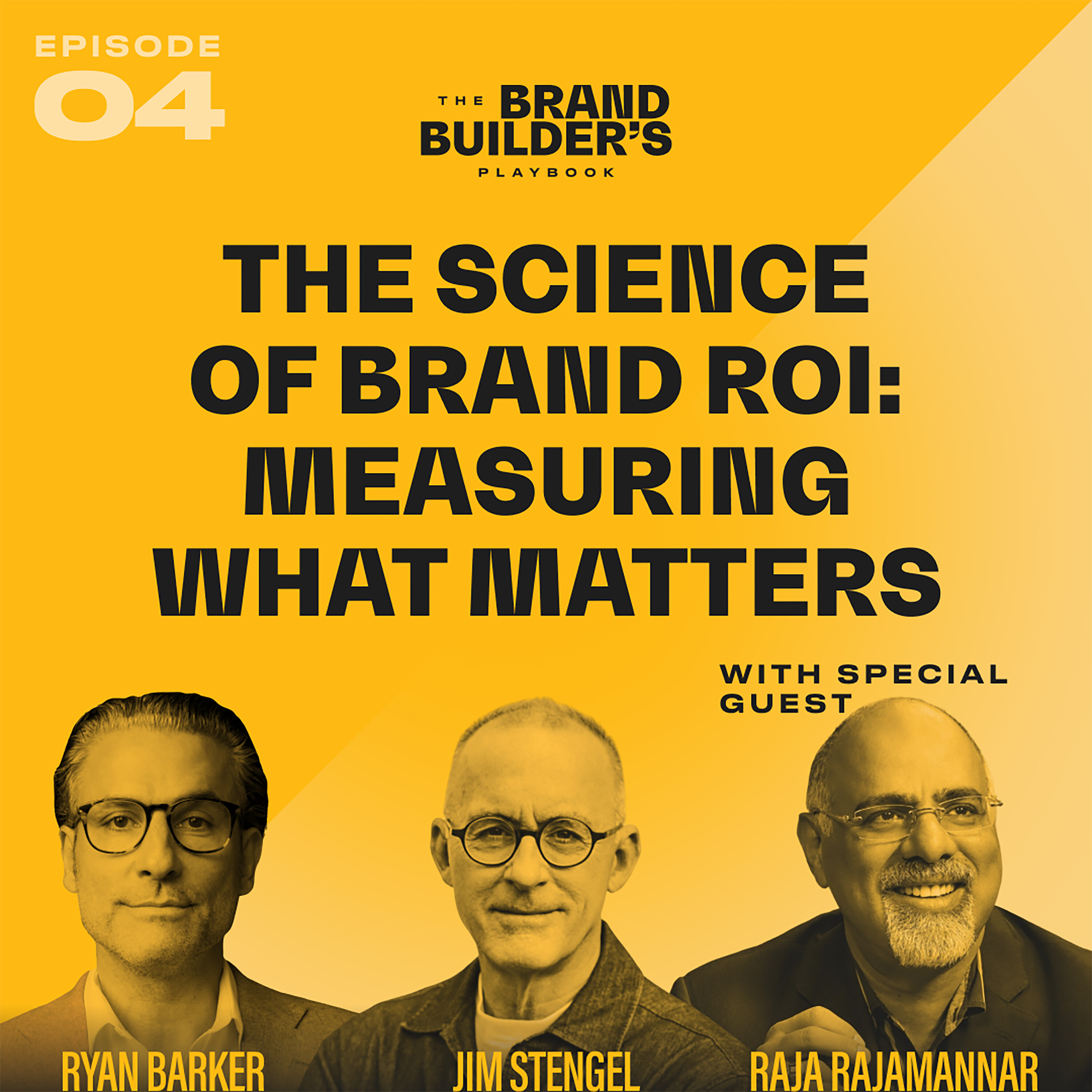
Former AB InBev CMO Chris Burgrave argues that brand building is a financial activity, not just a marketing one. A brand's ultimate purpose is to de-risk a business by creating repeatable, predictable future cash flows. This reframes the conversation from soft metrics to tangible financial outcomes like growth, profit, and risk reduction.
Companies like Tesla and Oracle achieve massive valuations not through profits, but by capturing the dominant market story, such as becoming an "AI company." Investors should analyze a company's ability to create and own the next compelling narrative.

Traditional valuation multiples are increasingly misleading because GAAP rules expense intangible investments (R&D, brand building) rather than capitalizing them. For a company like Microsoft, properly capitalizing these investments can drop its P/E ratio from 35 to 30, revealing a more attractive valuation.

Stocks with the strongest fundamentals (top dog, sustainable advantage, great management) are often labeled "overvalued" by commentators. Gardner argues this perception is actually the ultimate buy signal, as the market consistently underestimates the long-term potential of true greatness.
Assets like launch capabilities, energy access, or media influence may not generate strong cash flows but provide immense strategic leverage. In an era of competing power blocs, controlling these strategic assets is becoming more valuable than traditional financial metrics suggest, a shift that markets struggle to price.
