Get your free personalized podcast brief
We scan new podcasts and send you the top 5 insights daily.
Data scientist Penelope Lafeuille's burnout wasn't solely from long hours, but from a major disconnect between her daily work in finance and her long-term career goal in life sciences. This misalignment created a lack of purpose that overwork simply exacerbated, prompting a career change as the true solution.

Related Insights
Burnout isn't a single condition. Emotional exhaustion needs a break (vacation). A lack of self-efficacy requires skill development (upskilling). Cynicism, the hardest to fix, demands rediscovering your 'why' (inspiration). Misdiagnosing the cause leads to ineffective solutions.

A founder's unhappiness often arises from a disconnect between their core values and the values the company is forced to project, leading to inauthenticity. The founder's ultimate power is the ability to reset the company's culture and policies to realign with their own principles, restoring personal drive.

One of the most insidious signs of burnout is when your passion project becomes a source of dread. For example, a photographer who no longer wants to touch their camera. This emotional shift from love to loathing signifies that your craft has become exclusively linked to work and responsibility, requiring immediate intervention.

Founders often equate constant hustle with progress, saying yes to every opportunity. This leads to burnout. The critical mindset shift is recognizing that every professional "yes" is an implicit "no" to personal life. True success can mean choosing less income to regain time, a decision that can change a business's trajectory.
Connective labor can be sustaining, not draining. Burnout occurs when the "social architecture" lacks support systems like "sounding boards" for practitioners to process their work. The problem isn't the emotional work itself, but the conditions under which it's performed.
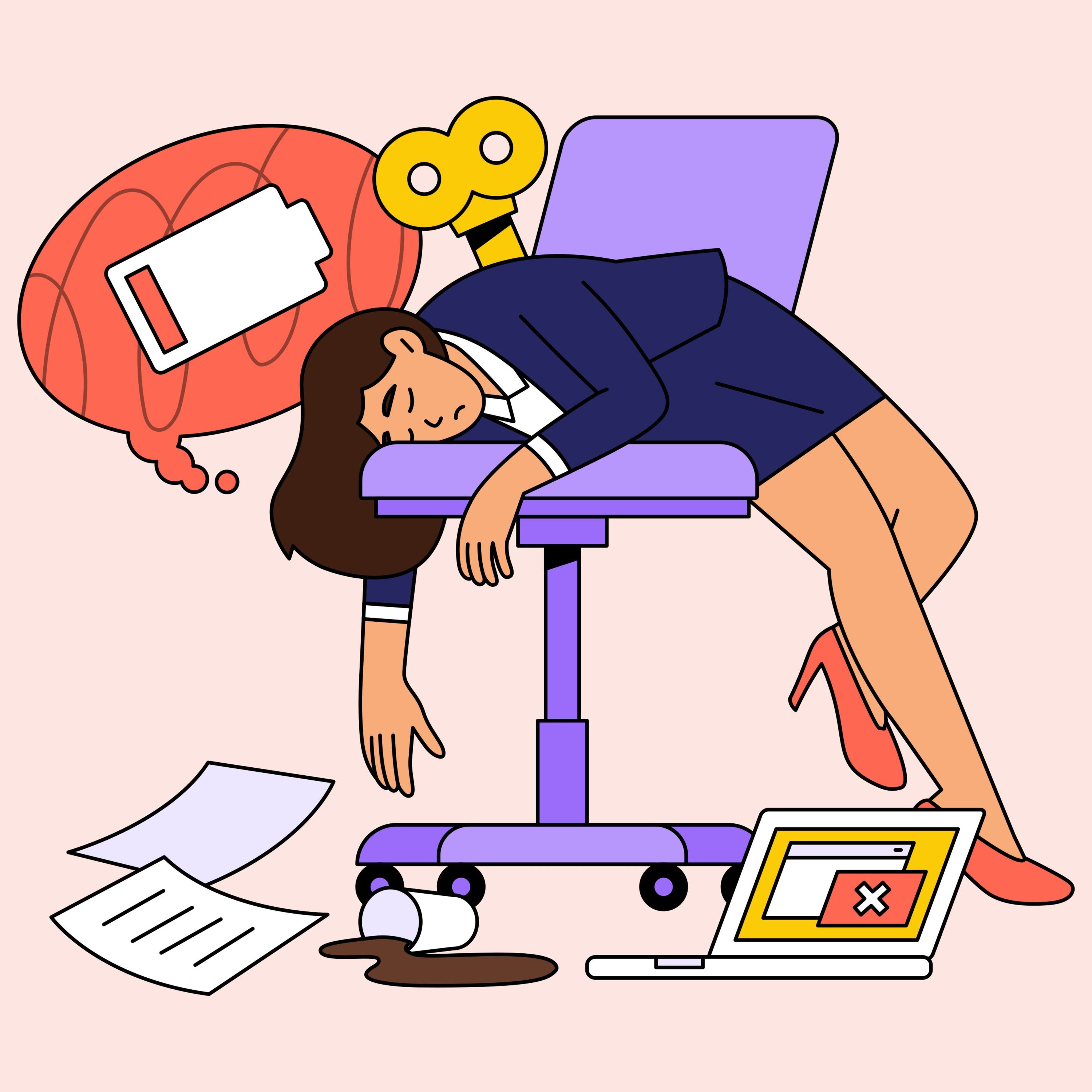
A slow job market has created a new burnout phenomenon: "quiet breaking." Unlike quiet quitting (doing the bare minimum), employees feel trapped in their current roles. They are burning out from working harder than ever in jobs they are unhappy with but cannot easily leave.
Your immediate emotional response to a new goal reveals your underlying energy and mindset. A feeling of dread is a critical early warning sign that your current path is unsustainable and heading towards burnout, while excitement signals a healthier state.
The free market is ruthlessly efficient at pushing commodity service providers to a point of burnout, where they give maximum effort for minimum sustainable pay. To escape burnout, you must escape commoditization by creating a unique, high-value offer.

The transition from 'deal jockey' to operator at a multi-billion dollar company took a visible physical and emotional toll on Snowflake's CRO. He lost his passion for the operational grind, leading to burnout. This highlights the importance of self-awareness for leaders in hyper-growth environments.

Burnout stems not from long hours, but from a feeling of stagnation and lack of progress. The most effective way to prevent it is to ensure employees feel like they are 'winning.' This involves putting them in the right roles and creating an environment where they can consistently achieve tangible successes, which fuels motivation far more than work-life balance policies alone.
