Get your free personalized podcast brief
We scan new podcasts and send you the top 5 insights daily.
Musk considers the desire for social approval a significant weakness in decision-making. His ability to withstand public criticism allows him to pursue radical, unpopular, and high-stakes strategies that others would avoid for social reasons.

Related Insights
CEOs like Meta's Mark Zuckerberg are now driven by a "spiteful" backlash against the perceived inefficiencies and consensus-driven culture of 2021. This results in an aggressive, risk-tolerant leadership style, where they'd rather fail spectacularly pursuing a vision than be mediocre and safe.

The personality trait that drives outlier entrepreneurial success isn't mere ambition, but a "tortured" state of mind. These individuals feel a constant, painful inadequacy that compels them to achieve extraordinary things. This drive often comes at the expense of their personal well-being, family life, and mental health.
![[REPLAY] Morgan Housel – Same as Ever (EP.359) thumbnail](https://static.libsyn.com/p/assets/f/b/7/6/fb76e1c8bfb69e8dd959afa2a1bf1c87/CA_Square_logo_light_background_6.26.24.jpg)
While one might hope to build a successful hardware company without being 'uncompromisingly demanding,' experience suggests otherwise. People are capable of far more than they believe, but almost always require extrinsic motivation. This tough leadership style appears necessary for succeeding in competitive hardware manufacturing.
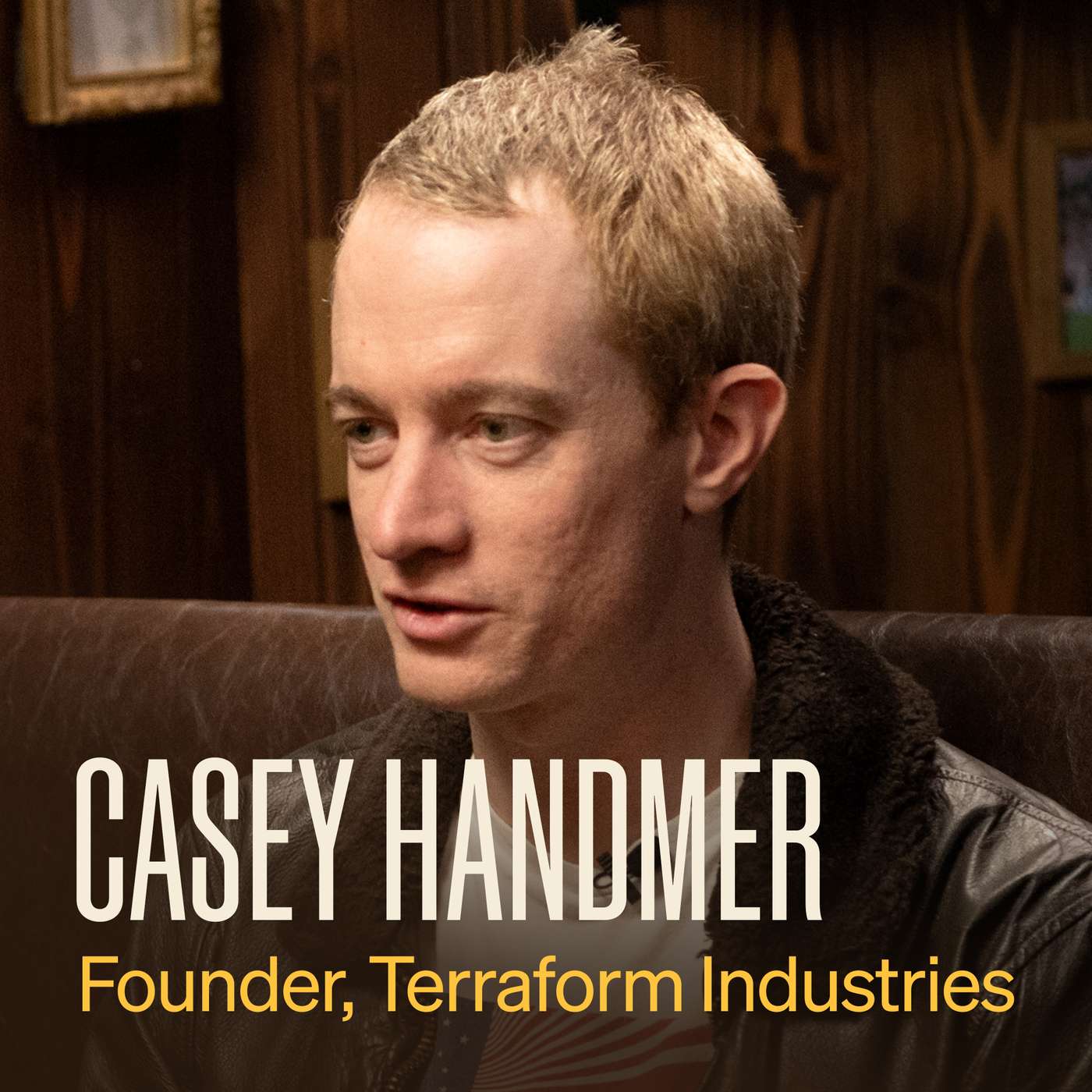
The mental challenges of building a company are immense. Musk's advice is not to seek encouragement, but to ensure your passion for the work is strong enough to withstand the inevitable suffering. He bluntly states, 'If you need encouragement, don't start a company.'

After his high-profile celebrity and political kingmaker phase backfired, Elon Musk is shifting his strategy. He is learning that his true influence comes from being the quiet "man behind the curtain" of his powerful companies, not from courting public attention.

Musk's sense of purpose isn't just a mission statement. It's a core operational pillar that justifies immense risk and fuels persistence through repeated failures, enabling him to pursue ventures others deem irrational.
Ryan Holiday uses Elon Musk as a case study for how genius can curdle. When a brilliant leader stops receiving challenging external inputs, surrounds themselves with sycophants, and starts to believe their own hype, their decision-making faculties degrade, leading to poor outcomes and a loss of wisdom.

A culture where everyone is friends can prevent honest feedback and challenging of ideas, which is essential for innovation. Musk believes a leader's job is to care for the success of the entire enterprise, even if it hurts an individual's feelings. Focusing on being liked is counterproductive.
The old goal of being universally liked is incompatible with being powerful in the new media environment. If you are making an impact and have a strong point of view, some people will inevitably dislike you. This controversy should be viewed as a positive signal of your relevance and significance, not a problem to be solved.

The pursuit of consensus is a dangerous trap for leaders aiming for standout success. Achieving breakthroughs requires the strength to proceed based on intellectual conviction, even amidst friction and criticism. This means accepting that you cannot please everyone and that some will inevitably disagree with your path.
![Luca Ferrari - Building Bending Spoons - [Invest Like the Best, EP.446] thumbnail](https://megaphone.imgix.net/podcasts/b29cbd80-b93a-11f0-a1b7-2b977c9469a2/image/39f7864ea628f71a81b94662bd4a86df.jpg?ixlib=rails-4.3.1&max-w=3000&max-h=3000&fit=crop&auto=format,compress)