Get your free personalized podcast brief
We scan new podcasts and send you the top 5 insights daily.
Architect Antoni Gaudí designed his 144-year project with features physically impossible to build at the time. This focus on the "what" (the ultimate vision) over the "how" (current technical capabilities) allowed for a revolutionary creation unconstrained by temporary limitations.

Related Insights
Frank Gehry's innovative architecture stemmed from a conflict between his old-world method of sketching and the modern software used to realize his designs. He was often frustrated when technology declared his most imaginative ideas impossible, highlighting a core tension between creative vision and engineering constraints.

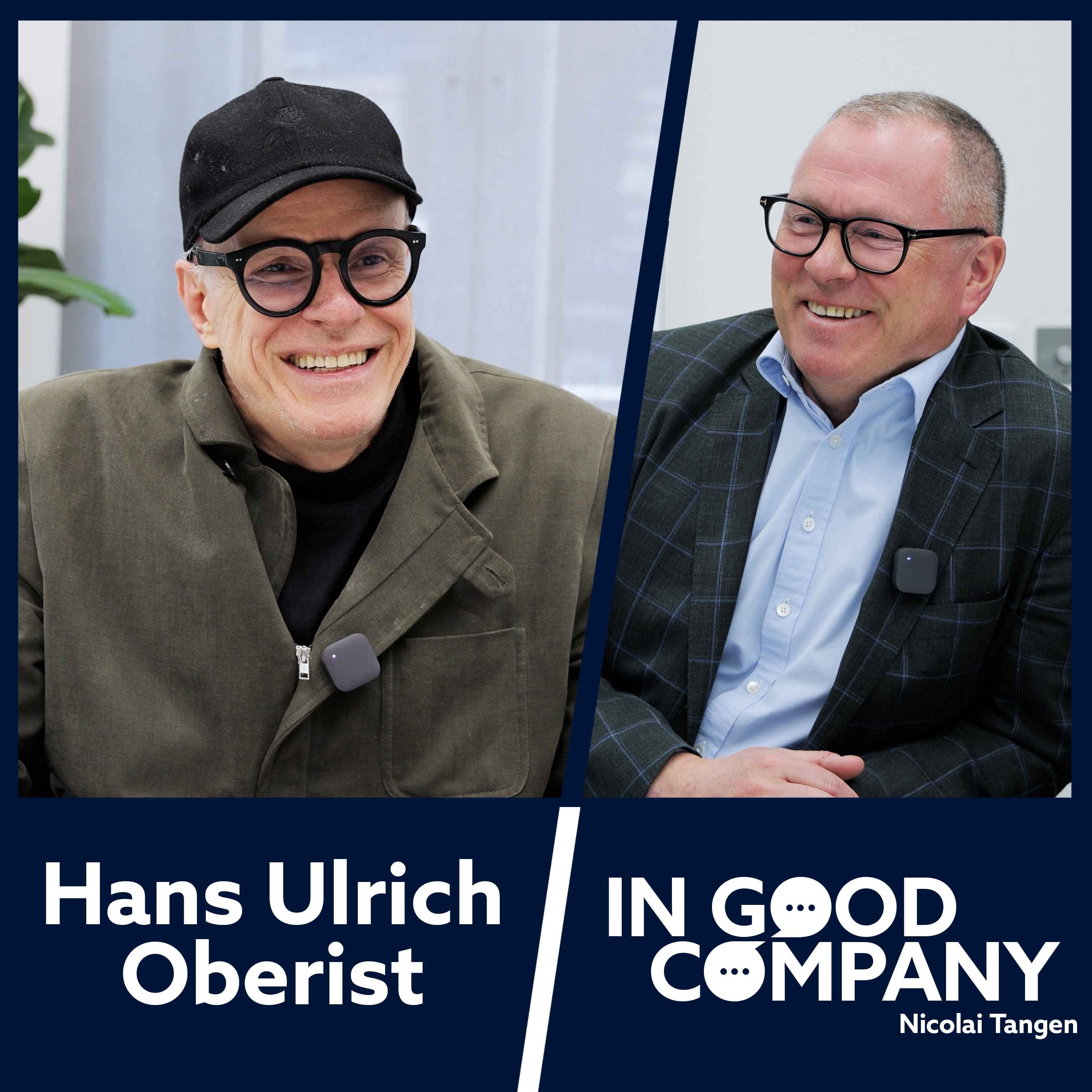
Hans Ulrich Obrist consistently asks creators about their unrealized projects. This question bypasses the limitations of their daily work to reveal their deepest ambitions, utopias, and self-censored ideas. It's a powerful tool for understanding true potential in any field.
Don't view limitations like budget cuts or recessions as purely negative. As architect Norman Foster told Guidara, constraints force you to be your most creative. Moments of adversity are when groundbreaking, efficient, and impactful ideas are often born out of necessity.

The culture at X under Elon Musk dismantles historical constraints by ruthlessly questioning every requirement. This environment, while disruptive, trains designers to shed their calloused ways of working within passive constraints and design without barriers.

Instead of iterating on existing solutions, Musk's approach is to start with an ideal, 'theoretically perfect' product and work backward to determine the tools and methods needed to create it. This pushes teams beyond incremental improvements and toward fundamental breakthroughs.

Imposing strict constraints on a creative process isn't a hindrance; it forces innovation in the remaining, more crucial variables like message and resonance. By limiting degrees of freedom, you are forced to excel in the areas that matter most, leading to more potent output.

Karri Saarinen of Linear posits that design should be a "search" phase, free from coding constraints. Jumping directly into code introduces biases from the existing codebase, making designers more conservative and less idealistic, which ultimately hinders breakthrough product ideas.

Resisting short-termism, Hans Ulrich Obrist designs projects that can evolve for decades. His "Do It" exhibition, running for 33 years, constantly learns and adapts. This model treats a project not as a static outcome but as a dynamic system designed for longevity and continuous learning.
Truly great work, from sushi masters to visionary founders, comes from a relentless pursuit of an underlying principle or 'divine lever'—like achieving 'wholeness' in architecture. This pursuit of essence, not just imitation of form, provides boundless energy and creates profound impact.

When pioneering a new technology, founders must have the conviction to build for its future state, not its current, often flawed, capabilities. Much like early mobile skeptics, today's AI critics may be proven wrong. Success requires ignoring current limitations and building for what will become possible.
