Get your free personalized podcast brief
We scan new podcasts and send you the top 5 insights daily.
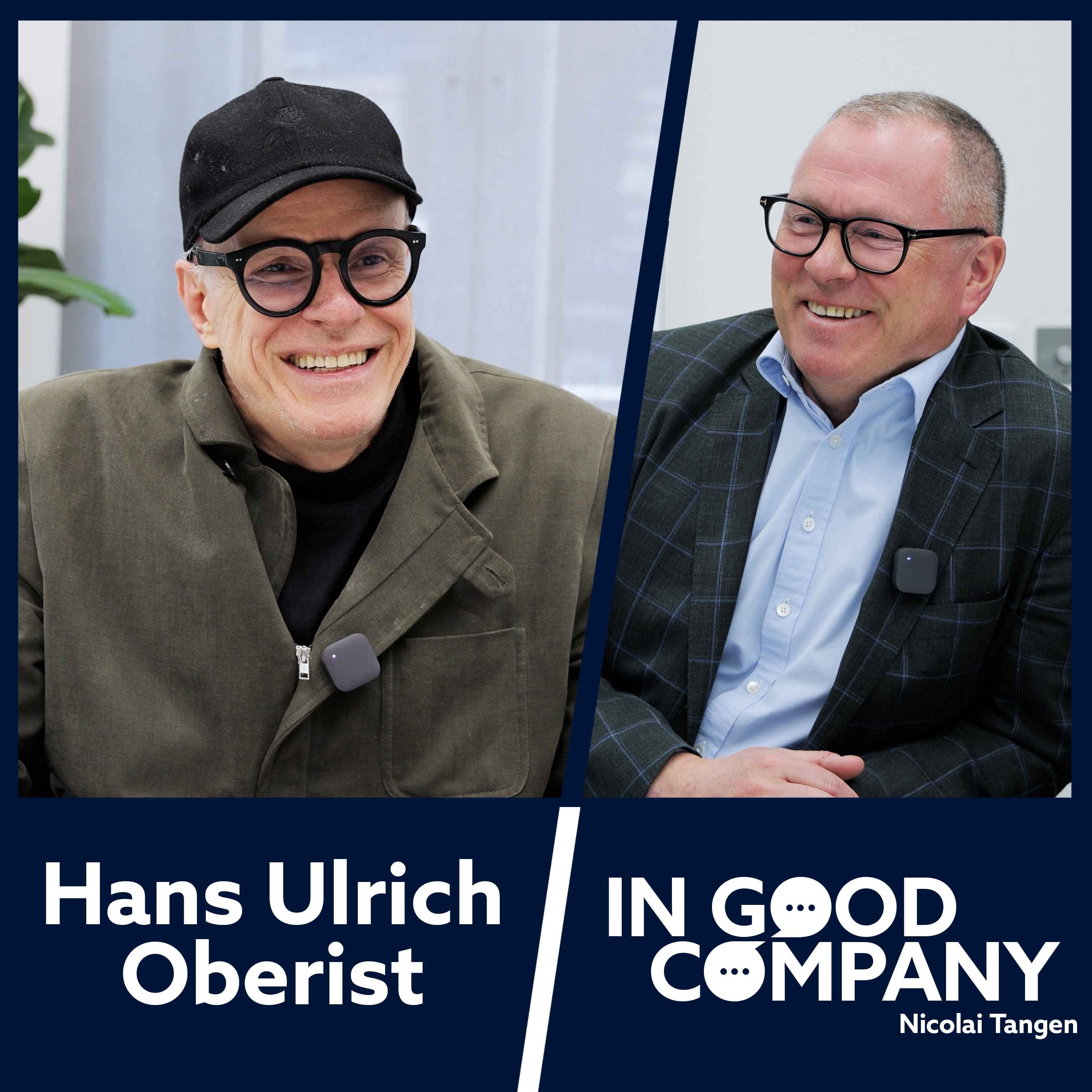
Resisting short-termism, Hans Ulrich Obrist designs projects that can evolve for decades. His "Do It" exhibition, running for 33 years, constantly learns and adapts. This model treats a project not as a static outcome but as a dynamic system designed for longevity and continuous learning.
Related Insights
Structure your projects so that you gain immense value even if they fail commercially. Prioritize the density of learning and the relationships you'll develop. These assets transcend any single project's outcome, ensuring that your time is always a worthwhile investment and compounding your long-term success.

Highly creative individuals are often driven by the intrinsic joy of the creative process, not just the final outcome. Constantly experimenting with side projects and personal websites, as designer Rano does, keeps skills sharp and serves as a sustainable source of inspiration and learning.

Hans Ulrich Obrist consistently asks creators about their unrealized projects. This question bypasses the limitations of their daily work to reveal their deepest ambitions, utopias, and self-censored ideas. It's a powerful tool for understanding true potential in any field.
Top art curator Hans Ulrich Obrist adopts writer J.G. Ballard's term "junction maker" to describe his role. This framing shifts focus from merely managing a domain to actively creating novel intersections between ideas, people, and projects, which is the core of his practice.
For ambitious 'moonshot' projects, the vast majority of time and effort (90%) is spent on learning, exploration, and discovering the right thing to build. The actual construction is a small fraction (10%) of the total work. This reframes failure as a critical and expected part of the learning process.

Products are no longer 'done' upon shipping. They are dynamic systems that continuously evolve based on data inputs and feedback loops. This requires a shift in mindset from building a finished object to nurturing a living, breathing system with its own 'metabolism of data'.

Inspired by architect Christopher Alexander, a designer's role shifts from building the final "house" to creating the "pattern language." This means designing a system of reusable patterns and principles that empowers users to construct their own solutions tailored to their unique needs.

Effective creation is not a linear process but a continuous cycle. Start with chaotic ideas, apply strategic constraints to create a tangible asset, and then use the feedback and new questions from your audience—the 'new chaos'—to fuel the next iteration or creation.

Obrist argues that true organizational reinvention comes from challenging the static org chart. At Serpentine, he added entirely new departments for technology and ecology. This structural change allows the institution to produce new kinds of work, rather than just iterating on existing formats.
Obrist argues against rigid master plans for creative projects. Instead, he advocates for embarking on a journey into the "unknowable," staying open to surprises and chain reactions. This allows serendipity to guide the project toward more innovative and unexpected outcomes.