Get your free personalized podcast brief
We scan new podcasts and send you the top 5 insights daily.
The speaker argues against using AI for core creative tasks like scripting and idea generation, as it dilutes the human element audiences crave. Instead, AI should automate repeatable, mechanical tasks to free up time for human creativity.

Related Insights
While AI tools once gave creators an edge, they now risk producing democratized, undifferentiated output. IBM's AI VP, who grew to 200k followers, now uses AI less. The new edge is spending more time on unique human thinking and using AI only for initial ideation, not final writing.
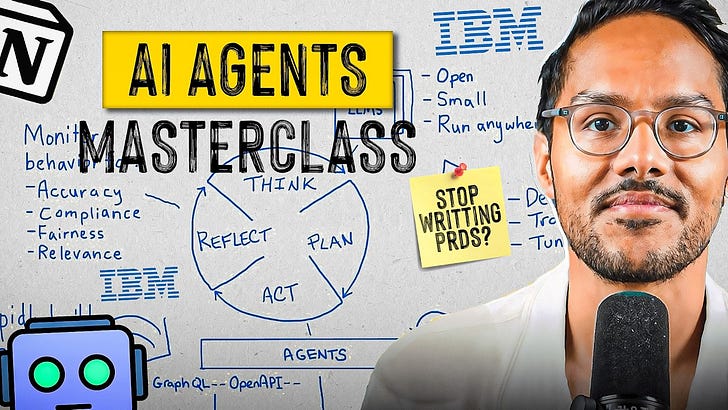
Generative AI is a powerful tool for accelerating the production and refinement of creative work, but it cannot replace human taste or generate a truly compelling core idea. The most effective use of AI is as a partner to execute a pre-existing, human-driven concept, not as the source of the idea itself.

While AI can run tasks autonomously, creatives must stay "in the loop." Avoid simply accepting AI output; instead, provide constant feedback to shape the result until it feels authentically yours. This prevents generic, soulless work and ensures you remain proud of the final product.
Sarandos argues AI's core function is to produce the most likely result, which is the opposite of what creators aim for in film and TV. He sees its value in production efficiency (e.g., pre-visualizing stunts for safety) and as a writing partner for brainstorming, not as a replacement for the originality that human writers' rooms provide.
The founder cautions against using AI for everything from art to development. He views it as a tool to accelerate repeatable tasks. The trap is that AI makes it so easy to build that founders may neglect to validate if they're building something people actually want, losing the essential human element of taste.

The best use of AI in content creation isn't for writing the first draft. Instead, apply it to the tedious parts of the process you dislike, such as data processing, topic ideation, or even editing, to accelerate the path to a high-quality, human-created piece.

AI excels at operational tasks and scaling processes. However, front-facing content should remain human-led. The coming flood of mediocre AI-generated content will make authentic, human-first material stand out and command a premium, as people can easily detect inauthentic content.

The most effective way to use AI in creative fields is not as an automaton to generate final products, but as a tireless, hyper-knowledgeable writing partner. The human provides taste and direction, guiding the AI through back-and-forth exchanges to refine ideas and overcome creative blocks.

AI tools are best used as collaborators for brainstorming or refining ideas. Relying on AI for final output without a "human in the loop" results in obviously robotic content that hurts the brand. A marketer's taste and judgment remain the most critical components.

Effective AI content strategy uses tools to handle first drafts and outlines, accelerating production and ensuring consistency. This frees up humans to perform the crucial roles of editing, shaping perspective, and injecting unique, lived experiences, which AI cannot replicate. The goal is amplification, not automation.