Get your free personalized podcast brief
We scan new podcasts and send you the top 5 insights daily.
While AI can run tasks autonomously, creatives must stay "in the loop." Avoid simply accepting AI output; instead, provide constant feedback to shape the result until it feels authentically yours. This prevents generic, soulless work and ensures you remain proud of the final product.
Related Insights
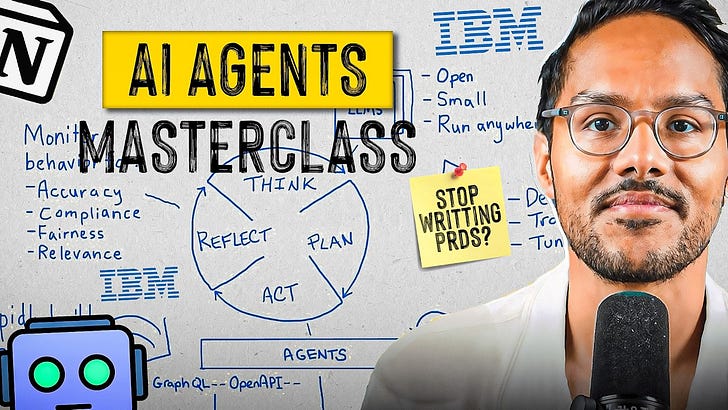
While AI tools once gave creators an edge, they now risk producing democratized, undifferentiated output. IBM's AI VP, who grew to 200k followers, now uses AI less. The new edge is spending more time on unique human thinking and using AI only for initial ideation, not final writing.
Generative AI is a powerful tool for accelerating the production and refinement of creative work, but it cannot replace human taste or generate a truly compelling core idea. The most effective use of AI is as a partner to execute a pre-existing, human-driven concept, not as the source of the idea itself.

A powerful workflow is to explicitly instruct your AI to act as a collaborative thinking partner—asking questions and organizing thoughts—while strictly forbidding it from creating final artifacts. This separates the crucial thinking phase from the generative phase, leading to better outcomes.

AI tools rarely produce perfect results initially. The user's critical role is to serve as a creative director, not just an operator. This means iteratively refining prompts, demanding better scripts, and correcting logical flaws in the output to avoid generic, low-quality content.

Instead of accepting an AI's first output, request multiple variations of the content. Then, ask the AI to identify the best option. This forces the model to re-evaluate its own work against the project's goals and target audience, leading to a more refined final product.

The most creative use of AI isn't a single-shot generation. It's a continuous feedback loop. Designers should treat AI outputs as intermediate "throughputs"—artifacts to be edited in traditional tools and then fed back into the AI model as new inputs. This iterative remixing process is where happy accidents and true innovation occur.

The primary path to success with AI isn't blind adoption, but critical resistance. Professionals who question, refine, and go beyond AI's initial 'easy button' outputs will produce differentiated, high-value work and avoid the trap of generic, AI-generated mediocrity.

The most effective way to use AI in creative fields is not as an automaton to generate final products, but as a tireless, hyper-knowledgeable writing partner. The human provides taste and direction, guiding the AI through back-and-forth exchanges to refine ideas and overcome creative blocks.

AI tools are best used as collaborators for brainstorming or refining ideas. Relying on AI for final output without a "human in the loop" results in obviously robotic content that hurts the brand. A marketer's taste and judgment remain the most critical components.

AI coding tools generate functional but often generic designs. The key to creating a beautiful, personalized application is for the human to act as a creative director. This involves rejecting default outputs, finding specific aesthetic inspirations, and guiding the AI to implement a curated human vision.