Get your free personalized podcast brief
We scan new podcasts and send you the top 5 insights daily.
Emil Michael identifies a key cultural flaw in the Pentagon: a tendency to avoid giving a direct 'no' to vendors. This ambiguity leaves startups burning cash while awaiting a decision. He is pushing for a culture of 'faster yeses, faster nos' to give startups the clarity they need to survive and pivot.

Related Insights
To attract innovation, the DoD is shifting its procurement process. Instead of issuing rigid, 300-page requirement documents that favor incumbents, it now defines a problem and asks companies to propose their own novel solutions.

Emil Michael warns defense tech founders that a prototype is not enough. The Department of War requires a credible plan for mass production. Startups must prove they have mastered the "skilled manufacturing piece" to win large contracts.
US Under Secretary of War Emil Michael reveals that the procurement system was so broken that SpaceX, Anduril, and Palantir all had to sue the Department of War to secure their first contracts, a barrier he is now working to eliminate.
Early-stage startups can't afford to be strung along by enterprise prospects. The goal isn't just to close deals, but to get feedback quickly. Founders must design a sales process that forces a decision, because a "long maybe will kill you." It's better to get a fast "no" and move on.

Luckey reveals that Anduril prioritized institutional engagement over engineering in its early days, initially hiring more lawyers and lobbyists. The biggest challenge wasn't building the technology, but convincing the Department of Defense and political stakeholders to believe in a new procurement model, proving that shaping the system is a prerequisite for success.
![Palmer Luckey - Inventing the Future of Defense - [Invest Like the Best, CLASSICS] thumbnail](https://megaphone.imgix.net/podcasts/f7c9aa8e-cb8d-11f0-828e-0b281809c10a/image/cc07f91ec47f95abbde771a4956b37b7.jpg?ixlib=rails-4.3.1&max-w=3000&max-h=3000&fit=crop&auto=format,compress)
The government's procurement process often defaults to bidding out projects to established players like Lockheed Martin, even if a startup presents a breakthrough. Success requires navigating this bureaucratic reality, not just superior engineering.

Many defense startups fail despite superior technology because the government isn't ready to purchase at scale. Anduril's success hinges on identifying when the customer is ready to adopt new capabilities within a 3-5 year window, making market timing its most critical decision factor.
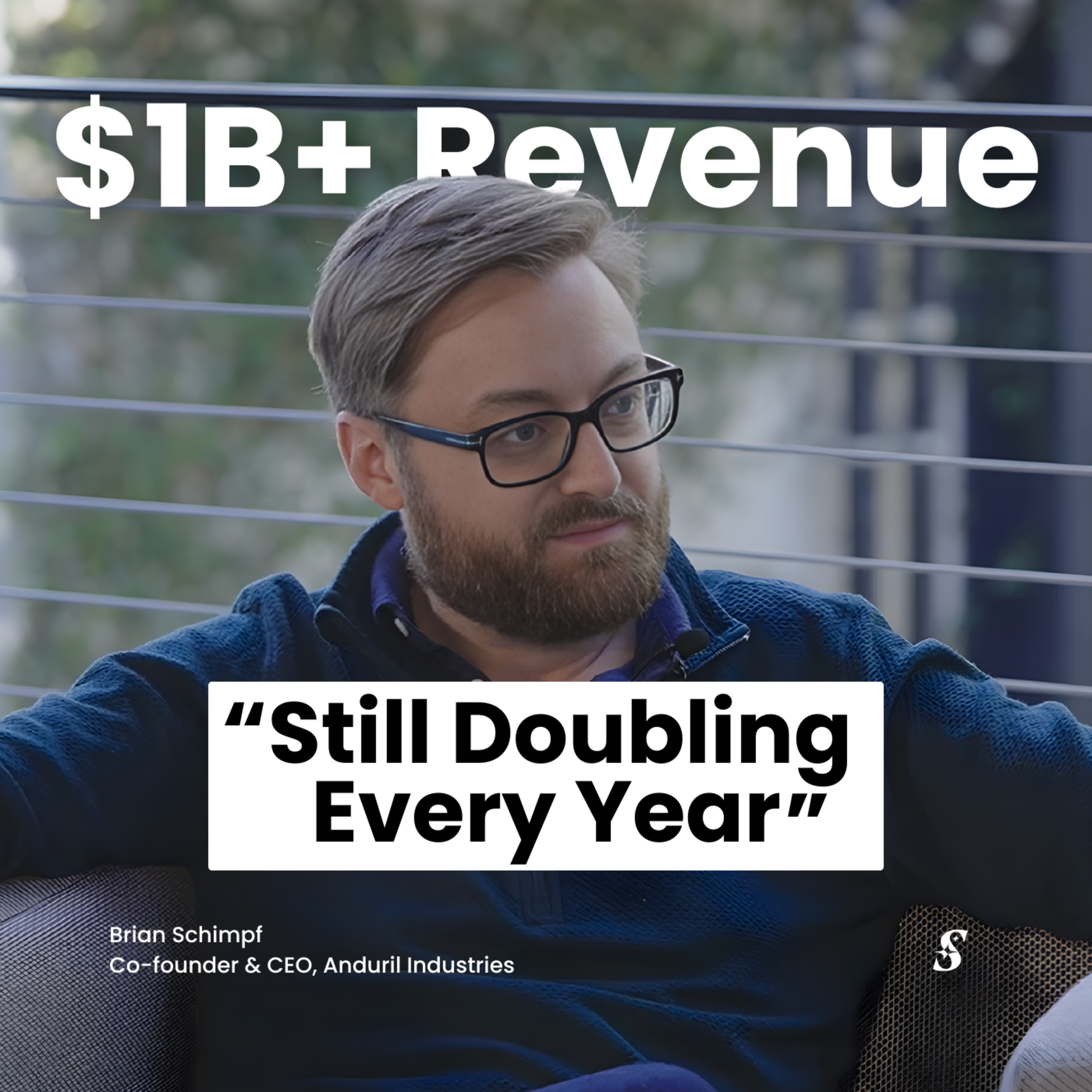
The defense procurement system was built when technology platforms lasted for decades, prioritizing getting it perfect over getting it fast. This risk-averse model is now a liability in an era of rapid innovation, as it stifles the experimentation and failure necessary for speed.

While startups excel at invention, Undersecretary Michael points out their primary disadvantage against established primes is the ability to manufacture and scale production reliably. He urges new entrants to build this 'muscle' early, borrowing from the 'old world' to cross the chasm from concept to deployed product.
Under Secretary of War Emil Michael states the biggest barrier for defense startups isn't technology, but navigating procurement bureaucracy. By reforming requirements and shifting to commercial-style, fixed-cost contracts, the Pentagon aims to favor product innovation over process navigation.
