Get your free personalized podcast brief
We scan new podcasts and send you the top 5 insights daily.
Alex Karp argues that while tech companies like to believe in positive-sum outcomes, the geopolitical reality of AI is a zero-sum competition between the U.S., China, and Russia. He highlights the hypocrisy that these same companies operate in a ruthless, zero-sum fashion against their direct competitors.

Related Insights
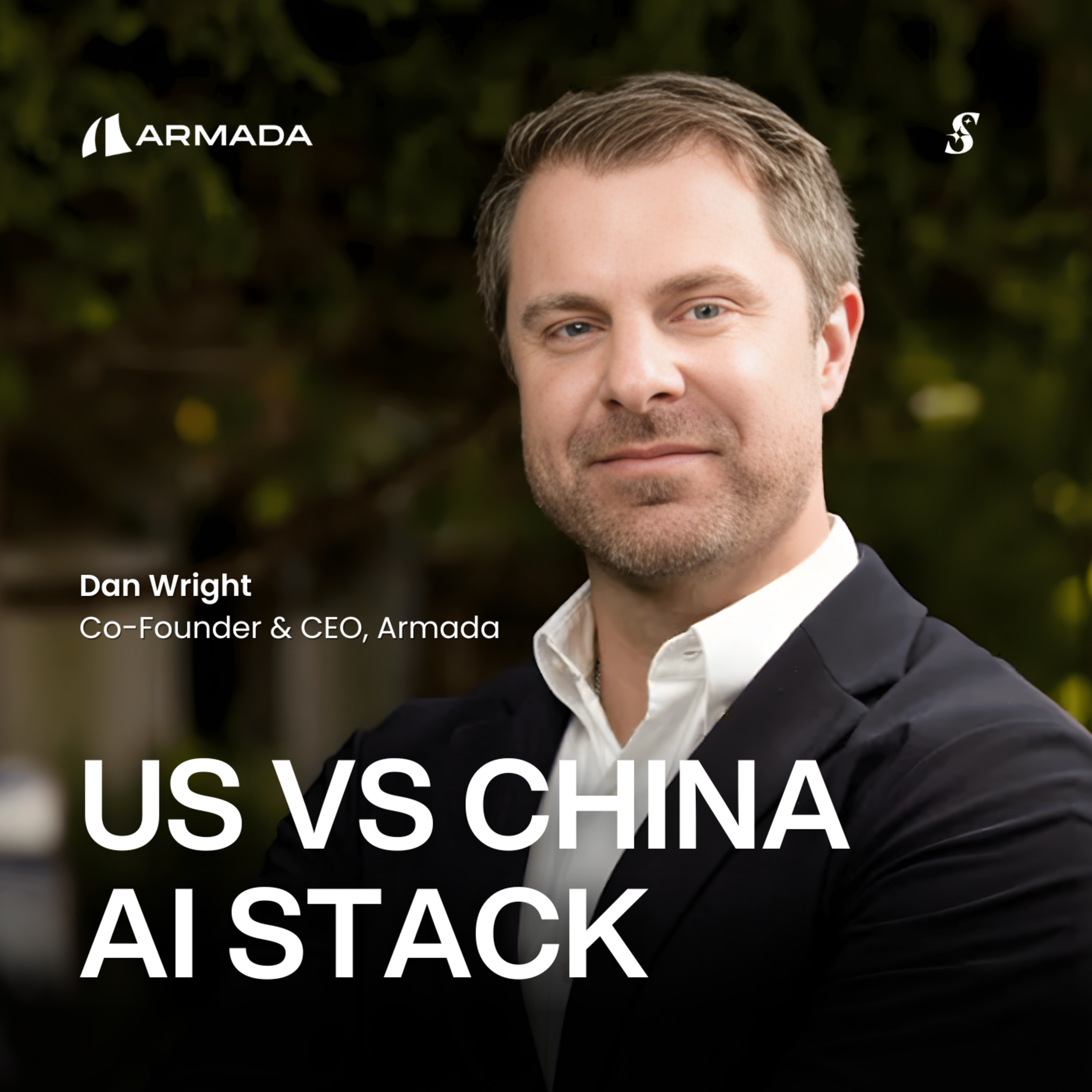
The competition in AI infrastructure is framed as a binary, geopolitical choice. The future will be dominated by either a US-led AI stack or a Chinese one. This perspective positions edge infrastructure companies as critical players in national security and technological dominance.
The justification for accelerating AI development to beat China is logically flawed. It assumes the victor wields a controllable tool. In reality, both nations are racing to build the same uncontrollable AI, making the race itself, not the competitor, the primary existential threat.

The development of AI won't stop because of game theory. For competing nations like the US and China, the risk of falling behind is greater than the collective risk of developing the technology. This dynamic makes the AI race an unstoppable force, mirroring the Cold War nuclear arms race and rendering calls for a pause futile.

The idea that AI development is a winner-take-all race to AGI is a compelling story that simplifies complex realities. This narrative is strategically useful as it creates a pretext for aggressive, 'do whatever it takes' behavior, sidestepping the messier nature of real-world conflict.

Pausing or regulating AI development domestically is futile. Because AI offers a winner-take-all advantage, competing nations like China will inevitably lie about slowing down while developing it in secret. Unilateral restraint is therefore a form of self-sabotage.

The feeling that AI development is a "race" is unique to this tech era. According to Aetherflux founder Baiju Bhat, this urgency is fueled by geopolitical competition between the U.S. and China, who both view AI leadership as a national strategic priority, unlike previous consumer-focused tech waves.

Framing the US-China AI dynamic as a zero-sum race is inaccurate. The reality is a complex 'coopetition' where both sides compete, cooperate on research, and actively co-opt each other's open-weight models to accelerate their own development, creating deep interdependencies.

Anthropic CEO Dario Amodei's writing proposes using an AI advantage to 'make China an offer they can't refuse,' forcing them to abandon competition with democracies. The host argues this is an extremely reckless position that fuels an arms race dynamic, especially when other leaders like Google's Demis Hassabis consistently call for international collaboration.

Major AI players treat the market as a zero-sum, "winner-take-all" game. This triggers a prisoner's dilemma where each firm is incentivized to offer subsidized, unlimited-use pricing to gain market share, leading to a race to the bottom that destroys profitability for the entire sector and squeezes out smaller players.

Alex Karp warns that if Silicon Valley is perceived as simultaneously destroying white-collar jobs and refusing to support the U.S. military, the political backlash will inevitably lead to the nationalization of critical AI technologies. He argues this is a predictable outcome that tech leaders with high IQs are failing to see.