Get your free personalized podcast brief
We scan new podcasts and send you the top 5 insights daily.
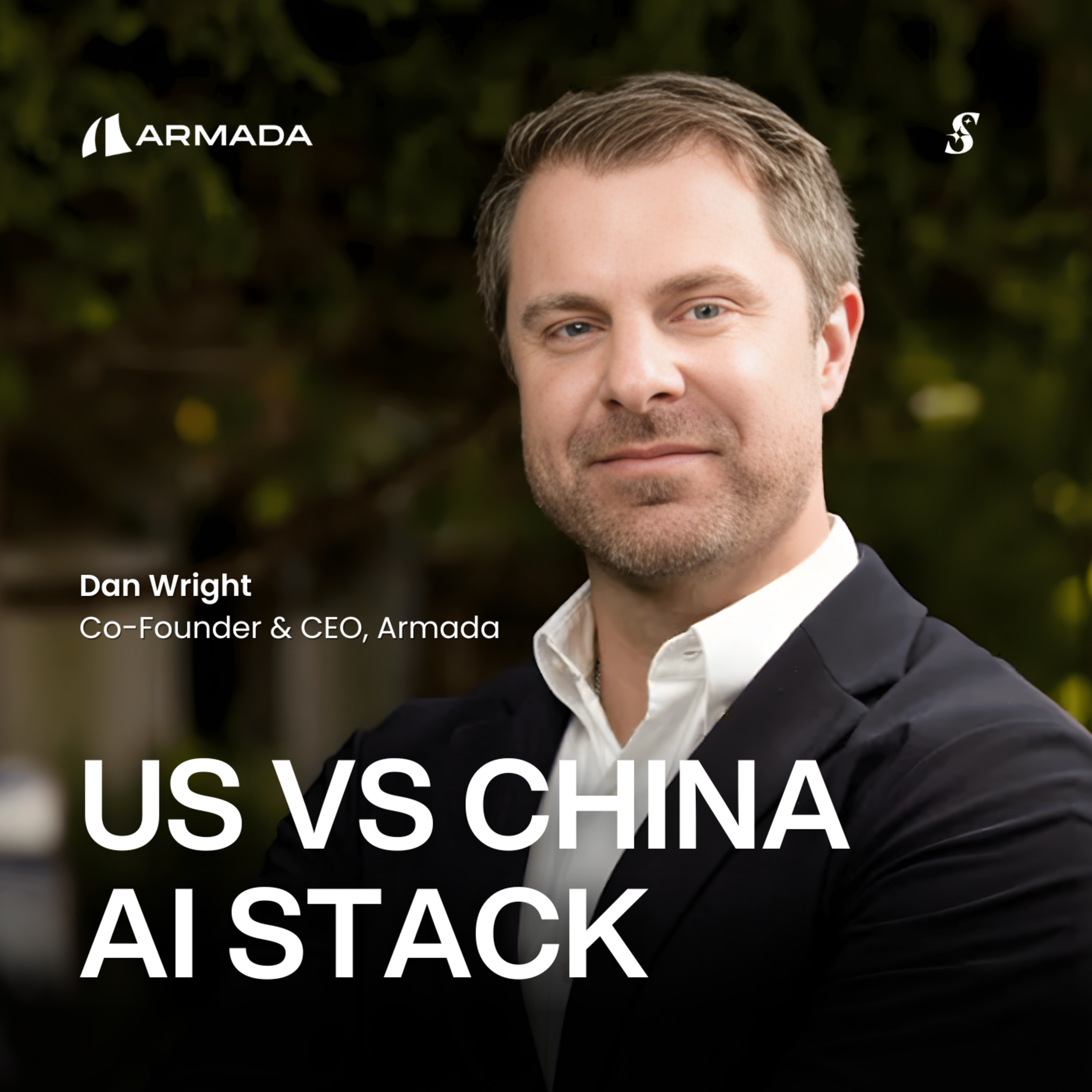
The competition in AI infrastructure is framed as a binary, geopolitical choice. The future will be dominated by either a US-led AI stack or a Chinese one. This perspective positions edge infrastructure companies as critical players in national security and technological dominance.
Related Insights
The US AI strategy is dominated by a race to build a foundational "god in a box" Artificial General Intelligence (AGI). In contrast, China's state-directed approach currently prioritizes practical, narrow AI applications in manufacturing, agriculture, and healthcare to drive immediate economic productivity.

By framing competition with China as an existential threat, tech leaders create urgency and justification for government intervention like subsidies or favorable trade policies. This transforms a commercial request for financial support into a matter of national security, making it more compelling for policymakers.

The conversation around AI and government has evolved past regulation. Now, the immense demand for power and hardware to fuel AI development directly influences international policy, resource competition, and even provides justification for military actions, making AI a core driver of geopolitics.

A nation's advantage is its "intelligent capital stock": its total GPU compute power multiplied by the quality of its AI models. This explains the US restricting GPU sales to China, which counters by excelling in open-source models to close the gap.

The US and China have divergent AI strategies. The US is pouring capital into massive compute clusters to build dominant global platforms like ChatGPT (aggregation theory). China is focusing its capital on building a self-sufficient, domestic semiconductor and AI supply chain to ensure technological independence.
![Dylan Patel - Inside the Trillion-Dollar AI Buildout - [Invest Like the Best, EP.442] thumbnail](https://megaphone.imgix.net/podcasts/799253cc-9de9-11f0-8661-ab7b8e3cb4c1/image/d41d3a6f422989dc957ef10da7ad4551.jpg?ixlib=rails-4.3.1&max-w=3000&max-h=3000&fit=crop&auto=format,compress)
The push for sovereign AI clouds extends beyond data privacy. The core geopolitical driver is a fear of becoming a "net importer of intelligence." Nations view domestic AI production as critical infrastructure, akin to energy or water, to avoid dependency on the US or China, similar to how the Middle East controls oil.

The US-China tech rivalry spans four arenas: creating technology, applying it, installing infrastructure, and self-sufficiency. While the U.S. excels at creating foundational tech like AI frameworks and semiconductors, China is leading in its practical application (e.g., robotics), installing digital infrastructure globally, and achieving resource independence.

The guest argues that without the massive GDP growth and efficiency gains promised by AI, the U.S. is on a path to being surpassed by China as the world hegemon by 2030. AI is not just an economic boom; it's a geopolitical necessity for maintaining America's global standing.
The US is betting on winning the AI race by building the smartest models. However, China has strategically mastered the entire "electric stack"—energy generation, batteries, grids, and manufacturing. Beijing offers the world the 21st-century infrastructure needed to power AI, while Washington focuses on 20th-century energy sources.

A key risk to OpenAI's trillion-dollar valuation is not just market competition, but the rise of a state-backed, parallel AI ecosystem in China. This creates a future where global AI leadership could be fragmented along geopolitical lines, challenging long-term dominance.