Get your free personalized podcast brief
We scan new podcasts and send you the top 5 insights daily.
NASA clarifies its role is not to centrally plan or guarantee a future lunar economy. Instead, by executing dozens of missions requiring landers, rovers, and manufacturing experiments, it will send a powerful and sustained demand signal. This creates the market conditions and opportunities for private industry to independently find and unlock value on the moon.

Related Insights
Getting to space is now relatively cheap thanks to SpaceX. The next economic revolution will be triggered by solving the much harder problem of bringing materials back from space. This will enable in-space manufacturing and create a true two-way space economy.

The long-term vision isn't just launching data centers, but manufacturing them on the moon. This would utilize lunar resources and electromagnetic mass drivers to deploy satellites, making Earth's launch costs and gravity well irrelevant for deep space expansion.
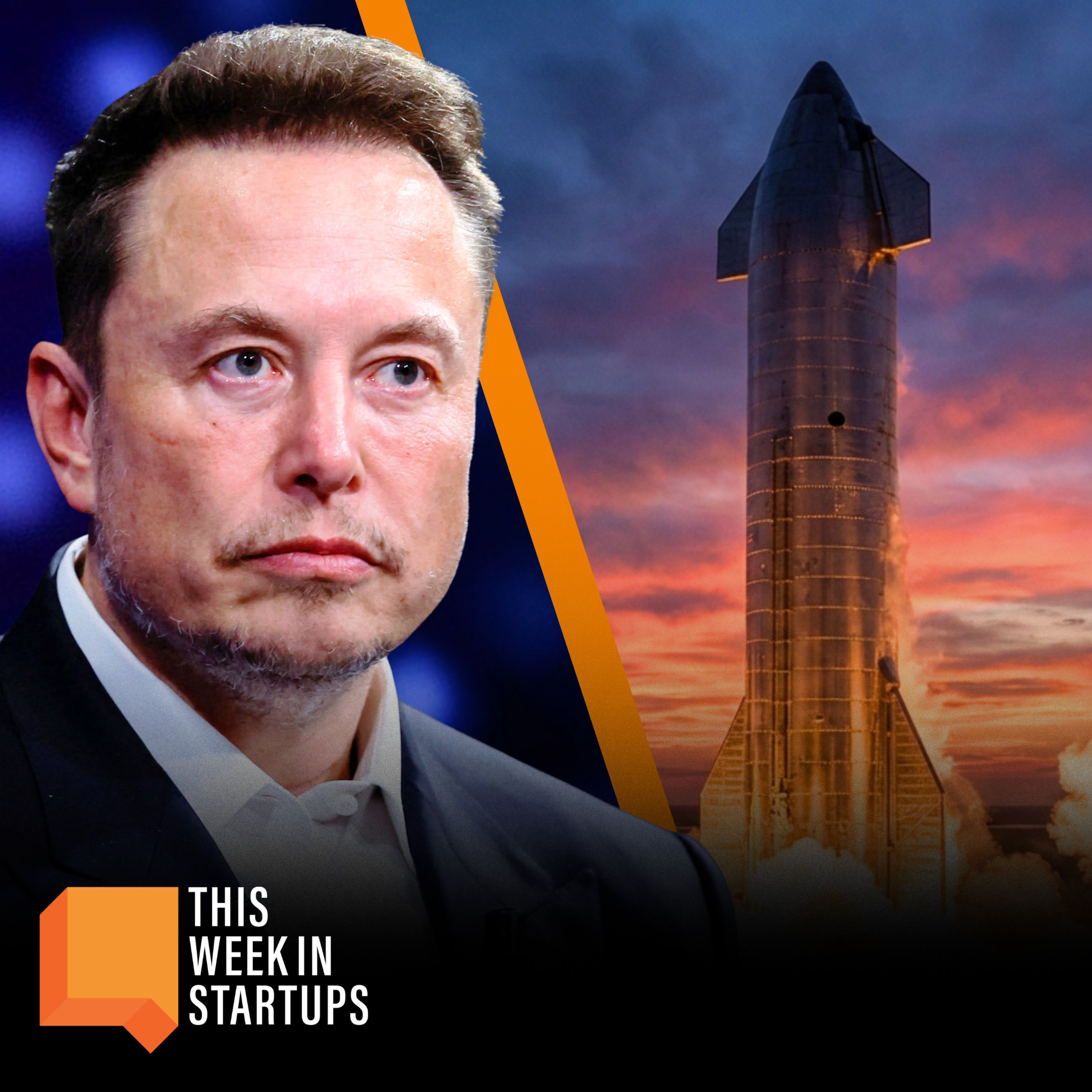
Companies like SpaceX have largely solved the transportation problem. The next major bottleneck and massive economic opportunity is creating sustainable habitats on the Moon and Mars by utilizing local resources (ISRU), shifting the core focus of the space economy.

Tom Mueller believes the Moon is more important than Mars in the near term, primarily as a source of critical resources. He highlights a potential terrestrial copper shortage, driven by data center demand, as a key economic driver for establishing a lunar mining presence.

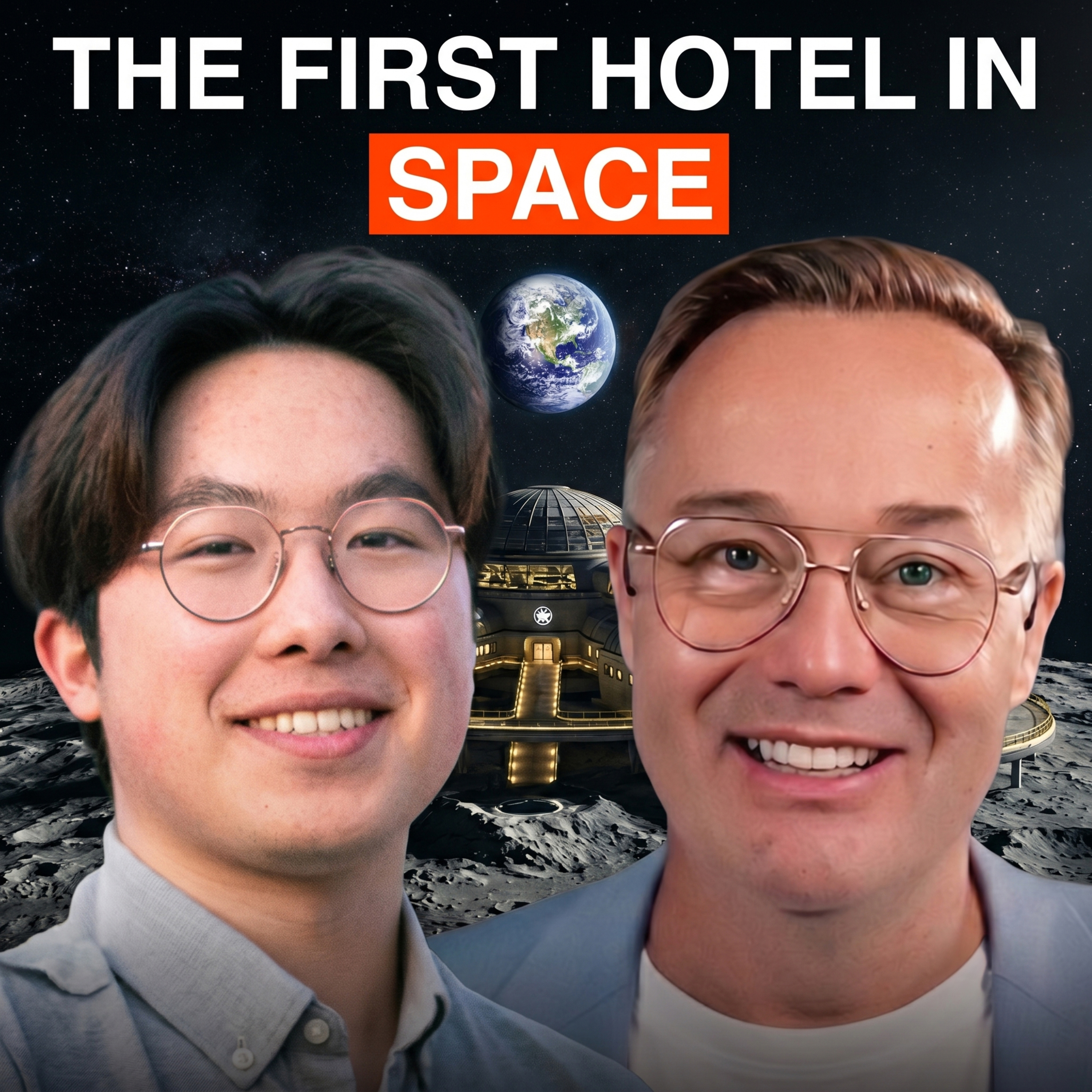
GRU Space's strategy is to build a commercial moon hotel to create demand for lunar services, positioning them as the go-to contractor for NASA's larger moon base projects. This creates a private ecosystem, reducing reliance on government funding.
The agency's purpose is to tackle near-impossible challenges where no viable business case or revenue model exists, such as developing nuclear propulsion for Mars. Once a breakthrough is made, the technology can be handed off to the private sector for commercialization, product improvement, and cost reduction.

Mining and manufacturing on the moon is more feasible than asteroid mining. The moon's low gravity and lack of atmosphere allow for a 'mass driver'—an electric rail—to launch finished goods back to Earth at nearly zero shipping cost, creating an economic advantage over terrestrial production.

Elon Musk has strategically shifted SpaceX's primary focus from colonizing Mars to establishing an industrial base on the Moon. The new vision is to manufacture AI satellites on the lunar surface and launch them into a 'Dyson swarm' using electromagnetic mass drivers, framing the Moon as a critical stepping stone for a space-based economy.
Blake Scholl argues the Artemis mission is an uneconomical "moondoggle" like Apollo. He advocates for a capitalist approach to lunar colonization, similar to the American West's expansion, rather than a centrally planned, government-led "glory project."

For the Artemis program, NASA is not building and owning lunar landers as it did during Apollo. Instead, it is contracting SpaceX and Blue Origin to provide landing as a managed service. This marks a fundamental shift from asset ownership to a services-based procurement model.
