Get your free personalized podcast brief
We scan new podcasts and send you the top 5 insights daily.
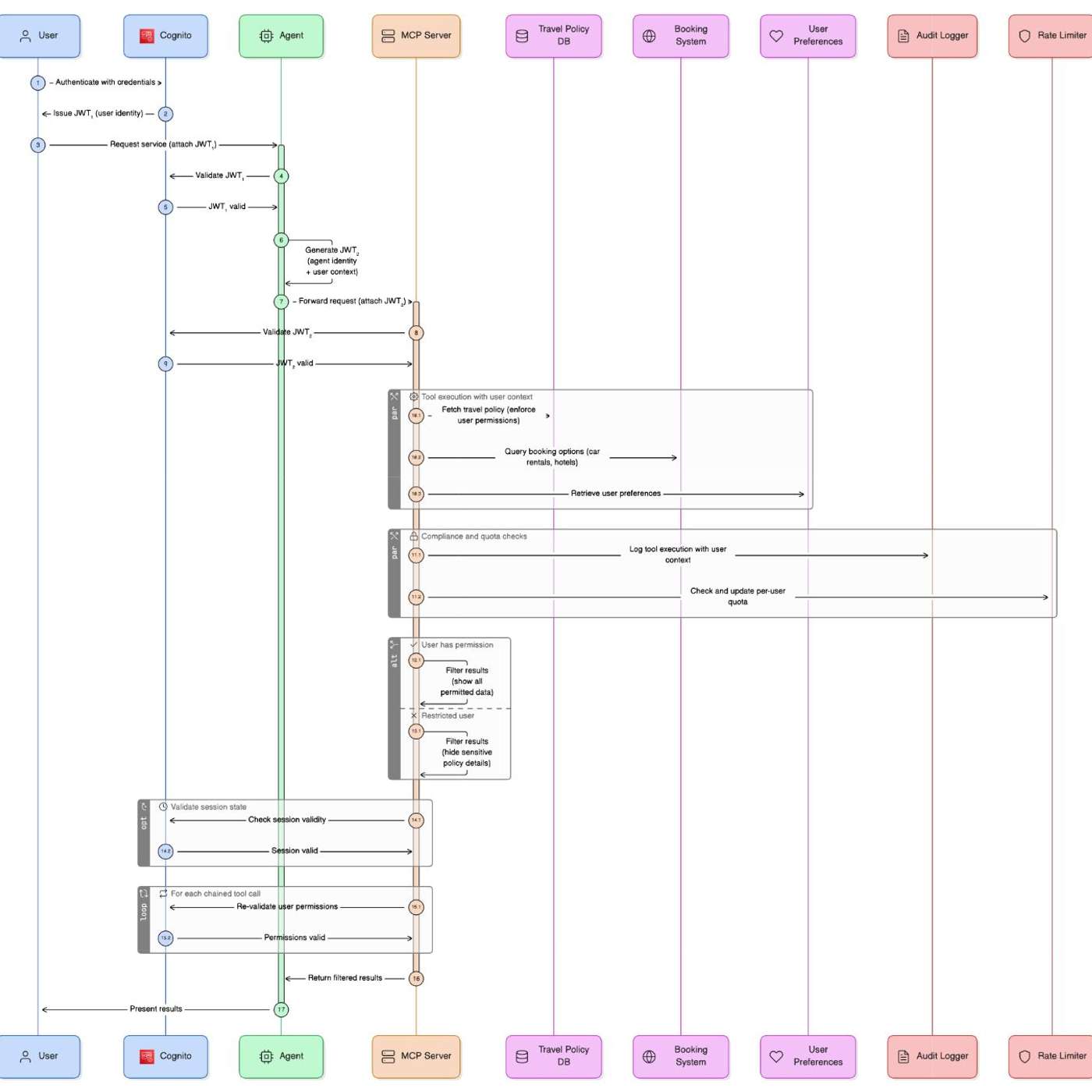
AI agents manage vast state (history, tool results), unlike traditional web apps. Externalizing this state to a service like S3, instead of keeping it in memory, is crucial. This approach enables advanced features like handing off conversations between agents, creating robust audit trails, and facilitating AI-to-AI collaboration.
Related Insights
According to Harrison Chase, providing agents with file system access is critical for long-horizon tasks. It serves as a powerful context management tool, allowing the agent to save large tool outputs or conversation histories to files, then retrieve them as needed, effectively bypassing context window limitations.
Instead of relying on lossy LLM-based summarization, architect agent memory into three tiers: an ephemeral scratchpad for immediate tasks, a deterministic state machine for history (e.g., Redis), and a semantic anchor (e.g., vector store) for global knowledge lookup.

The most significant challenge holding back AI agent development is the lack of persistent memory. Builders dedicate substantial effort to creating elaborate workarounds for agents forgetting context between sessions, highlighting a critical infrastructure gap and a major opportunity for platform providers.
![Agent Building Trends [Operator Bonus Episode] thumbnail](https://d3t3ozftmdmh3i.cloudfront.net/staging/podcast_uploaded_nologo/41472609/41472609-1752234663609-8665756a468e5.jpg)
To run reliably in the cloud, AI agents cannot be simple synchronous API calls. Their long-running, stateful nature requires an asynchronous architecture. This typically involves a message broker and task queue to farm out agentic loops to ephemeral workers, preventing process failures and enabling scalability.
Simply killing a misbehaving agent's process is a failing strategy because it destroys the audit trail needed for compliance (e.g., HIPAA). A "graceful" kill switch operates within a managed envelope, preserving the agent's state, cost data, and intermediate work products.

Relying on chat history for an AI's memory is fragile. A more robust method is to have the AI serialize key learnings into an external, structured file system (like an Obsidian vault). This creates inspectable, editable, and reusable artifacts that can outlive any single conversation thread.
Instead of siloing agents, create a central memory file that all specialized agents can read from and write to. This ensures a coding agent is aware of marketing initiatives or a sales agent understands product updates, creating a cohesive, multi-agent system.

Tasklet completely re-architected its agent, moving from feeding chat history into the LLM to treating the file system as the primary context. The agent now receives hints and pointers to relevant files, enabling it to handle infinitely long histories and larger contexts beyond the token window.

To make agents useful over long periods, Tasklet engineers an "illusion" of infinite memory. Instead of feeding a long chat history, they use advanced context engineering: LLM-based compaction, scoping context for sub-agents, and having the LLM manage its own state in a SQL database to recall relevant information efficiently.

Complex orchestration middleware isn't necessary for multi-agent workflows. A simple file system can act as a reliable handoff mechanism. One agent writes its output to a file, and the next agent reads it. This approach is simple, avoids API issues, and is highly robust.