Get your free personalized podcast brief
We scan new podcasts and send you the top 5 insights daily.
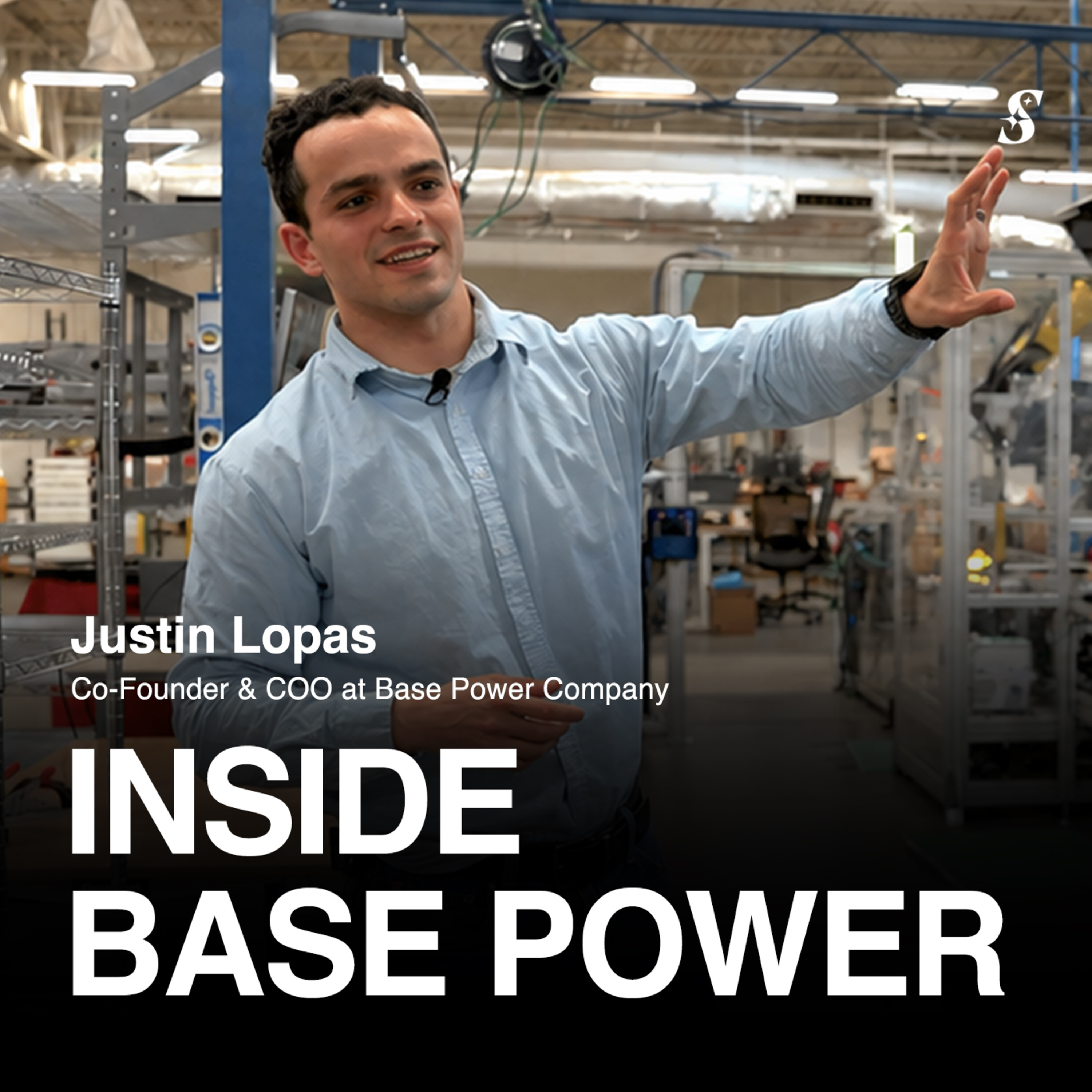
Base Power differentiates itself by designing its system to back up an entire home by default, unlike competitors that often only back up select circuits. This eliminates a complex decision for the customer during installation and provides a clearer, more comprehensive value proposition.
Related Insights
When a service has a generic name, it becomes a commodity in the customer's mind, making it indistinguishable from competitors except by price. This leads to a "race to the bottom." A unique, branded name creates a powerful differentiator and allows the business to compete on value and customer experience.

The CEO dismisses the incumbent argument that bundling services like mortgage and insurance is too complex. He contends that for 80% of customers, these are "vanilla" services. The current system forces this majority to subsidize complex edge cases, a model Opendoor aims to disrupt by focusing on a simple experience for the average person.
![Opendoor: Q1 2026 Earnings - [Business Breakdowns, EP.245] thumbnail](https://megaphone.imgix.net/podcasts/abec2476-4a94-11f1-ba4c-130e07a16fae/image/fd9bcf8c49f565897d58676655031c9a.jpg?ixlib=rails-4.3.1&max-w=3000&max-h=3000&fit=crop&auto=format,compress)
Competitors often have feature parity for standard use cases. To stand out, focus the conversation on how your product performs in the worst-case scenarios—like a dashcam operating at -20 degrees. This shifts the evaluation from a simple feature checklist to a discussion of reliability and premium quality.

Companies assume different verticals require entirely different positioning. But if they're buying the same product, the underlying value is often the same (e.g., ensuring uptime for both retail and utilities). Differentiate with industry-specific examples, not a completely separate core positioning.
Unlike competitors focused on pairing small batteries with solar for wealthy homeowners, Base Power's strategy is to deploy large batteries at the edge of the grid to provide grid support. This transforms individual home batteries into a decentralized network, creating a fundamentally different value proposition.
By designing, manufacturing, installing, and operating its own batteries, Base Power creates a flywheel. Greater scale lowers costs, which allows for lower consumer prices, which in turn drives more scale and demand. This strategy is key in a commodity industry.

The company bifurcates the installation process. A skilled electrician handles the complex wiring in 1-2 hours. Later, delivery drivers complete the physical, plug-and-play installation of the battery unit in under an hour, optimizing for skill level and cost.
In commoditized industries like energy, customers are accustomed to poor service and non-existent brands. Base identifies this as a massive opportunity. By focusing on creating the first "beloved brand in energy," they aim to build a powerful competitive moat that incumbents cannot easily replicate.

Instead of outsourcing, Base Power manufactures its batteries in-house in the US. This strategy gives them direct control over the production line, allowing for rapid hardware changes, reduced lead times, and lower costs compared to relying on contract manufacturers.
Don't just list all your features. To build a strong 'why us' case, focus on the specific features your competitors lack that directly solve a critical, stated pain point for the client. This intersection is the core of your unique value proposition and the reason they'll choose you.
