Get your free personalized podcast brief
We scan new podcasts and send you the top 5 insights daily.
The company bifurcates the installation process. A skilled electrician handles the complex wiring in 1-2 hours. Later, delivery drivers complete the physical, plug-and-play installation of the battery unit in under an hour, optimizing for skill level and cost.
Related Insights
According to Base Power CEO Zach Dell, breakthroughs in battery chemistry are less critical than optimizing the entire system. The majority of a deployed battery's cost comes from components "above the cell," including the pack, power electronics, deployment, customer acquisition, and maintenance. This makes vertical integration essential for driving down the true cost of power.

NIO's innovative battery-swap stations reframe the most expensive part of an EV as a subscription ("Battery as a Service"). Customers can swap a depleted battery for a full one in under three minutes, solving major pain points like charge time, range anxiety, and high upfront costs, creating a powerful competitive advantage.

The primary bottleneck for new energy projects, especially for AI data centers, is the multi-year wait in interconnection queues. Base's strategy circumvents this by deploying batteries where grid infrastructure already exists, enabling them to bring megawatts online in months, not years.

Unlike competitors focused on pairing small batteries with solar for wealthy homeowners, Base Power's strategy is to deploy large batteries at the edge of the grid to provide grid support. This transforms individual home batteries into a decentralized network, creating a fundamentally different value proposition.
By designing, manufacturing, installing, and operating its own batteries, Base Power creates a flywheel. Greater scale lowers costs, which allows for lower consumer prices, which in turn drives more scale and demand. This strategy is key in a commodity industry.

Giga Energy deploys data centers in just nine months by focusing on modular design and pre-fabrication. Their mantra, "building in the factory, not in the field," means most commissioning and integration happens in a controlled environment, reducing the need for on-site labor by 95%.

To circumvent grid connection delays, infrastructure costs, and potential consumer rate impacts, data centers are increasingly opting for energy independence. They are deploying on-site power solutions like gas turbines and fuel cells, which can be faster to implement and avoid burdening the local utility system.

Base Power differentiates itself by designing its system to back up an entire home by default, unlike competitors that often only back up select circuits. This eliminates a complex decision for the customer during installation and provides a clearer, more comprehensive value proposition.
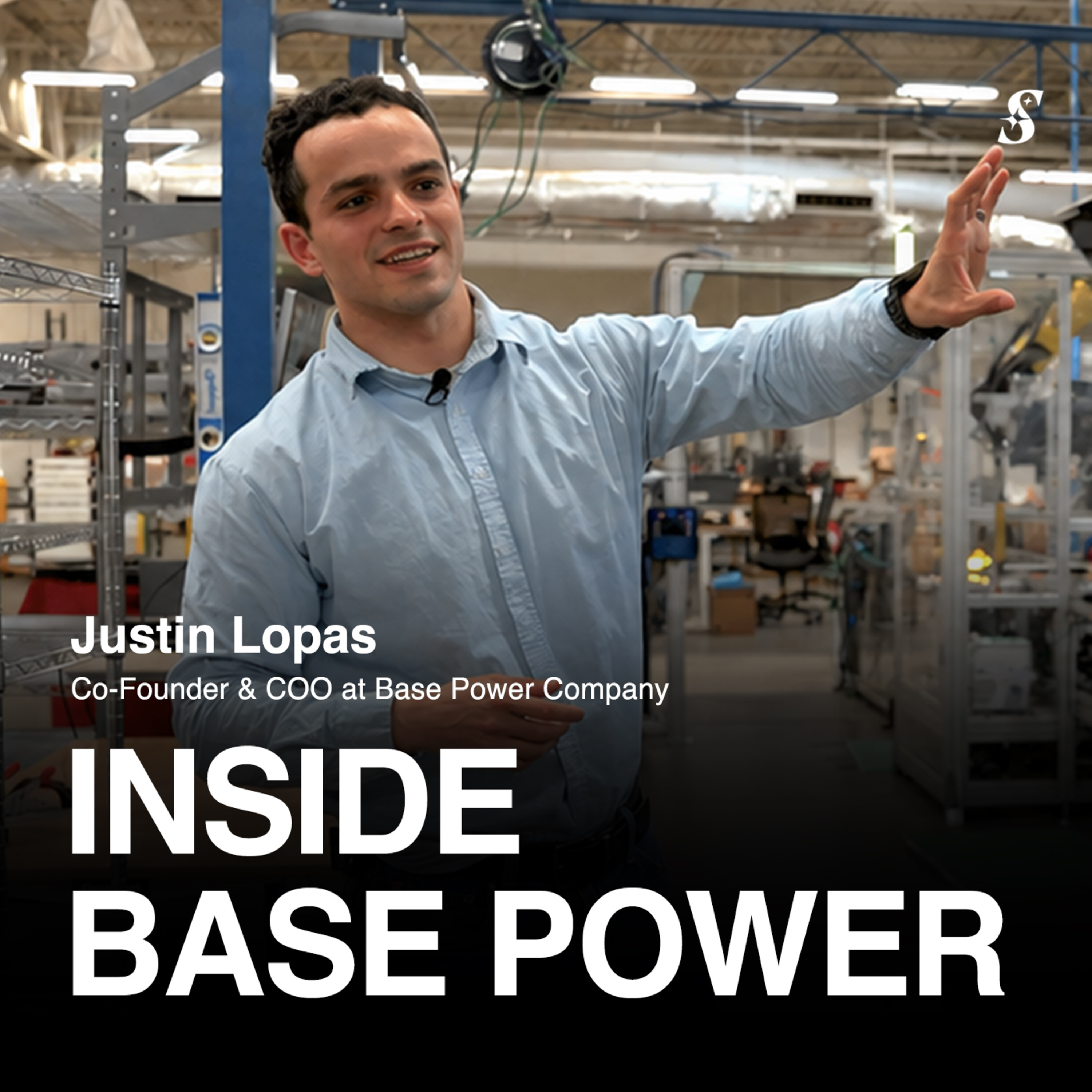
Instead of outsourcing, Base Power manufactures its batteries in-house in the US. This strategy gives them direct control over the production line, allowing for rapid hardware changes, reduced lead times, and lower costs compared to relying on contract manufacturers.
The company’s assembly line isn't fully automated. They use robots for repetitive tasks but rely on humans for high-dexterity operations, like installing small screws, that are difficult and costly to automate. This pragmatic approach balances capital expenditure with operational flexibility.