Get your free personalized podcast brief
We scan new podcasts and send you the top 5 insights daily.
Navan's IPO stumbled despite decent growth and improving margins, not because of its own fundamentals, but due to its relative unattractiveness. In the current market, public investors prefer putting capital into proven, profitable tech giants with strong AI stories over an unprofitable company at a high sales multiple.
Related Insights
Navan's post-IPO stock drop, despite strong revenue, is a troubling sign for the venture ecosystem. It highlights that even a multi-billion-dollar outcome can be considered a 'bummer' and may not generate sufficient returns for large, late-stage funds, resetting expectations for what constitutes a truly successful exit in the current market.
Unlike traditional SaaS where a bootstrapped company could eventually catch up to funded rivals, the AI landscape is different. The high, ongoing cost of talent and compute means an early capital advantage becomes a permanent, widening moat, making it nearly impossible for capital-light players to compete.
The current fundraising environment is the most binary in recent memory. Startups with the "right" narrative—AI-native, elite incubator pedigree, explosive growth—get funded easily. Companies with solid but non-hype metrics, like classic SaaS growers, are finding it nearly impossible to raise capital. The middle market has vanished.
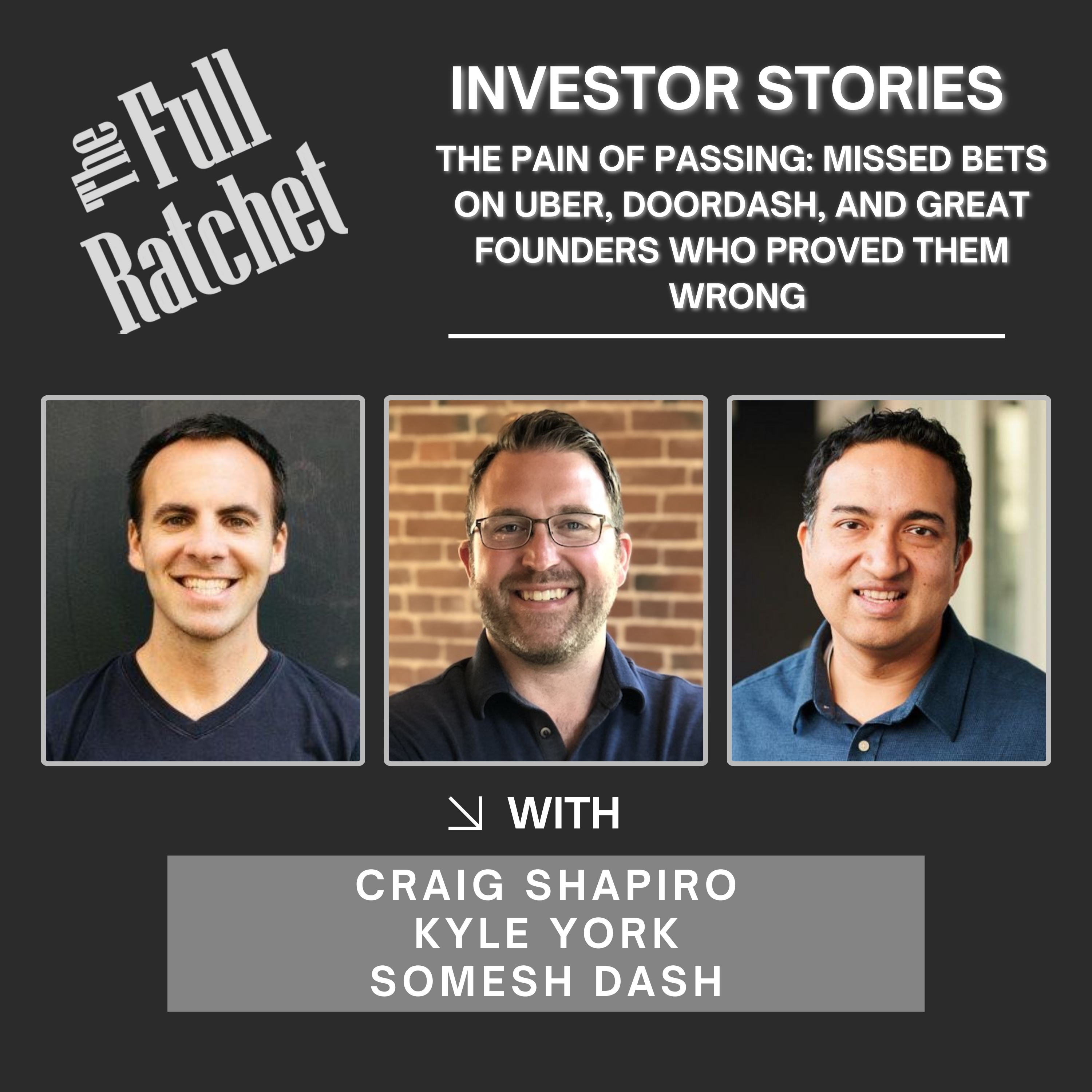
Samesh Dash of IVP passed on DoorDash because he couldn't reconcile its negative gross margins with its valuation. This highlights the venture dilemma of choosing between a visionary founder with a massive vision and the harsh reality of current, unsustainable unit economics during a heavy investment phase.
The startup landscape now operates under two different sets of rules. Non-AI companies face intense scrutiny on traditional business fundamentals like profitability. In contrast, AI companies exist in a parallel reality of 'irrational exuberance,' where compelling narratives justify sky-high valuations.

Contrary to the popular VC idea that IPO pops are 'free money' left on the table, they actually serve as a crucial risk premium for public market investors. Down-rounds like Navan's prove that buyers need the upside from successful IPOs to compensate for the very real risk of losing money on others.
The dot-com era saw ~2,000 companies go public, but only a dozen survived meaningfully. The current AI wave will likely follow a similar pattern, with most companies failing or being acquired despite the hype. Founders should prepare for this reality by considering their exit strategy early.

Contrary to common belief, the earliest AI startups often command higher relative valuations than established growth-stage AI companies, whose revenue multiples are becoming more rational and comparable to public market comps.

The CEO of Numeral notes that in the current fundraising climate, startups must heavily feature AI in their pitch to secure investor meetings. Furthermore, landing a major AI lab as a customer has become a key signal for VCs, leading to valuation multiples as high as 100-200x revenue for some companies.

The successful $6.3B IPO of medical supply company Medline, not a tech darling, is the real sign that the IPO market is reopening. Its success proves deep, stable investor demand exists beyond venture-backed hype, signaling that the window is now truly open for giants like SpaceX and Anthropic to go public.