Get your free personalized podcast brief
We scan new podcasts and send you the top 5 insights daily.
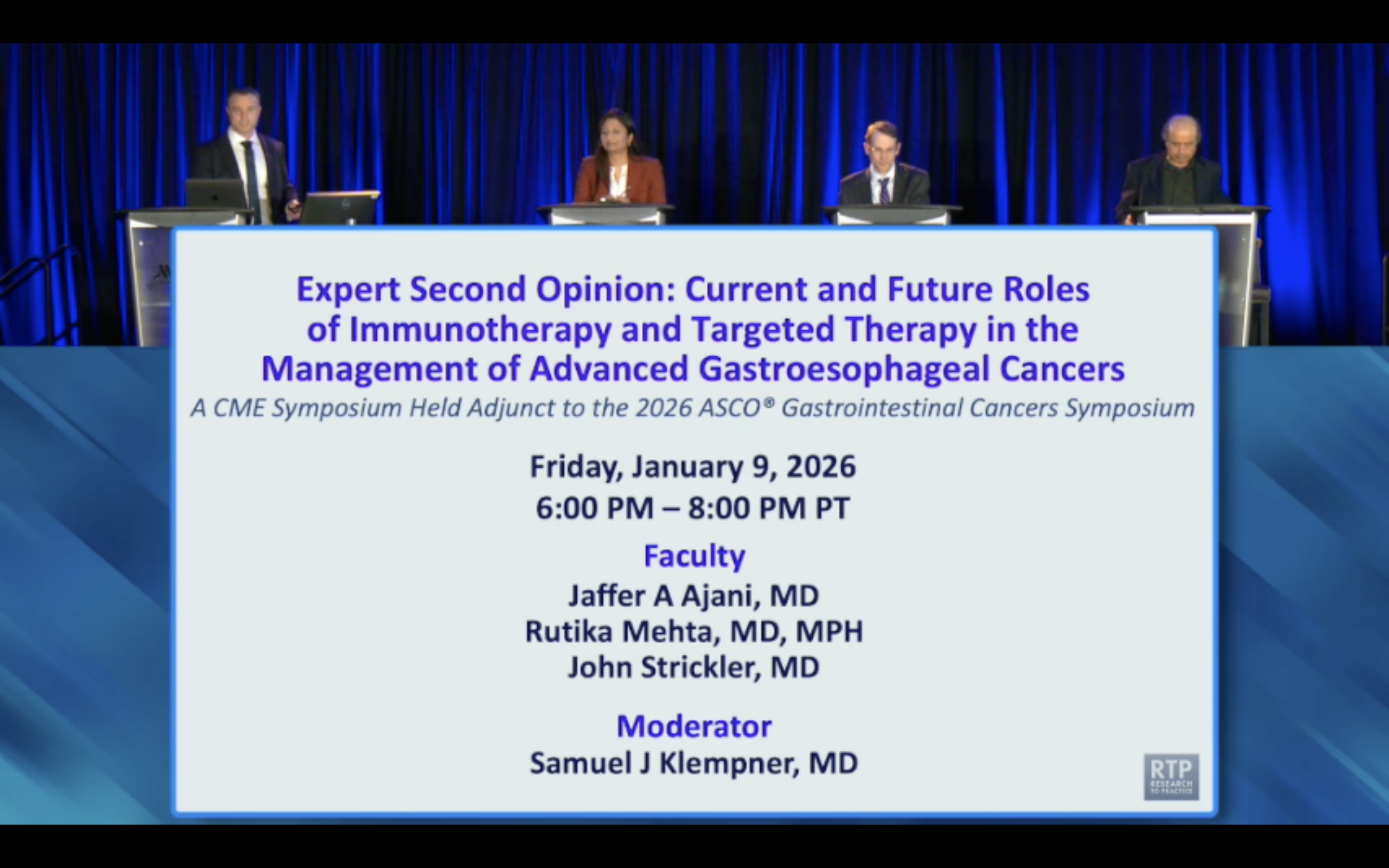
For frail elderly patients with HER2+ gastric cancer, starting with targeted therapy and immunotherapy alone can gauge response and tolerance. Cytotoxic chemotherapy can be added later if the patient's performance status improves, distinguishing disease-related frailty from baseline comorbidities.
Related Insights
While Trastuzumab deruxtecan (TDXD) is effective in HER2-low breast cancer, there is no evidence that it benefits patients with HER2-low or HER2-intermediate (IHC 2+/FISH negative) gastric cancer. Its use should be strictly limited to truly HER2-positive cases in this disease.

The HER2CLIMB-02 trial found that adding tucatinib to TDM-1 offered only a modest 2-month PFS benefit. This came at the cost of substantially increased toxicity, including transaminitis and diarrhea, suggesting the two agents are better used sequentially for most patients.
For patients over 75 with metastatic gastric cancer, a common practice is to reduce the oxaliplatin dose from 85 to 65 mg/m² and universally omit the 5-FU bolus from the FOLFOX regimen. This pragmatic approach aims to maintain efficacy while minimizing toxicity in a more vulnerable population.
When treating elderly patients (e.g., age 80+) with metastatic breast cancer, clinicians may prioritize quality of life over marginal overall survival gains seen in clinical trials. This justifies using a better-tolerated CDK4/6 inhibitor like palbociclib, even though ribociclib has demonstrated a statistical survival benefit, especially when patients have comorbidities or a preference for fewer side effects.
The next frontier in CSCC isn't just about new drugs, but about optimizing existing ones. A key research area is determining the minimum number of immunotherapy doses required for an optimal response—potentially just one or two—to limit toxicity, reduce treatment burden, and personalize care for high-risk patients.

Orca Bio's initial trials focused on younger patients who can withstand intense chemotherapy. Now, they are strategically expanding their addressable market by demonstrating Orca T's effectiveness with reduced-intensity conditioning. This makes the curative therapy safer and accessible to a larger population of older or frailer patients.

As survival times for metastatic gastric cancer patients extend, managing long-term toxicity is paramount. Clinicians typically administer only 6-8 cycles of oxaliplatin to prevent severe, cumulative peripheral neuropathy, allowing for longer, better-tolerated maintenance therapy with biologics.
Due to selective pressure from first-line treatment, 30-40% of HER2-positive gastroesophageal cancers lose HER2 expression by the time of progression. It is crucial to re-test these patients, either via tissue biopsy or ctDNA, to confirm continued HER2 positivity before initiating second-line HER2-targeted therapy like TDXD.
Clinicians advise against continuing targeted agents like zolbituximab or trastuzumab after disease progression in gastroesophageal cancer. The biological heterogeneity of this cancer type means that if a targeted therapy isn't working, it's unlikely to provide benefit with a different chemotherapy backbone.
In the increasingly common scenario of a patient with multiple positive biomarkers, a clear hierarchy exists for treatment decisions. Based on the robustness and maturity of clinical trial data, HER2-directed therapy is the top priority, followed by PD-L1 immunotherapy, with Claudin-18.2 targeting considered third.