Get your free personalized podcast brief
We scan new podcasts and send you the top 5 insights daily.
Experiments show the brain only continues working on a problem in the background if a goal is explicitly set (e.g., 'I will choose later'). If you tell yourself to forget the problem, background processing stops. You must actively assign a task to your 'hidden brain' for it to work.
Related Insights
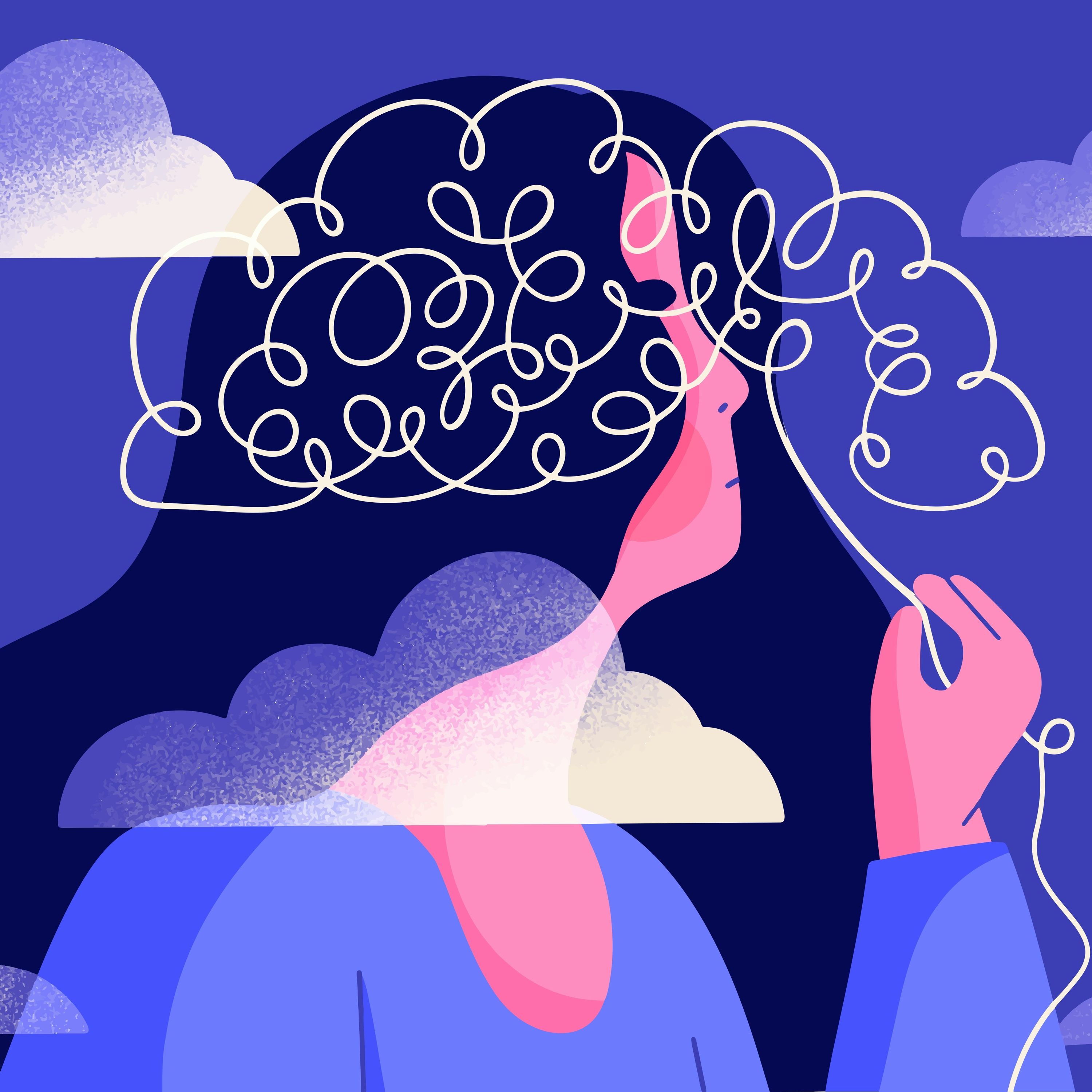
Getting stuck in mental loops is common. The physical act of translating thoughts into written or spoken words activates different neural pathways and accountability mechanisms. This externalization process inherently improves clarity and helps break unproductive thought patterns, even without feedback from others.

Constant productivity keeps the brain in a high-frequency "beta" state, which stifles creativity. To solve complex problems, you must intentionally shift to a slower "alpha" state by disconnecting. This is achieved through simple, non-distracting activities like walking in nature without your phone.

When we ruminate, a brain region called the default mode network becomes overactive and goes on "lockdown." This hyperactivity prevents hundreds of other brain areas responsible for creativity, problem-solving, and ideation from functioning, effectively paralyzing our productive cognitive abilities.
In an experiment asking for Dutch cities starting with 'A', conscious thinkers listed famous examples like Amsterdam. Those who were distracted first and thought unconsciously produced far more obscure and unusual villages, showing the unconscious mind's strength in finding novel connections.
Deeply embedding an intention activates the brain's "salience network." This functions like a subconscious bloodhound, constantly searching for relevant cues and opportunities in your environment. It's the neurological reason why, after focusing on a goal, you start noticing synchronicities and relevant conversations you previously would have missed.

Conscious thought is like a spotlight, precise and focused, good for analytical tasks. Unconscious thought is like a floodlight, with a vast capacity to process enormous amounts of information, make wild associations, and connect disparate ideas, making it more inherently creative.
The brain is designed to avoid costly thinking by defaulting to the "path of least resistance." To generate novel ideas, intentionally create a "preclude constraint" by blocking the most obvious or habitual solution. This forces your brain to explore new, more inventive pathways it would otherwise ignore.

The most crucial part of creativity is letting ideas "simmer" in the unconscious. After gathering information, step away from the problem completely. Engage in unrelated activities. This allows your mind to make novel connections you can't force through active thought.

The most common failure in problem-solving is rushing past defining ("State") and structuring the problem to get to the more gratifying "Solution" phase. A disciplined, multi-stage process forces a shift from instinctive (System 1) to deliberative (System 2) thinking, preventing premature and often flawed solutions.
If you're stuck on a problem for over 10 minutes, change your physical state to change your mental state. Taking a walk creates an optimal condition for breakthroughs: it aligns brain and body, allows attention to wander productively without fixating, and prevents rumination.