Get your free personalized podcast brief
We scan new podcasts and send you the top 5 insights daily.
In an experiment asking for Dutch cities starting with 'A', conscious thinkers listed famous examples like Amsterdam. Those who were distracted first and thought unconsciously produced far more obscure and unusual villages, showing the unconscious mind's strength in finding novel connections.
Related Insights
Breakthroughs often occur in routine environments like the shower or during a walk. These activities promote what psychologists call "divergent thinking," where the relaxed mind makes novel connections. This scientific process can be intentionally triggered to solve complex problems and foster creativity.
Constant productivity keeps the brain in a high-frequency "beta" state, which stifles creativity. To solve complex problems, you must intentionally shift to a slower "alpha" state by disconnecting. This is achieved through simple, non-distracting activities like walking in nature without your phone.

To access breakthrough ideas, creators like Renaissance Technologies founder Jim Simons create a mental space free from clutter. By lying in a dark, quiet room, they induce a sensory "vacuum" that allows subconscious thoughts and solutions, normally drowned out by daily noise, to surface.

The best creative solutions often surface when you're not actively working. After absorbing project information, stepping away for days or weeks allows the subconscious to process and connect ideas, leading to stronger, more innovative outcomes than forced brainstorming.
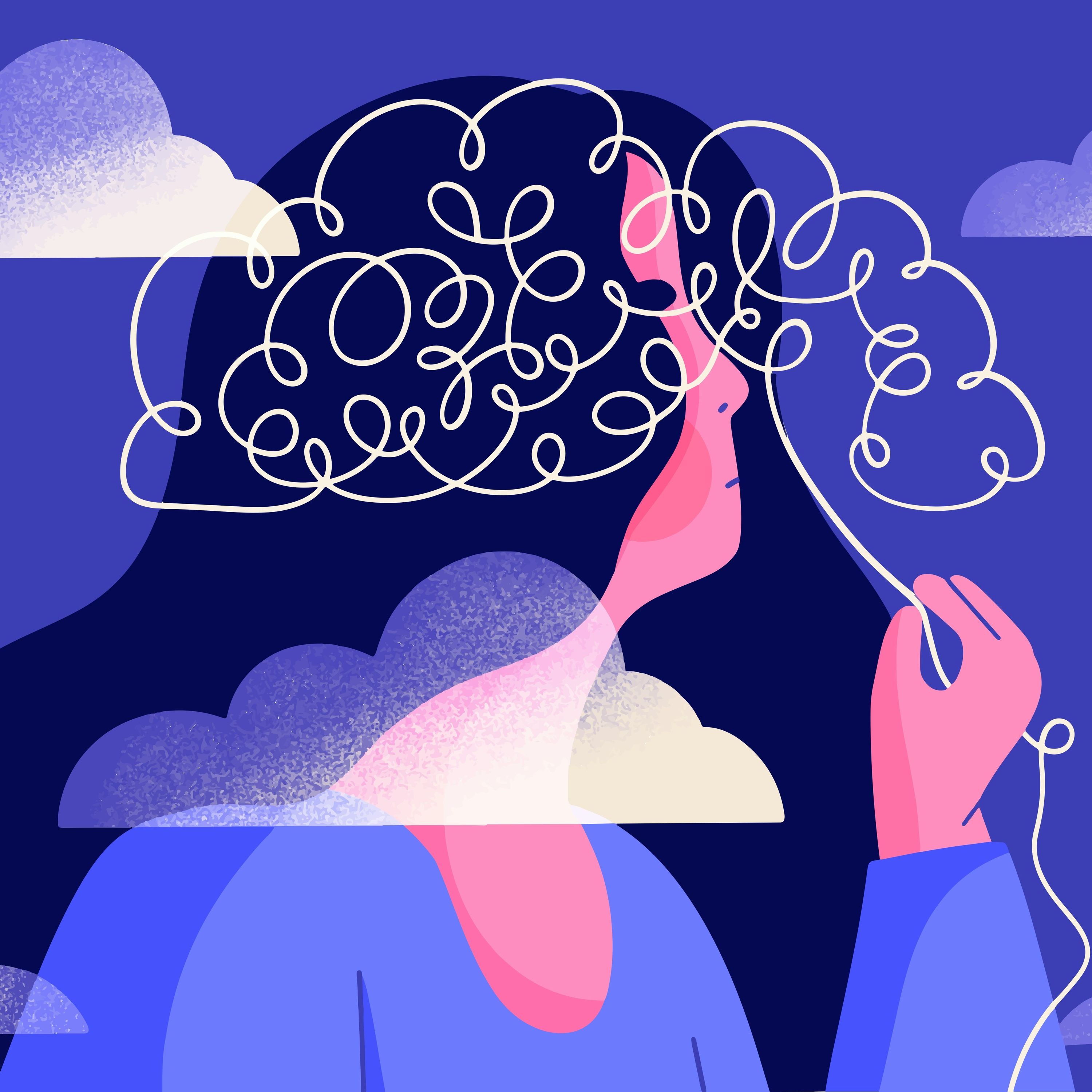
Conscious thought is like a spotlight, precise and focused, good for analytical tasks. Unconscious thought is like a floodlight, with a vast capacity to process enormous amounts of information, make wild associations, and connect disparate ideas, making it more inherently creative.
The brain is designed to avoid costly thinking by defaulting to the "path of least resistance." To generate novel ideas, intentionally create a "preclude constraint" by blocking the most obvious or habitual solution. This forces your brain to explore new, more inventive pathways it would otherwise ignore.

The most crucial part of creativity is letting ideas "simmer" in the unconscious. After gathering information, step away from the problem completely. Engage in unrelated activities. This allows your mind to make novel connections you can't force through active thought.

A CMO's award-winning poem wasn't written at her desk under pressure but came to her spontaneously during an ACDC concert. This illustrates that creative breakthroughs often happen when the mind is disengaged from the problem and in a state of relaxation or high energy, rather than through forced effort.
![What is Marketing? Part 2: Marketing is Poetry with Kory Marchisotto [Uncensored Renegades] thumbnail](https://img.transistorcdn.com/VIH3Rn5ET8-eHQxgBGNydnhXL95pc10_Kq7qTpjezuc/rs:fill:0:0:1/w:1400/h:1400/q:60/mb:500000/aHR0cHM6Ly9pbWct/dXBsb2FkLXByb2R1/Y3Rpb24udHJhbnNp/c3Rvci5mbS9zaG93/LzQ3MzEvMTU3MDAz/MjQ3NC1hcnR3b3Jr/LmpwZw.jpg)
Improving imagination is less like a painter adding to a blank canvas and more like a sculptor removing material. The primary task is to forget expected answers and consensus reality. This subtractive process uncovers the truly novel ideas that are otherwise obscured by convention.
![Kevin Kelly - Be Generous and Unique - [Invest Like the Best, CLASSICS] thumbnail](https://megaphone.imgix.net/podcasts/9e957b1c-b60e-11f0-8fae-c3720ebd149d/image/fe443cb4b0d58f10dbccb1cf43a6abe2.jpg?ixlib=rails-4.3.1&max-w=3000&max-h=3000&fit=crop&auto=format,compress)
Activities like train rides (J.K. Rowling) or walking are mildly stimulating without demanding full attention. This 'softly fascinating' state occupies the conscious mind just enough to allow the unconscious to wander, make connections, and deliver insights, unlike high-stimulation or deep-focus environments.