Get your free personalized podcast brief
We scan new podcasts and send you the top 5 insights daily.
Initiatives like Google's Synth ID aim to standardize detection of AI-generated content. However, these systems are vulnerable. Simple user actions like screenshotting can strip metadata, and blending AI-generated assets with real footage can easily confuse detection algorithms, limiting their effectiveness.

Related Insights
The rise of realistic, AI-generated content creates a significant operational burden for media creators. An 'inordinate amount of time' is now spent verifying the authenticity of images and stories, with many segments being killed last-minute after failing a fact-check.

Creating reliable AI detectors is an endless arms race against ever-improving generative models, which often have detectors built into their training process (like GANs). A better approach is using algorithmic feeds to filter out low-quality "slop" content, regardless of its origin, based on user behavior.

A critical failure point for C2PA is that social media platforms themselves can inadvertently strip the crucial metadata during their standard image and video processing pipelines. This technical flaw breaks the chain of provenance before the content is even displayed to users.
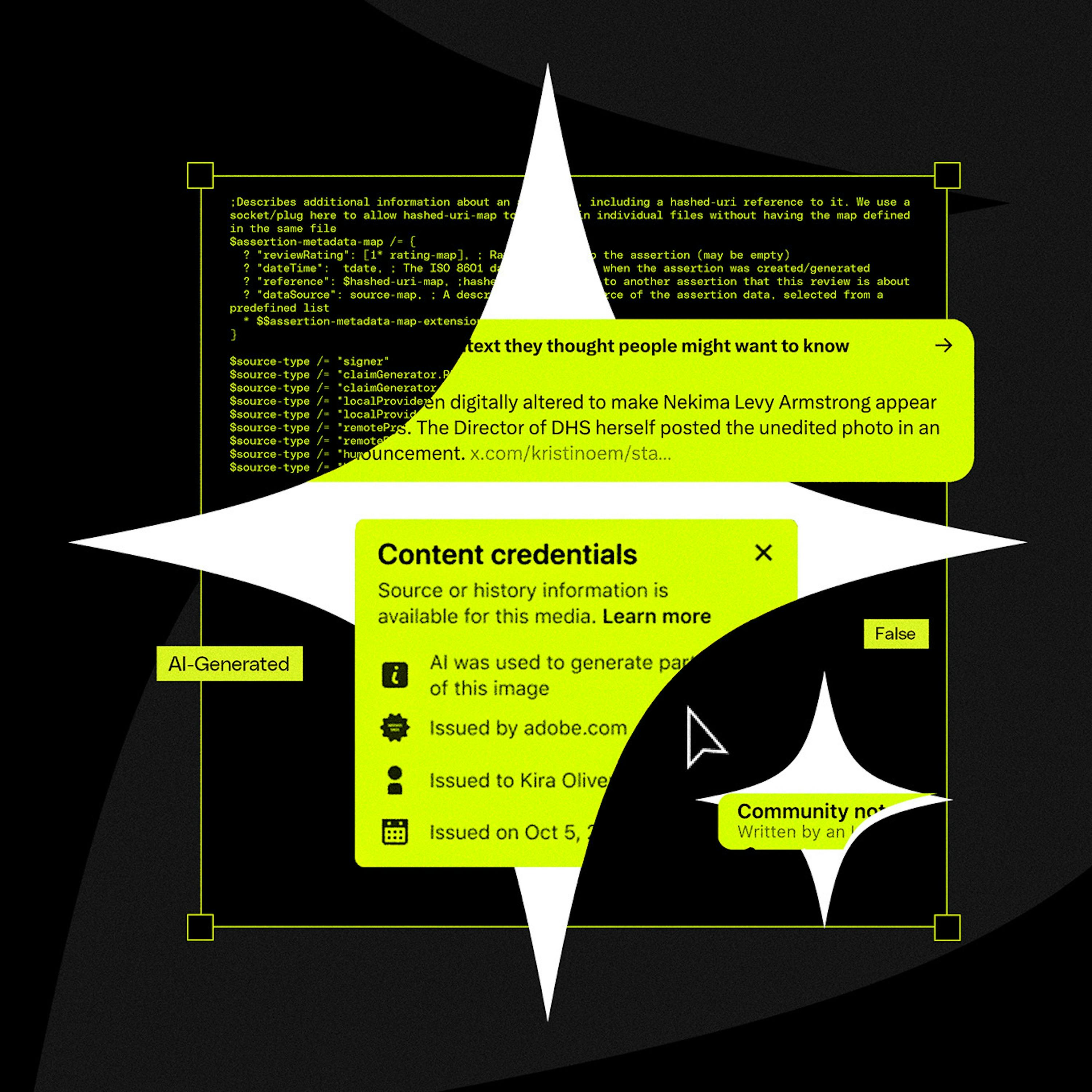
Politician Alex Boris argues that expecting humans to spot increasingly sophisticated deepfakes is a losing battle. The real solution is a universal metadata standard (like C2PA) that cryptographically proves if content is real or AI-generated, making unverified content inherently suspect, much like an unsecure HTTP website today.

The shift from "Copyright" to "Content Detection" in YouTube Studio is a strategic response to AI. The platform is moving beyond protecting just video assets to safeguarding a creator's entire digital identity—their face and voice. This preemptively addresses the rising threat of deepfakes and unauthorized AI-generated content.

Instead of detecting AI fakes, a new approach focuses on proving authenticity at the source. Organizations like C2PA work with hardware makers to embed cryptographic signatures into photos and videos, creating a verifiable chain of "content provenance" that proves an asset was captured by a real device.
Cryptographically signing media doesn't solve deepfakes because the vulnerability shifts to the user. Attackers use phishing tactics with nearly identical public keys or domains (a "Sybil problem") to trick human perception. The core issue is human error, not a lack of a technical solution.

Current responses to deepfakes are insufficient. Detection is an endless cat-and-mouse game with high error rates. Watermarking can be compromised. Provenance systems struggle with explainability for complex media edits. None provide the categorical confidence needed to solve the crisis of digital trust.

C2PA was designed to track a file's provenance (creation, edits), not specifically to detect AI. This fundamental mismatch in purpose is why it's an ineffective solution for the current deepfake crisis, as it wasn't built to be a simple binary validator of reality.
Attempts to label "AI content" fail because AI is integrated into countless basic editing tools, not just generative ones. It's impossible to draw a clear line for what constitutes an "AI edit," leading to creator frustration and rendering binary labels meaningless and confusing for users.