Get your free personalized podcast brief
We scan new podcasts and send you the top 5 insights daily.
The U.S. government cannot develop leading AI in-house primarily because it lacks the technical talent. Crucially, it also cannot compete with the massive private capital mobilized for building data centers and training models. The commercial applications are so vast that they dwarf the defense sector's budget and influence.

Related Insights
Unlike nuclear energy or the space race where government was the primary funder, AI development is almost exclusively led by the private sector. This creates a novel challenge for national security agencies trying to adopt and integrate the technology.

Unlike stealth technology developed in secret defense labs, AI is an imported commercial product. This fundamental difference means the military must contend with the values, ethical debates, and employee activism of the commercial tech sector, creating friction and power dynamics that are novel in the history of the military-industrial complex.
The AI industry and the US government both require trillions in funding. This creates a paradox: the more successful AI becomes, the more it erodes the white-collar tax base by automating jobs, forcing the Treasury to borrow even more and intensifying the competition for scarce capital.

Leading AI companies, facing high operational costs and a lack of profitability, are turning to lucrative government and military contracts. This provides a stable revenue stream and de-risks their portfolios with government subsidies, despite previous ethical stances against military use.
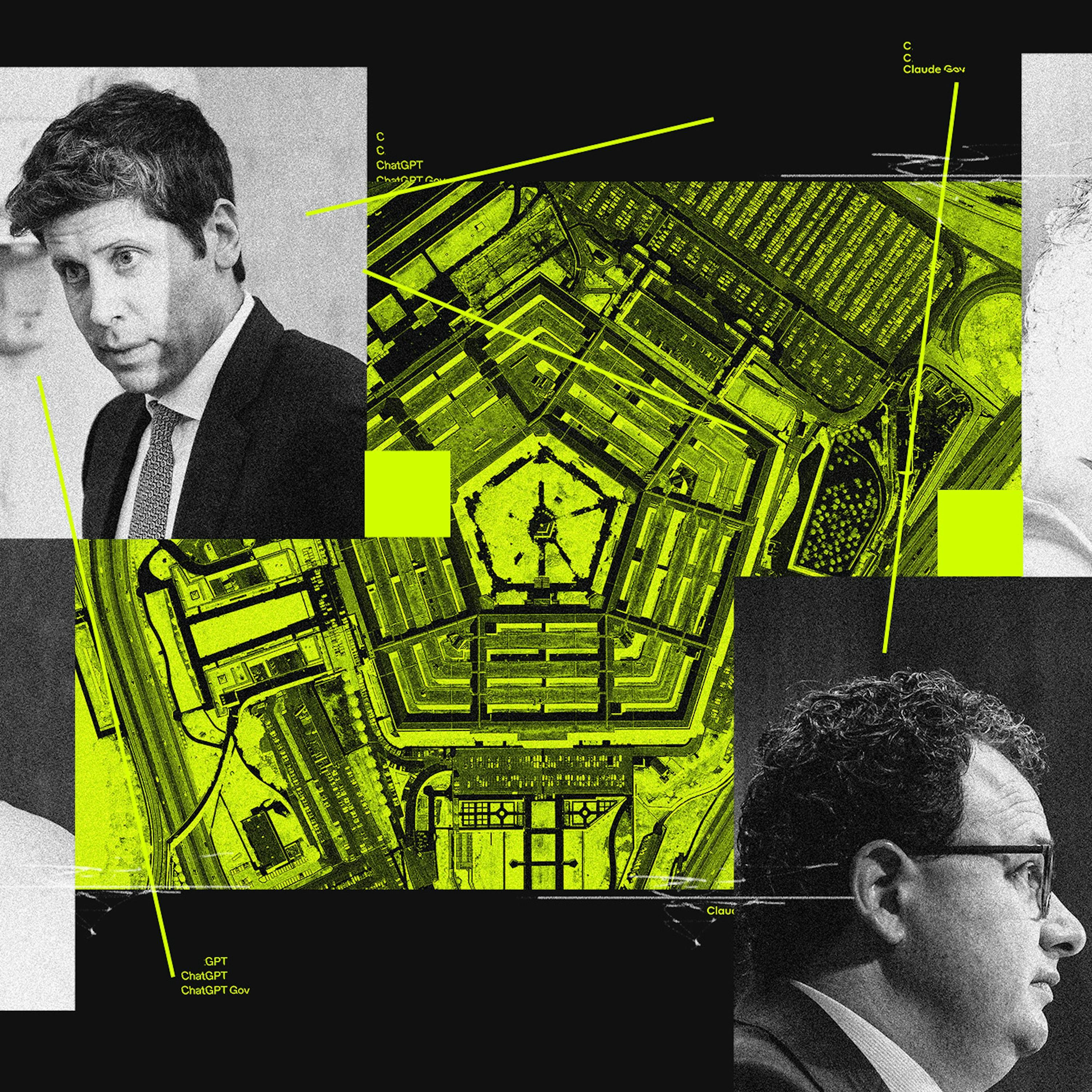
Lucrative civilian markets, not government deals, drive frontier tech. By making the defense side of a business a major political and legal liability, the Pentagon risks pushing top companies to completely shun government work, reversing a decades-long, successful dynamic for dual-use technology.
The massive upfront CapEx for AI models is only viable when serving the entire market, not just government contracts. Thompson cites Intel's early decision to design for the large consumer market, not just the military, which accelerated its capabilities far beyond what government-funded projects could. This economic reality ensures private companies will remain at the forefront of AI development.

The Department of War's top AI priority is "applied AI." It consciously avoids building its own foundation models, recognizing it cannot compete with private sector investment. Instead, its strategy is to adapt commercial AI for specific defense use cases.

Analyst Dean Ball warns against nationalizing advanced AI. He draws a parallel to nuclear technology, where government control secured the weapon but severely hampered the development of commercial nuclear energy. To realize AI's full economic and consumer benefits, a competitive private sector ecosystem is essential.
AI is the first revolutionary technology in a century not originating from government-funded defense projects. This shift means policymakers lack the built-in knowledge and control they had with nuclear or space tech, forcing them to learn from and regulate an industry they did not create.

Drawing a parallel to Intel's early strategy, the immense capital costs of AI development necessitate serving the largest possible market (consumers and businesses). This private, market-driven approach inherently conflicts with government expectations for control, as the government becomes just one of many customers for a globally-scaled technology.
