Get your free personalized podcast brief
We scan new podcasts and send you the top 5 insights daily.
For AI projects, decide whether to buy or build using a 2x2 matrix plotting business differentiation against implementation complexity. You should build projects that are highly differentiating but complex. Conversely, you should buy solutions that have low-differentiation and low-complexity.

Related Insights
To maximize ROI from AI, evaluate potential use cases on two axes: the value they provide (time saved, revenue generated) and the amount of ongoing "babysitting" they require (maintenance, monitoring, support). Prioritize high-value, low-babysitting tasks first.

The build-vs-buy decision for AI tools hinges on risk and scale. Opt to "buy" when dealing with customer data, complex approval governance, or security requirements, as established vendors provide necessary certifications and support. "Build" is better for internal, specific use cases where speed and customization are paramount and data is not sensitive.

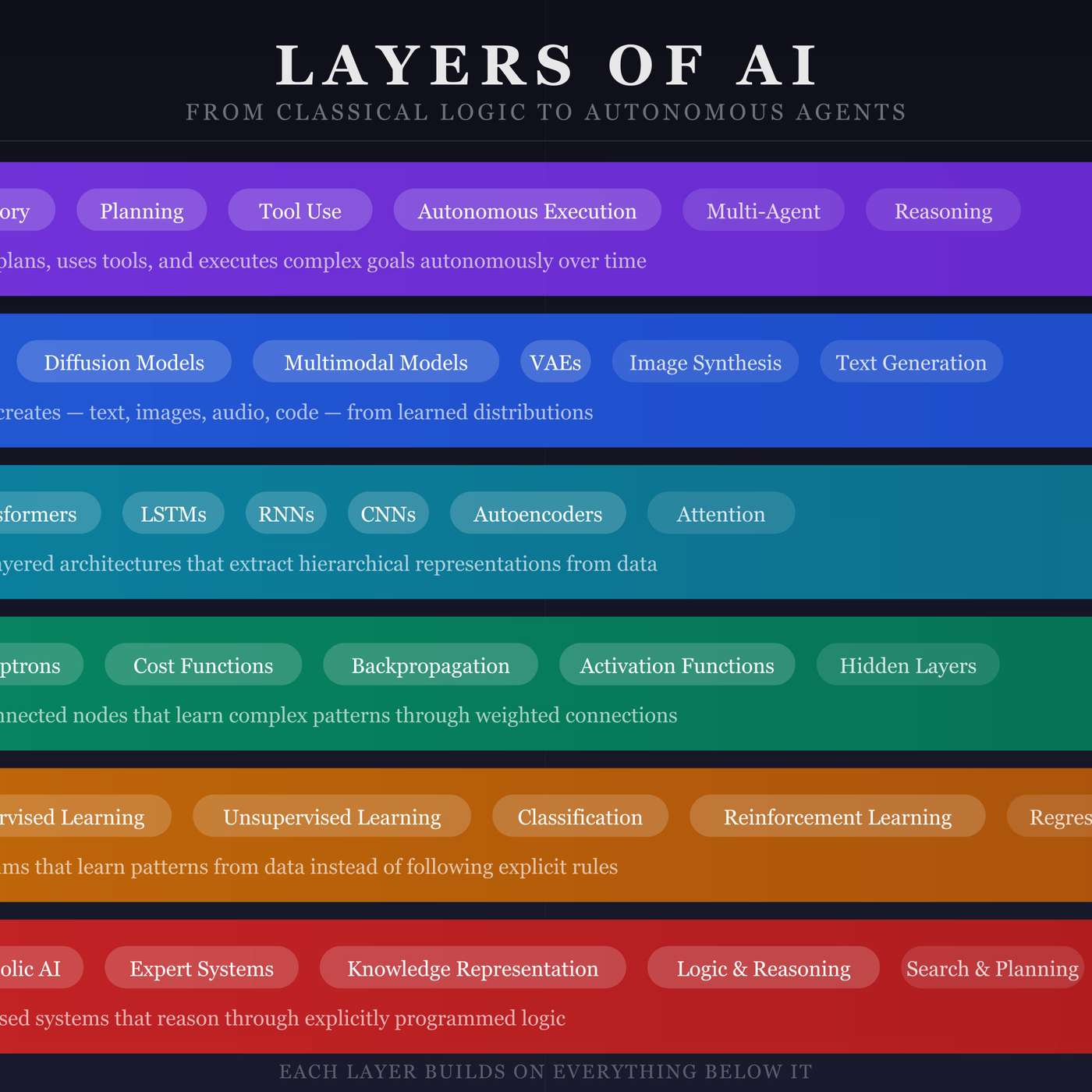
Not every business problem requires an LLM. Using a simple classifier (Layer 2) for email sorting or a deep learning model (Layer 4) for recommendations is more efficient than defaulting to the latest generative AI (Layer 5/6). This layered thinking saves costs, reduces complexity, and builds better products.
Advocates for buying most AI agents off the shelf to leverage existing solutions. Building should be reserved for the small fraction where no suitable tool exists, where you can replace a mediocre incumbent, or where proprietary data is a key advantage.
The true enterprise value of AI lies not in consuming third-party models, but in building internal capabilities to diffuse intelligence throughout the organization. This means creating proprietary "AI factories" rather than just using external tools and admiring others' success.

A mental model for selecting AI tools based on two axes: the size of the task (from a small bug fix to a large new feature) and the amount of code that already exists in production. This framework helps designers decide when to use a prototyping tool versus a production-focused AI agent.

The traditional wisdom to "build what's core" to your business is becoming obsolete for AI. The immense cost and rapid advancement of foundational models by major labs mean most companies are better off buying or partnering for core AI capabilities rather than attempting to build them in-house.

When deciding whether to build or buy an AI tool, purchase stable, undifferentiated infrastructure (like a dialer). In-house resources should focus on building proprietary intelligence that creates a unique competitive advantage, such as a custom pre-call research model tailored to your specific customer profile.

Forgo building custom AI tools for common problems. Instead, purchase 90% of your AI stack from specialized vendors. Reserve your in-house engineering resources for the critical 10% of tasks that are unique to your business and for which no adequate third-party solution exists.

Large companies integrate AI through three primary methods: buying third-party vendor solutions (e.g., Harvey for legal), building custom internal tools to improve efficiency, or embedding AI directly into their customer-facing products. Understanding these pathways is critical for any B2B AI startup's go-to-market strategy.