Get your free personalized podcast brief
We scan new podcasts and send you the top 5 insights daily.
Kahlow actively encourages her team to find ways to replace their own roles with AI. She promises that those who succeed in automating their job will be given a new, higher-value position within the company.

Related Insights
The common fear of AI eliminating jobs is misguided. In practice, AI automates specific, often administrative, tasks within a role. This allows human workers to offload minutiae and focus on uniquely human skills like relationship building and strategic thinking, ultimately increasing their leverage and value.

Frame internal AI initiatives not as a way to replace employees, but to automate their chores. This frees them to move 'up the stack' to perform higher-value functions like client relations, creative strategy, and founder meetings, ultimately increasing overall output.
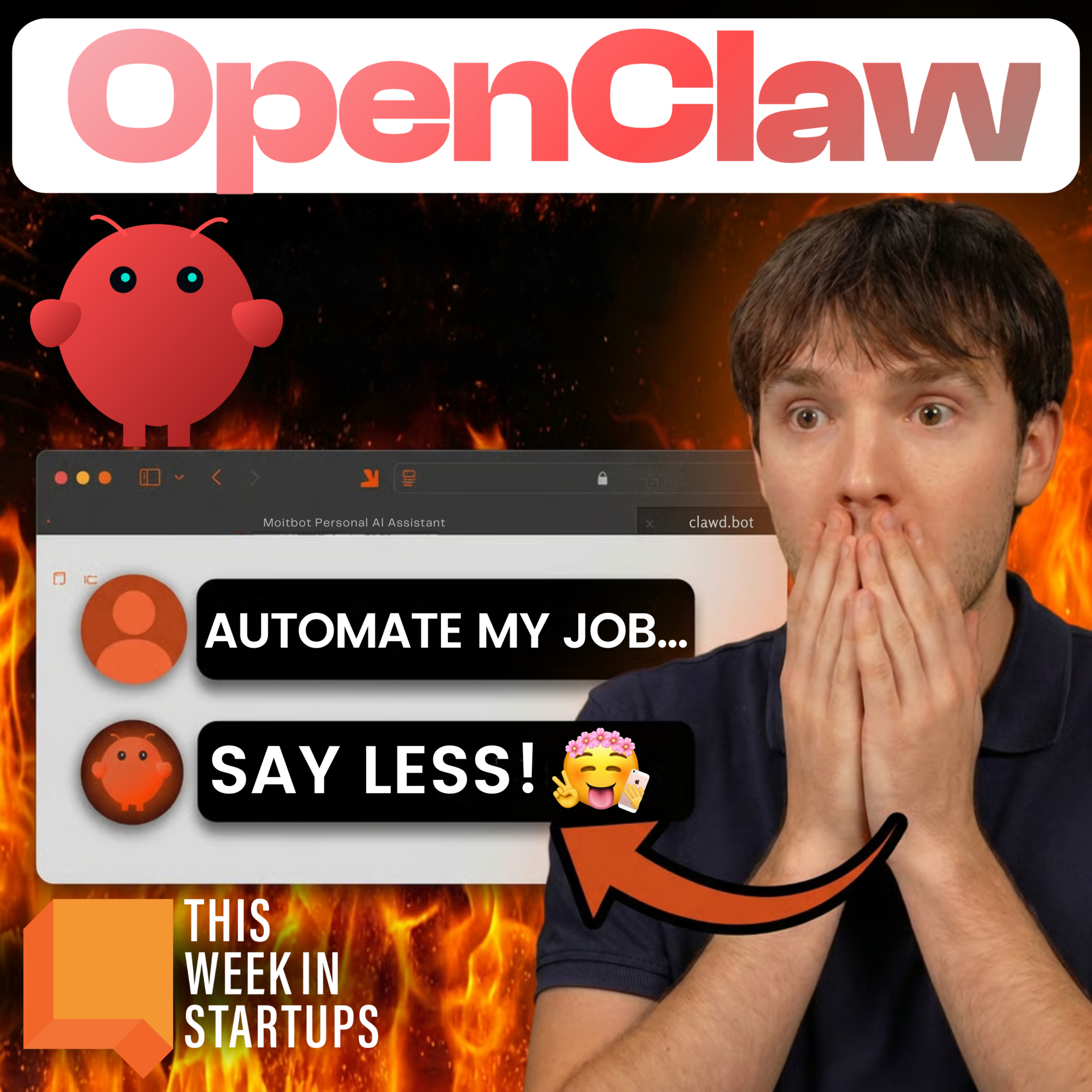
To combat employee fear of replacement, frame AI automation as a path to promotion. By automating their current IC-level tasks, employees free themselves to operate at the next level, effectively managing their new 'AI direct report' and taking on more strategic work.

Kahlow argues the most humane thing to do is be honest about the coming wave of AI-driven job displacement in sales and marketing. She believes roles like SDR and Sales Engineer will be among the first to be automated.
The most effective career strategy for employees facing automation is not resistance, but mastery. By learning to operate, manage, and improve the very AI systems that threaten their roles, individuals can secure their positions and become indispensable experts who manage the machines.
Instead of becoming obsolete, laid-off employees can master AI agent platforms like OpenClaw. They can then demonstrate how to automate their former role and pitch their old company on rehiring them at a premium to implement these new efficiencies.
To accelerate AI adoption and overcome fear of displacement, OneMind's CEO has a policy to financially reward and find new roles for employees who successfully eliminate their own positions using AI. This turns a threat into an incentive for innovation.

With AI tools being so new, no external "experts" exist. OpenAI's Chairman argues that the individuals best positioned to lead AI adoption are existing employees. Their deep domain knowledge, combined with a willingness to learn the new technology, makes them more valuable than any outside hire. Call center managers can become "AI Architects."
The immediate career advantage in the AI era goes to employees who become internal AI champions. As CEOs mandate AI adoption, those who are already AI-native and can teach their teams to become more efficient will receive massive promotions and raises. This creates a clear path for advancement by leading the AI transition from within.

The employees who discover clever AI shortcuts to be 'lazy' are your biggest innovation assets. Instead of letting them hide their methods, companies should find them, make them heroes, and systematically scale their bottom-up productivity hacks across the organization.