Get your free personalized podcast brief
We scan new podcasts and send you the top 5 insights daily.
Jennifer Scanlon, CEO of UL Solutions, confirms that a core part of their safety work involves destructive testing. Her own office is situated above a hazardous location testing lab and occasionally shakes from the controlled explosions, highlighting the physical nature of the work.

Related Insights
At NASA, the design process involves building multiple quick prototypes and deliberately failing them to learn their limits. This deep understanding, gained through intentional destruction, is considered essential before attempting to build the final, mission-critical version of a component like those on the Mars Rover.

Contrary to the belief that companies resist regulation, UL's customers often initiate the standards-creation process for new innovations. They view universal standards as a way to de-risk technology, ensure fair competition, and create a stable, trusted marketplace.
A core Musk method is the immediate physical relocation to the site of a problem. This isn't a suggestion but a strict operational rule. It ensures direct, unfiltered information and demonstrates extreme ownership from the factory floor to the CEO.
Many safety products hit a wall by incrementally adding more padding, which has diminishing returns. The Triaxis founder broke this pattern by applying a first-principles physics concept: redirecting impact force across a larger surface area (the shoulders) instead of just trying to absorb it at the point of impact (the head).

UL Solutions CEO Jennifer Scanlon enforces a strict policy of never overruling the scientific and engineering judgments of her lab technicians. This protects the integrity of their testing process, which is the foundation of the company's brand and business.
To build credibility for a new safety device without industry access, the founder hired a senior NASA engineer as a consultant. Leveraging expertise and simulation tools from an industry with even higher safety standards, like aerospace, provides powerful third-party validation that can overcome skepticism from incumbents.
Protecting the UL mark's value requires active enforcement. The company maintains a market surveillance and anti-counterfeiting team that collaborates with customs and competitors to find and legally pursue sellers on platforms like Amazon using fraudulent UL certifications.
Anduril's R&D building houses machine shops, labs, and a 'dev test area' designed specifically to break products. By putting engineers across the parking lot from facilities that can rapidly prototype and test for failures (e.g., saltwater corrosion, vibration), they create an extremely tight feedback loop, speeding up iteration.
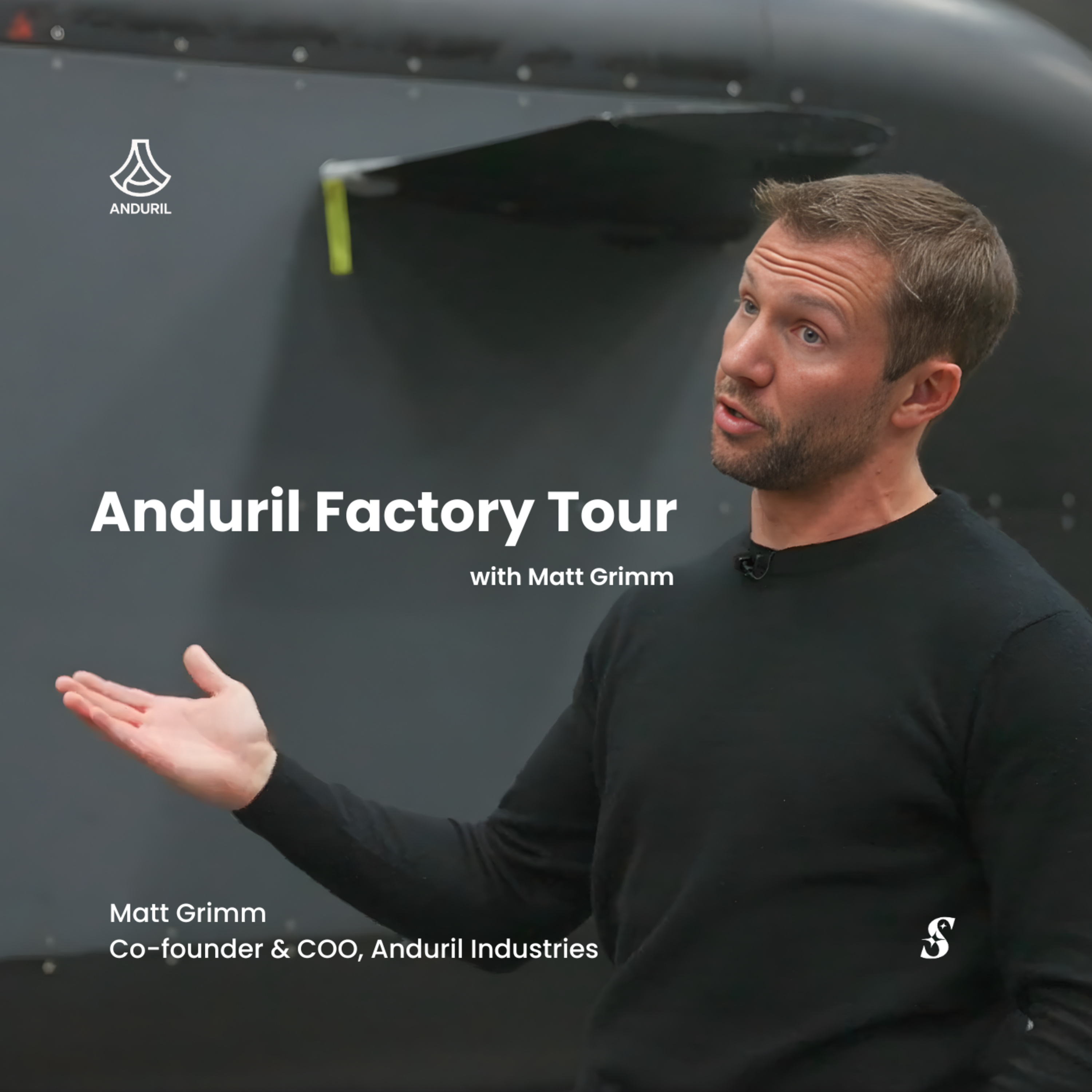
To test its electronic warfare products, Anduril uses an anechoic chamber. This is not just for a clean signal environment but a legal necessity. Their proximity to John Wayne Airport makes it illegal to broadcast powerful jamming signals openly, requiring a specialized, enclosed facility to develop and test these capabilities.
Hamdi Ulukaya attributes Chobani's success in scaling without sacrificing product quality to his extreme operational commitment. For years, he rarely left the factory floor, ensuring standards were met firsthand. This underscores the value of deep, physical immersion for leaders in manufacturing and operations.