Get your free personalized podcast brief
We scan new podcasts and send you the top 5 insights daily.
At NASA, the design process involves building multiple quick prototypes and deliberately failing them to learn their limits. This deep understanding, gained through intentional destruction, is considered essential before attempting to build the final, mission-critical version of a component like those on the Mars Rover.

Related Insights
The default assumption for any 'moonshot' idea is that it is likely wrong. The team's immediate goal is to find the fatal flaw as fast as possible. This counterintuitive approach avoids emotional attachment and speeds up the overall innovation cycle by prioritizing learning over being right.

Instead of starting with a blank slate, Nike's team prototypes new ideas by physically cutting and modifying existing products. This "cobbling" method enables rapid, low-cost testing of core concepts before investing in new designs and expensive molds, allowing them to fail fast and forward.

Unlike software, hardware iteration is slow and costly. A better approach is to resist building immediately and instead spend the majority of time on deep problem discovery. This allows you to "one-shot" a much better first version, minimizing wasted cycles on flawed prototypes.

For ambitious 'moonshot' projects, the vast majority of time and effort (90%) is spent on learning, exploration, and discovering the right thing to build. The actual construction is a small fraction (10%) of the total work. This reframes failure as a critical and expected part of the learning process.
Inspired by James Dyson, Koenigsegg embraces a radical commitment to differentiation: "it has to be different, even if it's worse." This principle forces teams to abandon incremental improvements and explore entirely new paths. While counterintuitive, this approach is a powerful tool for escaping local maxima and achieving genuine breakthroughs.

Instead of stigmatizing failure, LEGO embeds a formal "After Action Review" (AAR) process into its culture, with reviews happening daily at some level. This structured debrief forces teams to analyze why a project failed and apply those specific learnings across the organization to prevent repeat mistakes.

Many founders become too attached to what they've built. The ability to unemotionally kill products that aren't working—even core parts of the business—is a superpower. This prevents wasting resources and allows for the rapid pivots necessary to find true product-market fit.

Moving from a science-focused research phase to building physical technology demonstrators is critical. The sooner a deep tech company does this, the faster it uncovers new real-world challenges, creates tangible proof for investors and customers, and fosters a culture of building, not just researching.

To truly learn from go-to-market experiments, you can't be half-hearted. StackAI's philosophy is to dedicate significant, focused effort for 1-3 months on a single idea. This ensures that if it fails, you know it's the idea, not poor execution, providing a definitive learning.

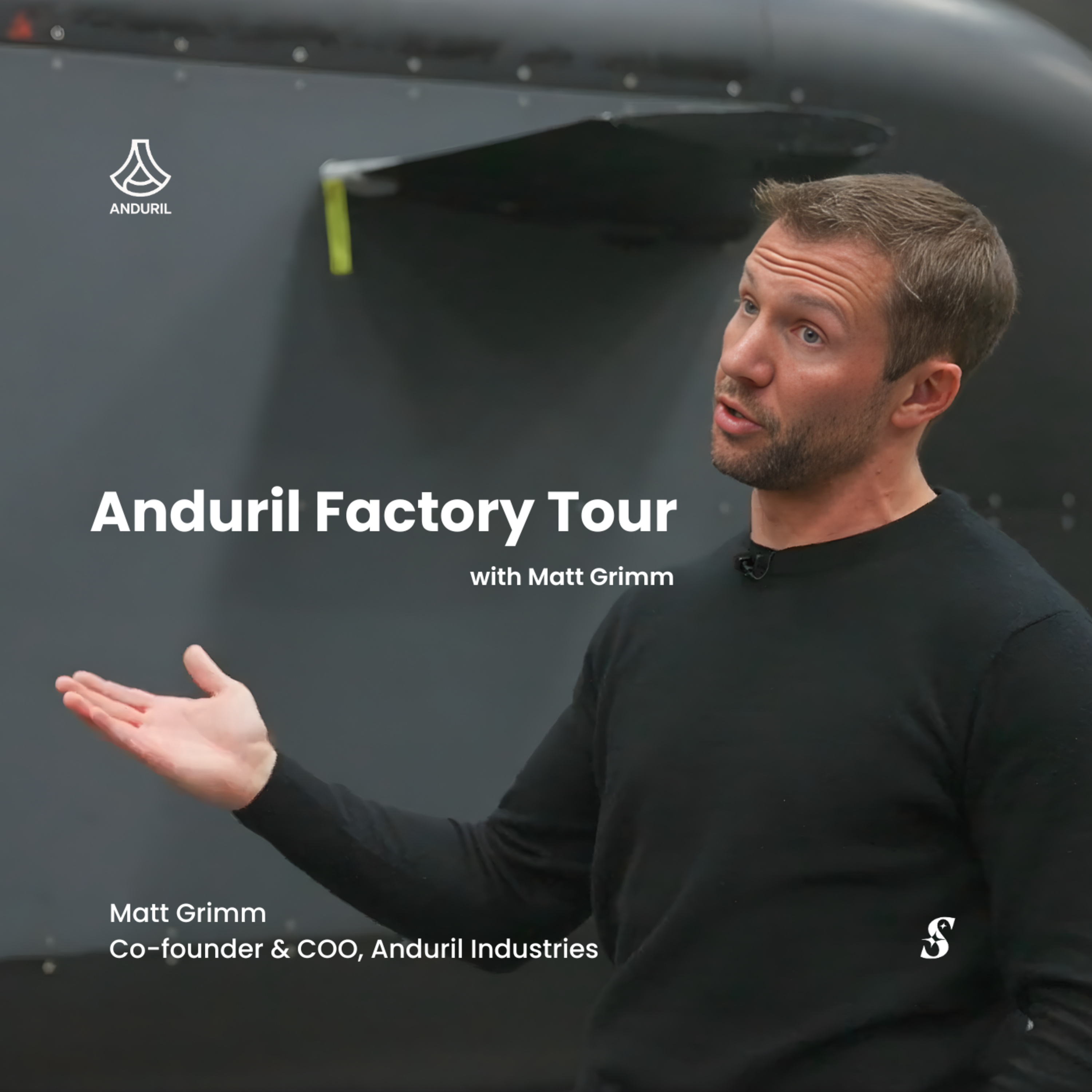
Anduril's R&D building houses machine shops, labs, and a 'dev test area' designed specifically to break products. By putting engineers across the parking lot from facilities that can rapidly prototype and test for failures (e.g., saltwater corrosion, vibration), they create an extremely tight feedback loop, speeding up iteration.