Get your free personalized podcast brief
We scan new podcasts and send you the top 5 insights daily.
Gurley argues the patent system creates artificial barriers to innovation. Citing Matt Ridley, he suggests progress accelerates when ideas can combine freely, like in open source, where people contribute without immediate economic gain. This free exchange leads to faster, cumulative innovation.

Related Insights
Open-source initiatives like OpenClaw can surpass well-funded corporate R&D because they leverage a global pool of contributors. This distributed approach uncovers genius in unlikely places, allowing for breakthroughs that siloed internal teams might miss.

Open-source AI projects have a fundamental disadvantage against closed-source rivals. Companies like Anthropic can freely examine OpenClaw's code and adopt its best features, while OpenClaw cannot see inside Anthropic's proprietary models. This one-way information flow creates a strategic challenge for open-source sustainability.

Advanced technology used to be expensive, requiring permission from investors or governments. Now, cheap and accessible tools like AI and open-source platforms allow individuals anywhere to innovate disruptively without needing approval, as exemplified by Ethereum.

The current trend toward closed, proprietary AI systems is a misguided and ultimately ineffective strategy. Ideas and talent circulate regardless of corporate walls. True, defensible innovation is fostered by openness and the rapid exchange of research, not by secrecy.

Biotech companies are incentivized to own the entire intellectual property for a drug, from delivery to molecule. This leads to endless litigation and siloed innovation, preventing the combination of "best-in-class" components from different companies and ultimately slowing progress for patients.

The convergence of AI, blockchain, and quantum computing is creating technological shifts faster than our legal frameworks can adapt. U.S. patent law, with roots in 1790, is slow to evolve, creating significant uncertainty and risk for innovators and companies building on these new platforms.

The PC revolution was sparked by thousands of hobbyists experimenting with cheap microprocessors in garages. True innovation waves are distributed and permissionless. Today's AI, dominated by expensive, proprietary models from large incumbents, may stifle this crucial experimentation phase, limiting its revolutionary potential.

The primary barrier to realizing the benefits of new technologies like AI isn't the tech itself, but a societal structure Stripe calls the "Republic of Permissions." Non-market forces like regulators, committees, and courts create synthetic impediments that prevent economically superior solutions from being adopted.

To avoid a future where a few companies control AI and hold society hostage, the underlying intelligence layer must be commoditized. This prevents "landlords" of proprietary models from extracting rent and ensures broader access and competition.

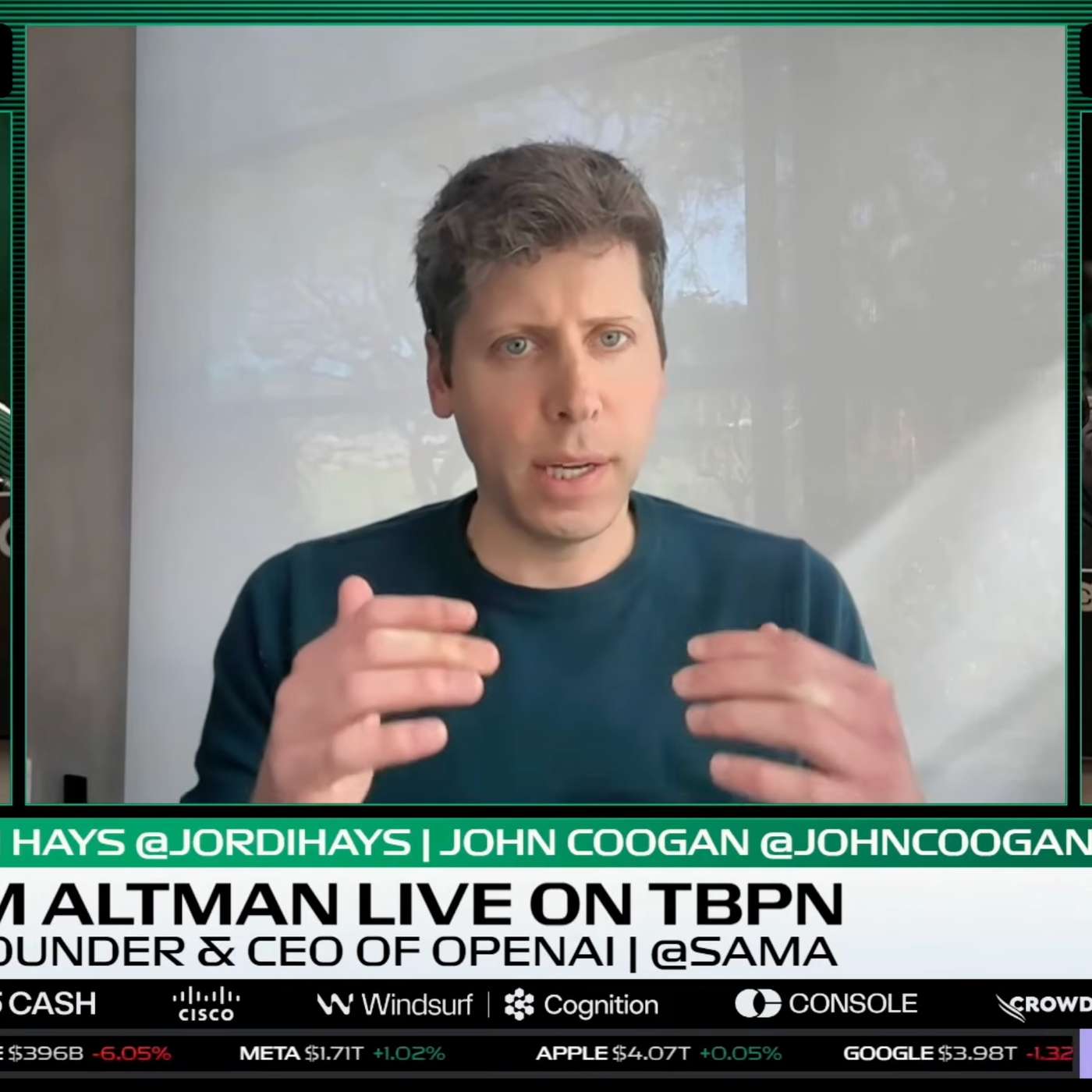
Altman praises projects like OpenClaw, noting their ability to innovate is a direct result of being unconstrained by the lawsuit and data privacy fears that paralyze large companies. He sees them as the "Homebrew Computer Club" for the AI era, pioneering new UX paradigms.